
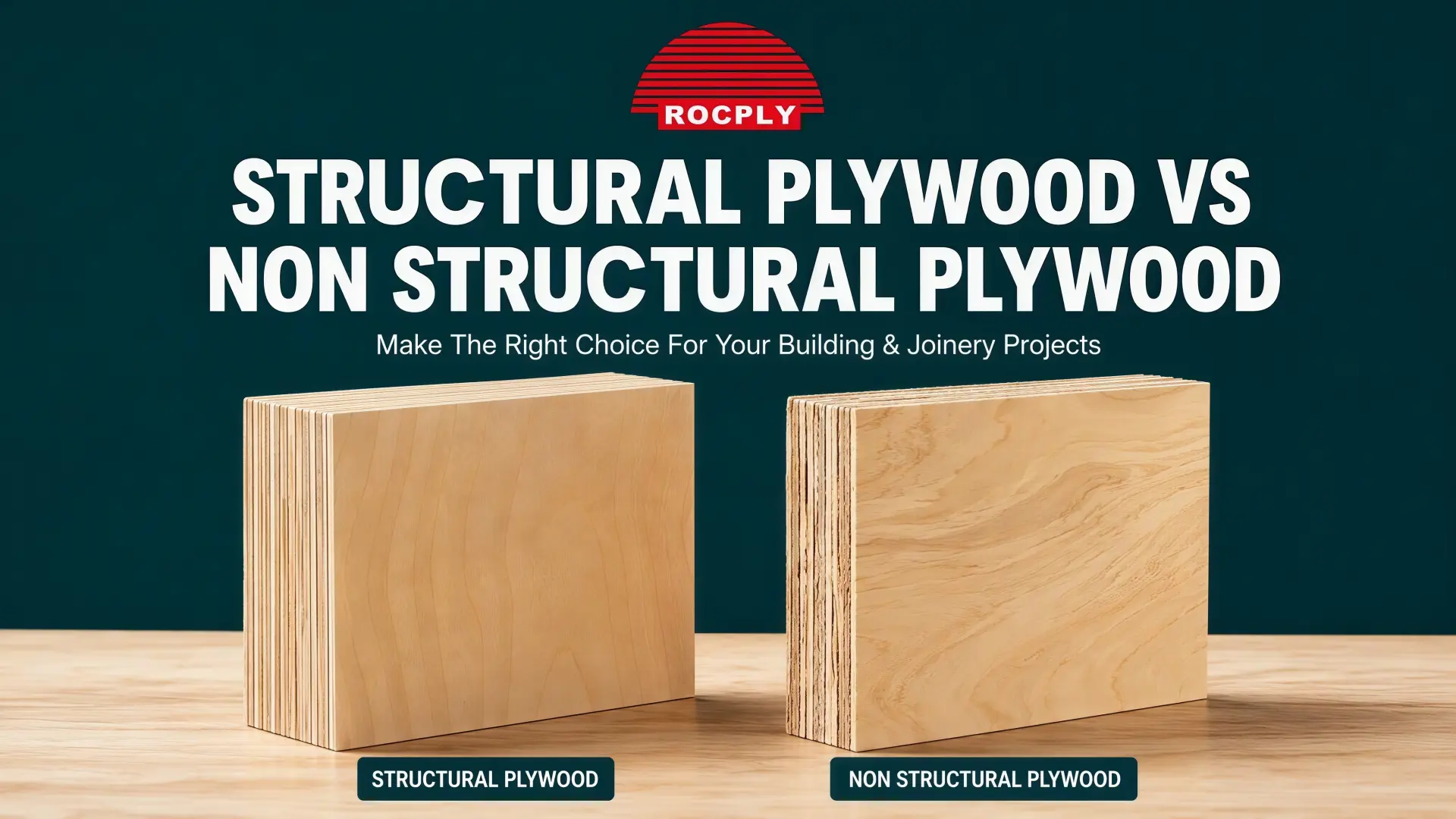
Structural plywood vs non structural plywood is a job-function decision. Use certified structural plywood when a panel must brace, span, carry load or form part of a designed building system. Use non structural plywood when the sheet provides lining, appearance, joinery, packaging or another non-load-bearing function. Thickness, face quality and an exterior bond cannot replace the correct structural classification.
Therefore, classify every panel position before comparing prices. Then verify the standard, structural grade, product marking, exposure conditions and project documents.
This guide supports purchasing and site checks. However, the project designer or specifier must confirm final capacities, spans, fixings and installation details.
Start with the load path, not the sheet appearance
A buyer can place a clean structural sheet beside an appearance-grade sheet and see little difference. Yet their documented roles are different. Standards Australia lists AS/NZS 2269.0:2012 with Amendment 1 as current for structural plywood specifications.
Structural plywood has defined structural properties. Consequently, it can enter a design only when the grade, panel construction and installation match that design. In contrast, interior and exterior appearance plywood follow different product paths. They should not inherit a structural role because they look strong.
Structural plywood vs non structural plywood decision table
| Panel position | Does the sheet have a structural role? | Correct starting path | Check before ordering |
|---|---|---|---|
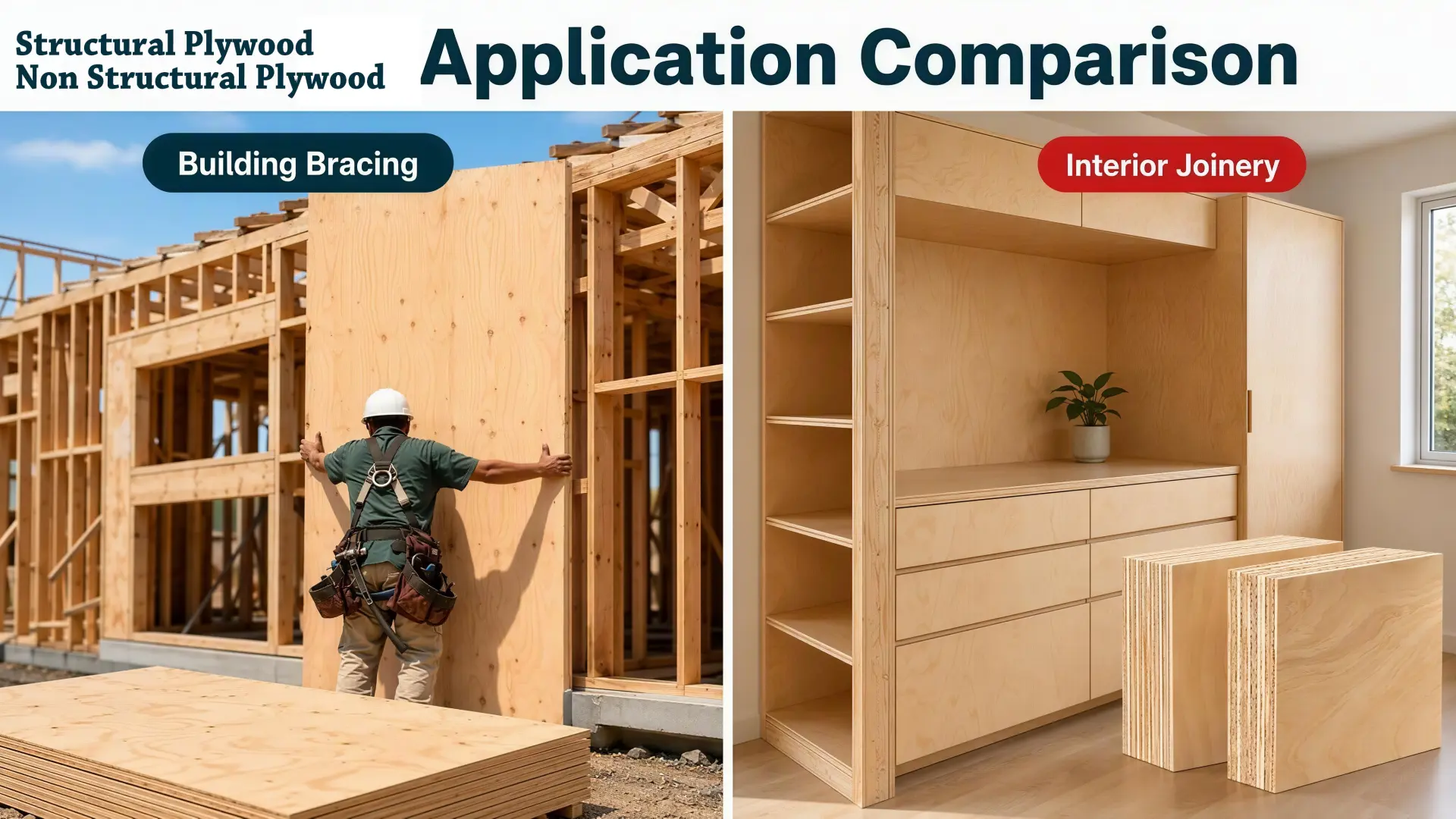
| Wall bracing | Yes, it resists lateral actions | Structural plywood | Design, stress grade, thickness, fixing schedule and certification |
| Structural floor or roof deck | Yes, it spans and transfers load | Structural plywood | Span direction, support spacing, edge support, grade and exposure |
| Combined cladding and bracing | Yes, despite the visible finish | Structural plywood | Both cladding and bracing requirements |
| Decorative wall or ceiling lining | No, when it adds no bracing | Non structural plywood | Interior or exterior service, face grade, bond and finish |
| Cabinet, joinery or display panel | Normally no | Non structural or furniture plywood | Face, core, thickness, machining and hardware |
| Exterior cladding without bracing | No, unless the design assigns one | Exterior non structural plywood may suit | Product standard, coating, detailing and maintenance |
| Crate, pallet or temporary hoarding | Usually no | Utility or non structural plywood | Handling loads, moisture, fixing and reuse expectations |
| Concrete formwork | Specialised temporary structural duty | Purpose-made formply | AS 6669, stress grade, overlay, edge seal and pour plan |
The NCC 2022 referenced-documents table includes AS/NZS 2269.0 for structural plywood. Therefore, a structural plywood vs non structural plywood substitution should follow the project documents, not a visual comparison in the yard.
Read structural plywood marking in the right order
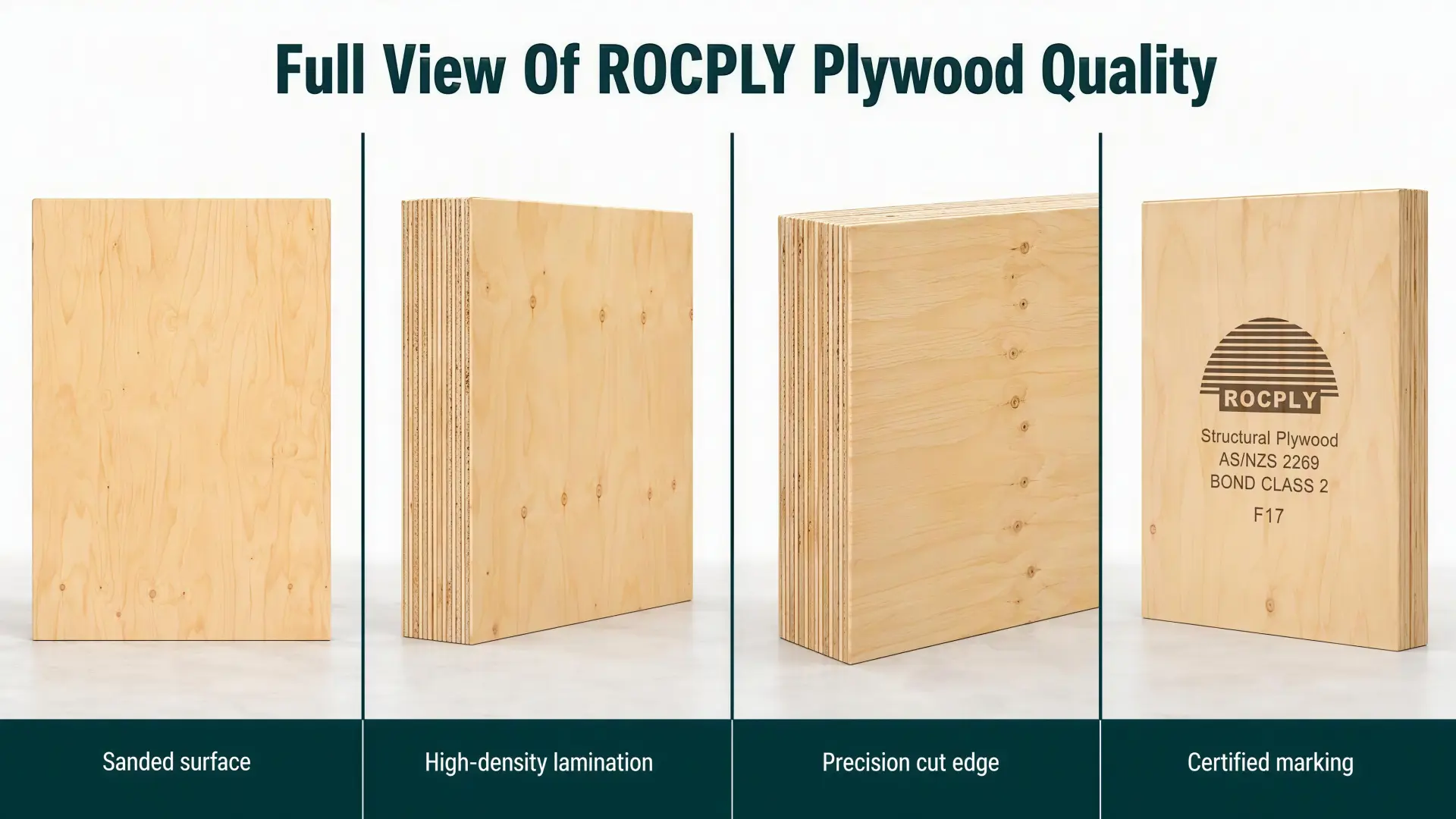
In structural plywood vs non structural plywood procurement, a structural label should lead to an auditable specification. First, confirm the product standard. Next, check the required stress grade and panel construction. Then match the face and back grade, bond, emission class and certification evidence.
The EWPAA Structural Plywood and LVL Design Guide explains that a stress grade defines a set of strength and stiffness properties. It also shows a structural specification using the standard, F-grade, identification code, face/back grade, bond and product-certification stamp.
Seven fields for an auditable structural quote
- Product standard: the required AS/NZS 2269.0 designation.
- Stress grade: the F-grade required by the design, not the highest grade offered.
- Panel construction: thickness, identification code and face-grain direction where relevant.
- Veneer grades: the accepted face and back appearance.
- Bond and exposure details: separate from structural classification.
- Conformity evidence: certification body, manufacturer, certificate number and exact scope.
- Project variables: treatment, emission class, sheet size, tolerance, packing and destination.
Do not accept a logo alone. Instead, confirm that the certificate remains valid and covers the proposed mill, product, grade and standard. The EWPAA product-certification process describes factory inspections, independent testing and ongoing surveillance. Other accredited schemes may also apply, so verify their scope directly.
Why A Bond does not prove structural capacity
Bond type and structural classification answer different questions. A bond describes glue-line durability under defined conditions. A structural grade describes verified mechanical properties. Therefore, exterior appearance plywood can have a durable bond and still remain non structural.
EWPAA identifies plywood made to AS/NZS 2270 for interior use and AS/NZS 2271 for exterior use as non-structural. Its guide also warns that a phenolic adhesive does not make those panels suitable for structural applications.
For a broader explanation of face grades, F-grades, bonds, cores and thickness, use the ROCPLY plywood grades guide. It keeps these five purchasing checks separate.
When non structural plywood is the better specification
Non structural does not mean defective or disposable. It means the panel has not been selected to perform a structural function. As a result, buyers can optimise the sheet for appearance, machining, weight, finish and price.
Typical uses include decorative linings, cabinet parts, retail displays, furniture, packaging and protected fit-out work. ROCPLY’s non structural plywood range shows common appearance grades and sheet options for these roles.
Exterior non structural plywood can also suit cladding that has no bracing duty. However, the exposure, coating and detailing still matter. WoodSolutions notes that exterior plywood cladding to AS 2271 is intended for non-structural applications. Any combined cladding-and-bracing role needs a structural path.
Five substitution stop signs
| Supplier or site claim | Why it is incomplete | Required action |
|---|---|---|
| “It is the same thickness.” | Equal thickness does not prove equal structural properties or construction. | Recheck the specified standard, grade and design. |
| “It has A Bond.” | Bond durability does not confirm structural capacity. | Request the structural designation and conformity evidence. |
| “The face looks stronger.” | Face appearance is not a stress grade. | Separate veneer grade from structural grade. |
| “F17 is better than the specified grade.” | A different grade may also have a different lay-up, availability or design implication. | Obtain designer approval before substitution. |
| “Marine plywood or formply covers everything.” | These are separate product categories with different standards and intended uses. | Check the project function and governing specification. |
A higher price, heavier sheet or cleaner face cannot close a documentation gap. Moreover, an unapproved substitution can change fixing, span, weight, finish and compliance at once.
Run a delivery release check before installation
Use this structural plywood vs non structural plywood release check on one unopened pack. Photograph the panel or pack mark, product label and batch reference. Next, match them to the purchase order, packing list and certificate scope.
Then confirm sheet size, thickness, face/back grade, damage and storage condition. Keep structural stock separated from appearance or utility panels. If the mark or documents do not match, quarantine the affected pack until the supplier and project team resolve the discrepancy.
Thickness is still important after classification. Use the ROCPLY plywood thickness chart for an application-level first pass. For structural positions, always pair thickness with the approved grade, span, support and fixing information.
Write an RFQ that blocks ambiguity
“18mm plywood” is not a complete request. Instead, write one auditable line for each panel role:
Quantity; length × width × thickness; intended application; plywood type and product standard; required stress grade and panel construction; face/back grade; bond; emission class; treatment; certification evidence; packing; destination.
For non-load-bearing panels, replace the stress-grade fields with the correct interior or exterior product standard, face requirement, core, machining, finish and exposure details. This approach makes structural plywood vs non structural plywood quotes comparable without forcing unlike products into one price column.
The cheapest sheet can create the most expensive correction
Using non structural plywood in a structural position can trigger rejection, redesign, removal and schedule delay. Conversely, using structural plywood for every lining or cabinet part may add cost without improving the required finish.
Therefore, compare cost by approved installed function. Include documentation, cutting yield, support details, finishing labour, handling, inspection and substitution risk. ROCPLY offers structural plywood options and separate non structural panels, so buyers can build a role-based schedule rather than one generic plywood order.
Questions builders and buyers ask
Does thicker plywood mean it is structural?
No. Thickness affects stiffness and handling, but it does not establish a structural classification. Check the product standard, grade, construction, marking and documents.
Can structural plywood be used for furniture?
It can, provided the face, core, thickness and finish suit the component. Still, the structural premium may add no value when appearance or machining drives the decision.
Can non structural plywood be used outside?
Exterior non structural plywood can suit non-load-bearing exterior applications when the product, coating, detailing and maintenance match the exposure. It must not replace structural plywood where the panel braces, spans or carries load.
Is a higher F-grade always better?
No. Select the grade required by the project design. A higher offered grade still needs approval because panel construction, availability, weight and other details may change.
How do I verify structural plywood before buying?
Request the AS/NZS 2269.0 designation, required F-grade, panel construction, product marking and current certification scope. Then match those details to the quote and delivered batch.
Request a structural plywood specification
Send ROCPLY the panel schedule, application, design requirement, sheet size, thickness, face grade, exposure, quantity, destination and required evidence. The team can separate structural and non-load-bearing positions, then prepare a structural plywood vs non structural plywood supply specification for review.
Post time: Sep-07-2026