
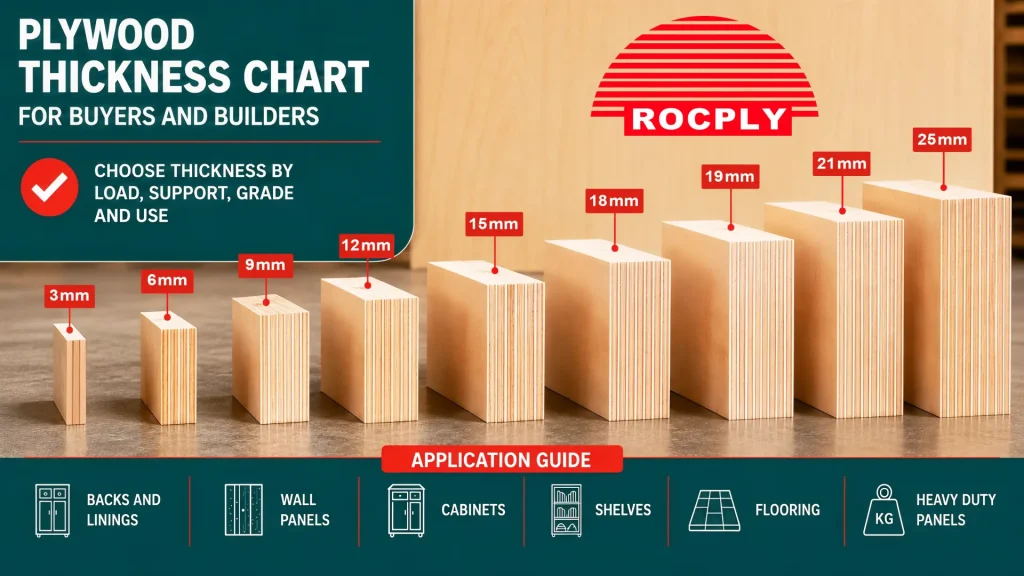
Choosing the right plywood thickness starts with the job, not the price list. This plywood thickness chart helps builders, distributors, cabinet shops and project buyers match a panel to its load, support layout, finish and moisture risk. Use it for the first buying decision, then confirm grade and design data for structural work.
Quick Answer
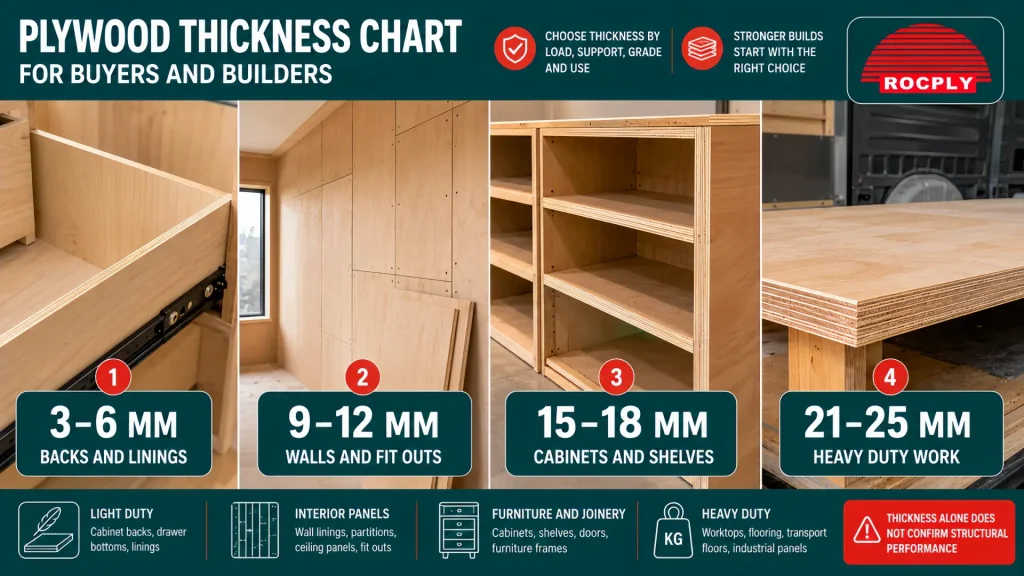
Use 3mm to 6mm plywood for backed panels, skins and light linings. Use 9mm to 12mm for interior panels, wall linings and many fit-out parts. 15mm to 18mm plywood for cabinet carcasses, shelves, benches and well-supported utility work. Use 21mm to 25mm, or a job-specific panel, for heavy-duty work such as transport floors, formwork and some engineered systems.
Thickness is only one part of the choice. Core quality, veneer lay-up, face grain direction, stress grade, glue bond, support spacing and fasteners also affect the result. For floors, roofs, bracing and other load-bearing work, use the project design and certified panel data.
Plywood Thickness Chart for Common Work
| Nominal Thickness | Best Suited To | Check Before Ordering |
|---|---|---|
| 3mm to 4mm | Drawer backs, cabinet backs, door skins and laminated substrates | Needs close backing. Not for shelves or load-bearing work. |
| 5mm to 6mm | Ceiling linings, curved panels, light partitions, backs and packing | Confirm face grade and bend direction where a curve is required. |
| 9mm | Wall linings, light furniture parts, drawer bottoms, packing and interior panels | Use adequate framing or backing. Avoid unsupported shelves. |
| 12mm | Wall panels, fit-outs, cabinet sides and light shelves with close supports | Check core quality, screw holding and face finish. |
| 15mm | Cabinet parts, retail fixtures, utility shelving and supported worktops | Confirm span, edge support and moisture exposure. |
| 18mm | Cabinet carcasses, shelves, furniture frames and rated floor or roof systems | Structural work needs the correct grade and approved layout. |
| 21mm to 25mm | Heavy worktops, transport floors, formwork and special structural uses | Confirm product type, panel grade, design load and support system. |
Common sheet sizes vary by market and product. In Australia, 1200mm wide sheets in 1800mm, 2400mm and 2700mm lengths are common for structural plywood. Many trade programs also use 1220 x 2440mm or 1250 x 2500mm sheets. Match the sheet size to your cutting plan before you lock the thickness.

Thickness Is Not a Strength Rating
A thicker panel usually gives more stiffness. Still, it does not replace the right grade. Two 18mm sheets can perform very differently. One may have a light core for dry fit-out work. Another may have a denser core, a higher stress grade and an exterior glue bond for structural service.
Panel direction also matters. Plywood veneers run in alternating directions. In structural work, face grain direction, support direction and span direction affect how the panel carries load. Do not choose a floor, roof or bracing panel from a thickness chart alone.
For visible furniture, thickness also does not guarantee a good finish. Specify the face grade, face veneer species and surface treatment you need. Review ROCPLY’s plywood sheet guide before choosing a general panel specification.
Choose Plywood Thickness by Project
Thin Plywood for Backs Skins and Light Linings
Use 3mm to 6mm plywood where the panel has close support or mainly covers a surface. Cabinet backs, drawer backs, ceiling skins, door skins and packing panels are typical uses.
Thin sheets reduce weight and cost. However, they can bow or dent when the support is too wide. Ask for flat panels and stable thickness when the sheet will run through a laminating line or a repeat furniture program.
For a controlled curve, use bendable plywood. Standard thin plywood may flex, but it does not always give the same bend result.
9mm and 12mm Plywood for Walls and Fit Outs
Nine and 12 millimetre plywood work well for many interior panels, wall linings, cabinet components and fit-out parts. They are light enough for fast handling, while still giving useful strength with proper support.
Twelve millimetre plywood is a practical choice for walls, joinery and utility panels. See ROCPLY’s 12mm plywood sheets buyer guide for more application detail. Do not use 9mm or 12mm sheets as structural floors or roofs just because they feel firm. Those jobs need a rated product, the right support spacing and a design check.
15mm and 18mm Plywood for Cabinets and Shelves
Fifteen and 18 millimetre plywood are common for cabinet carcasses, shelves, benches and retail fixtures. They provide more depth for screws, hinges and joinery than thin sheets. They also resist deflection better with sensible support.
For cabinet work, 18mm often provides a useful balance of stiffness, screw holding and hardware fit. Yet a long shelf, stone top, wet room or heavy display unit may need blocking, brackets, thicker edges or closer supports.
Compare face grade and core type as well. A clear-coated table needs a clean face. A cabinet program may need a stable core for machining. A warehouse fixture may value strength and price over appearance.
21mm and 25mm Plywood for Demanding Work
Thicker panels can suit heavy benches, transport floors, special formwork, industrial fixtures and selected structural systems. They are heavier and cost more per sheet, so assess total project value rather than thickness alone.
For concrete work, use purpose-made formply. A generic thick sheet may not have the film surface, edge sealing, bond performance or structural grade that the job requires. For vehicle floors, confirm the anti-slip surface, core, coating and fastening plan.
Five Checks Before You Buy
Start with load and support. Ask what sits on the sheet, how far it spans and where it is fixed.
Match the bond to moisture risk. Dry furniture, covered work and exposed work need different bond and finish choices. Edge sealing and storage also matter.
Specify face and core. A clear-coated table, painted wall, concrete form and crate do not need the same panel.
Check the panel mark for structural work. Confirm the stress grade, applicable standard, product mark and design data. Structural plywood comes in several F-grades, but the job still needs the right layout. See ROCPLY structural plywood options before selecting a panel for rated work.
Order for the cutting plan. A larger or custom sheet can reduce offcuts, saw time and handling. Share your cut list, pack quantity and destination when requesting a quote.
A Practical Plywood Buying Specification
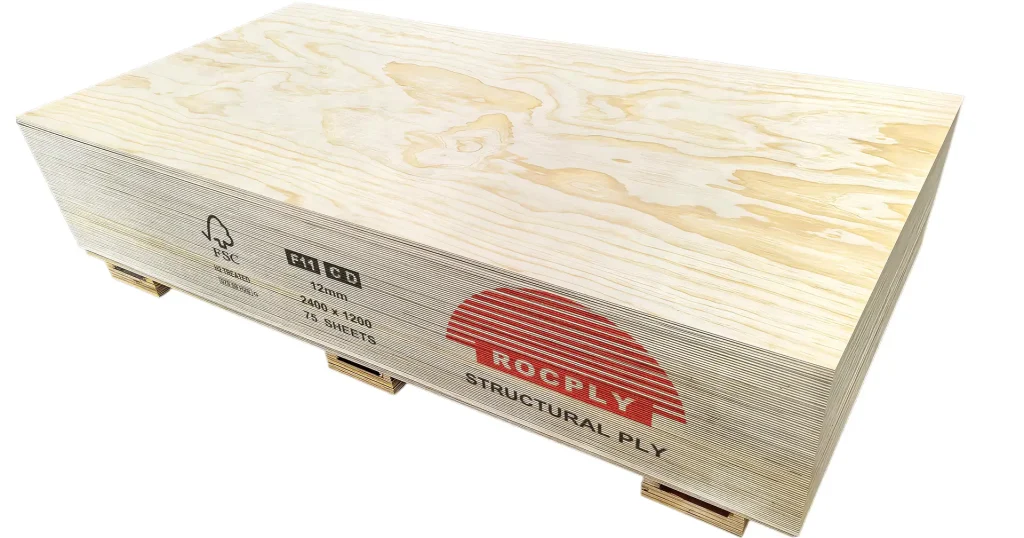
Do not place an order that says only “18mm plywood.” Include the product type, final application, thickness and accepted tolerance, sheet size, face and back grade, core type, glue bond, required structural grade, surface finish, edge treatment, pack quantity and inspection points.
This detail helps a supplier quote the correct panel. It also makes repeat orders safer. For structural applications, ROCPLY’s plywood structural sizes and span guide can help start the specification discussion.
Common Mistakes Buyers Should Avoid
The first mistake is choosing on thickness only. A thicker low-grade panel can still have core gaps, poor flatness or a face that fails the finish plan. The second is using a furniture panel in a structural role. The third is ignoring moisture, storage and edge sealing.
Review the specification before every large order. Support spacing, sheet size, face finish and shipping needs can change from one project to the next.
Questions Buyers Often Ask
Is 18mm Plywood Strong Enough for Shelves
It can be a good choice for many shelves, cabinet carcasses and fixtures. The final answer depends on shelf length, load, support, core type and fixing method. Add support or use a stronger design for long spans and heavy loads.
Is 12mm Plywood Strong Enough for Wall Panels
Often, yes. Twelve millimetre plywood can work well for wall linings and interior fit-outs when framing and fixings suit the panel. Check the finish, impact risk and any structural role before ordering.
What Plywood Thickness Should I Use for Flooring
Use a rated structural panel selected for the exact support spacing, loading and local requirements. Confirm the panel mark, stress grade, span direction, edge detail and fixing schedule.
Does Thicker Plywood Always Hold Screws Better
A thicker sheet usually gives more depth for fixings. Yet core density, face veneer quality, pilot holes and edge distance also affect screw holding. Test the hardware on a sample panel for critical fixings.
Technical References for Structural Selection
- WoodSolutions Structural Plywood Fact Sheet
- EWPAA Structural Plywood and LVL Design Guide
- APA Performance Rated Plywood Guide
Make the Thickness Decision Easier
The best plywood thickness is the thinnest panel that safely meets the job, finishes well and controls total cost. Start with the use case. Then confirm grade, core, bond, face, sheet size and support layout.
ROCPLY helps trade buyers match plywood thickness to real purchase requirements. Send your application, sheet size, target grade, quantity and delivery market. The team can prepare a panel recommendation, packing plan and quotation for your program.
Post time: Jun-22-2026