
Plywood price factors begin long before a supplier writes a number on a quotation. Core construction, face quality, bond, dimensions, manufacturing control, packing and commercial terms all change what the buyer is actually purchasing.
That is why two quotations for “18mm hardwood plywood” can differ sharply without either supplier making a pricing mistake. The descriptions may look similar, while the products behind them are not equivalent.
The right question is therefore not simply, “What is your plywood price?”
A better question is: “What specification, yield and delivery condition does this price buy?”
A Plywood Quote Is a Configuration
Plywood does not behave like a commodity with one universal specification.
The APA plywood overview shows that plywood comes in many grades, thicknesses and end-use classifications. Its construction and intended application vary substantially.
Therefore, a plywood quotation should work like a configuration sheet.
| Quote Field | What Must Match | Why It Changes the Comparison |
|---|---|---|
| Product type | Structural, furniture, marine, formwork or utility | Different manufacturing requirements |
| Thickness | Finished nominal thickness and tolerance | Changes material volume and processing |
| Face grade | Face and back appearance | Changes veneer selection and repairs |
| Core | Species and veneer construction | Changes weight, machining and material input |
| Bond | Adhesive and service requirement | Changes manufacturing specification |
| Sheet size | Finished dimensions | Changes volume, cutting yield and packing |
| Certification | Exact claim and certificate scope | Changes sourcing and documentation route |
| Packing | Sheets per pack and protection | Changes handling and shipment risk |
| Trade term | EXW, FOB, CFR, CIF or another agreed term | Changes which costs sit inside the price |
| Payment | Deposit, balance and payment timing | Changes commercial exposure |
Normalize the Quote Before Negotiating It
A professional buyer should create a Quote Normalization Card before discussing a price reduction.
Place every supplier against the same specification:
- Same panel
- Same dimensions
- Same grade
- Same core
- Same bond
- Same certification scope
- Same quantity
- Same packing
- Same trade term
- Same payment basis
Only then does the unit price become useful.
This is one of the most important plywood price factors because many apparent price differences are actually specification differences.
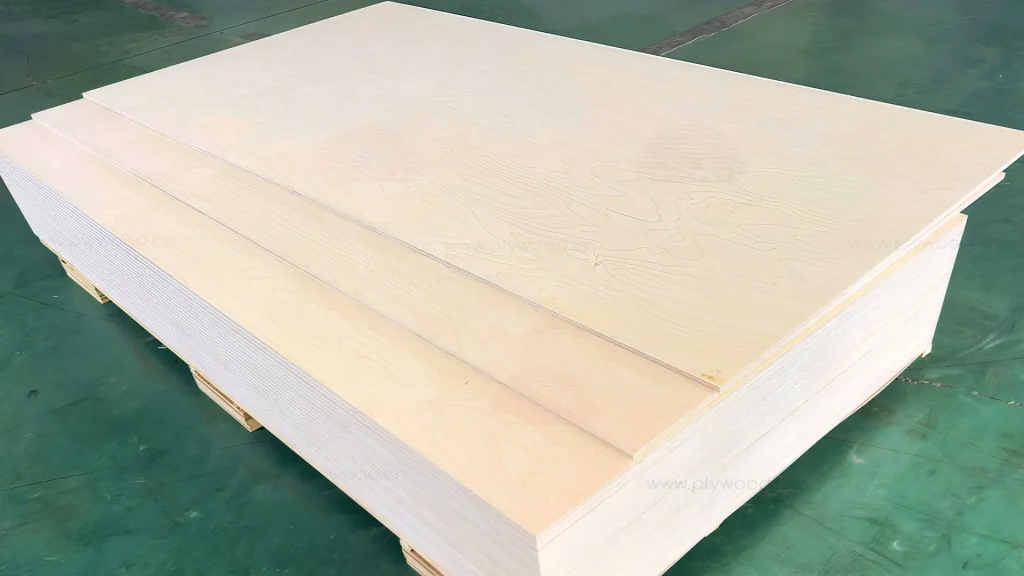
For example, one supplier may quote a cleaner face. Another may use a lighter core. A third may include stronger export protection. A fourth may quote FOB while another gives CFR.
The numbers cannot be ranked correctly until those differences become visible.
The Material Stack Sets the Base Cost
Think of plywood as a material stack rather than one wooden sheet.
The face veneer sits at the top of that stack. A clean decorative surface requires a different veneer selection process from a concealed utility face.
Then comes the under-face structure and core. Species, veneer thickness, recovery, repairs and lay-up all influence the production route.
The ROCPLY Plywood Core Types resource explains why “poplar,” “hardwood,” “birch” and “combi” are not complete specifications. A core name should lead to a construction schedule.
Likewise, the ROCPLY Plywood Grades resource separates appearance grade from structural performance.
A buyer can often reduce unnecessary cost by identifying where premium material creates value and where it does not.
Yield Is the Price Factor Most Quotations Hide
Invoice price is easy to see. Yield is harder.
Suppose one panel costs slightly less but produces more rejected parts, larger offcuts or more sanding work. Its purchase price is lower, yet its cost per approved component can be higher.
For furniture and joinery factories, calculate value around usable components per sheet, not only price per sheet.
- Sheet dimensions
- Squareness
- Thickness consistency
- Core breakout
- Face rejection
- Cutting layout
- Required sanding
- Edge repair
- Machine downtime
The ROCPLY Plywood Sheet Sizes resource should control the sheet-format and cutting-yield discussion.
This creates a useful distinction between sheet price and production cost.
Quality Variation Has a Financial Value
Buyers often treat quality and price as separate conversations. In production, they meet on the same cost sheet.
| Variation | Possible Commercial Effect |
|---|---|
| Uneven thickness | Assembly adjustment and machining changes |
| Core gaps in fixing zones | Rejected parts or weak hardware locations |
| Poor face repair | Extra filler, sanding or rejected visible pieces |
| Bow or twist | Reduced cutting yield |
| Damaged corners | Lost usable panel area |
| Weak wrapping | Transport and moisture claims |
| Inconsistent repeat orders | More incoming inspection and production changes |
The ROCPLY How to Check Plywood Quality Before Buying page owns the inspection process. This pricing page asks a different question: What does variation cost after the plywood reaches the factory or site?
Certification Must Be Compared Like for Like
Certification should not appear as a vague logo beside the quotation.
If a buyer requires an FSC claim, the quotation should identify what is being claimed and whether the supply chain supports that claim. FSC Chain of Custody certification controls how eligible certified material is identified and tracked through the supply chain.
- Required certification scheme
- Product claim
- Certificate holder
- Certificate scope
- Relevant mill or trading entity
- Documents required with shipment
Price the required evidence into the original RFQ rather than adding it after production.
Packing Is Part of the Product Economics
Packing rarely attracts attention until it fails.
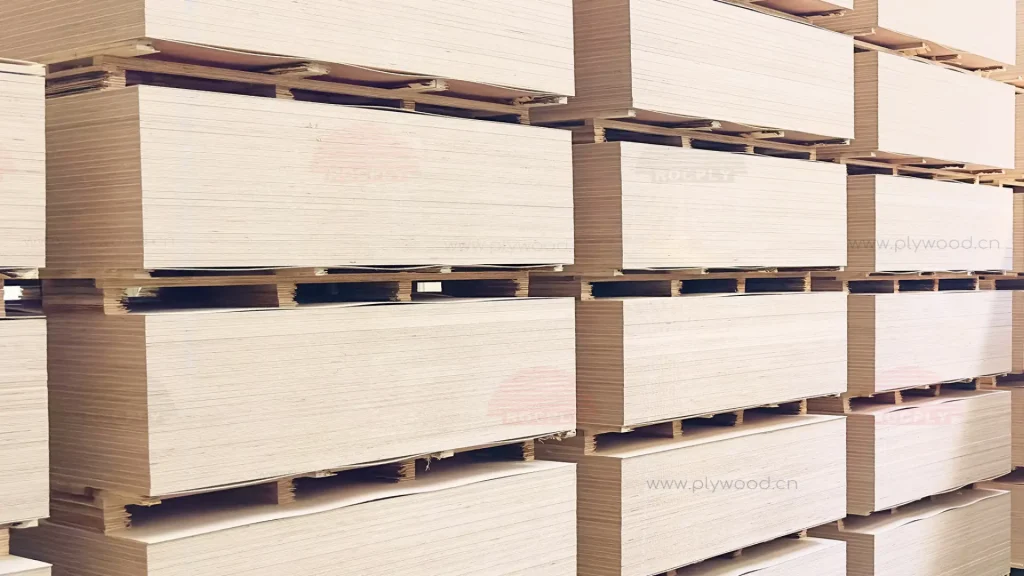
However, export plywood may pass through forklifts, warehouses, terminals, vessel movement and destination handling before the buyer opens the pack.
- Number of sheets per bundle
- Bearer construction
- Top and bottom protection
- Edge protection
- Wrapping
- Strap arrangement
- Forklift entry
- Pack identification
- Container loading method
Good packing does not make a poor panel good. However, poor packing can make good plywood commercially unusable.
That is why packing belongs inside plywood price factors rather than in a separate afterthought at the bottom of the quotation.
Freight Must Stay Separate from Panel Value
International buyers should distinguish the plywood value from the transport market.
The UNCTAD Review of Maritime Transport 2025 reports continued freight-rate volatility and explains how rerouting and disruption can affect voyage length, available capacity and transport costs.
Therefore, a plywood supplier can keep the same factory specification while the landed price moves.
Panel specification → export packing → inland logistics → origin charges → ocean freight → destination charges
This makes quotations easier to audit. It also prevents a temporary freight change from being mistaken for a change in plywood manufacturing cost.
Price Per Sheet Can Mislead Container Buyers
Retail buyers naturally think in sheets. Container buyers should also calculate cubic metres and container utilisation.
A price per sheet becomes difficult to compare when suppliers quote different dimensions or finished thicknesses.
- Price per sheet
- Price per cubic metre
- Sheets per bundle
- Bundles per container
- Total sheets
- Total cubic metres
- Estimated gross weight
- Freight basis
None of these figures is the “best” unit on its own. Together, they explain the order.
Payment Terms Are Also Plywood Price Factors
Two identical plywood specifications can carry different commercial conditions.
A quotation may involve a deposit, balance before shipment, letter of credit, credit insurance or another agreed structure.
Therefore, buyers should compare price and payment terms together. A low number with unsuitable payment conditions may not be the best purchasing result.
Watch for False Savings
Very low face grade price
Check repairs, sanding and approved appearance samples.
Low hardwood-core price
Ask which species form the core and whether the construction may change.
Very low structural plywood price
Verify marking, certificate scope and supplied product identity.
Very low delivered price
Check what destination charges or services remain excluded.
Low custom-size price
Check minimum quantity, trimming allowance and actual finished dimension.
Very low packing cost
Inspect the pallet and protection standard.
The purpose is not to reject a low price. The purpose is to understand why it is low.
Build the RFQ Before Asking for the Price
- Application
- Product type
- Finished thickness
- Length and width
- Face and back grade
- Core construction
- Bond requirement
- Surface requirement
- Certification and documents
- Quantity
- Packing
- Trade term
- Destination port
- Payment basis
- Required sample or approval process
Then ask each supplier to quote against the same document.
Instead of asking suppliers to reduce an unexplained price, buyers can identify exactly which specification or commercial variable creates the difference.
Four Questions That Clarify a Quote Fast
Why can plywood prices differ so much?
Because quotations may contain different faces, cores, bonds, sizes, quality limits, certification, packing, quantities and delivery terms.
Should I compare plywood price per sheet or per cubic metre?
Use both for trade buying. Price per sheet helps with unit planning. Price per cubic metre helps normalise different thicknesses and sheet sizes.
Is the cheapest plywood core always the lowest-cost choice?
No. A lower material price may create higher machining, rejection or handling cost. Compare the core against the finished component.
What information should I send for an accurate plywood quote?
Send the application, dimensions, grade, core, bond, certification, quantity, packing, trade term and destination. Add drawings or approved samples when appearance or machining matters.
Buy Quote Transparency
The most useful plywood price factors are the ones a buyer can define, compare and verify.
Do not start by asking which supplier has the lowest number. Start by making every supplier quote the same product.
Then separate material, yield, compliance, packing, logistics and commercial terms.
ROCPLY can prepare a specification-based plywood quotation using the panel construction, quantity, packing and trade route required for the order. That gives procurement teams a number they can actually compare.
Need a Plywood Quote by Specification
Send your application, thickness, sheet size, face grade, core, bond, quantity, packing requirement and destination port. ROCPLY can prepare a comparable specification-based quotation.
Post time: Aug-17-2026