
Plywood sheet sizes affect more than the number printed on a quotation. The right format can reduce waste, shorten cutting time, improve handling and make a container load easier to plan. The wrong format can create extra joints, poor yield, damaged edges and avoidable site delays.
This plywood sheet sizes guide helps builders, cabinet factories, timber wholesalers and import buyers choose panels for real projects. It explains common formats, what they suit and what should appear on a purchase order.
Quick Answer
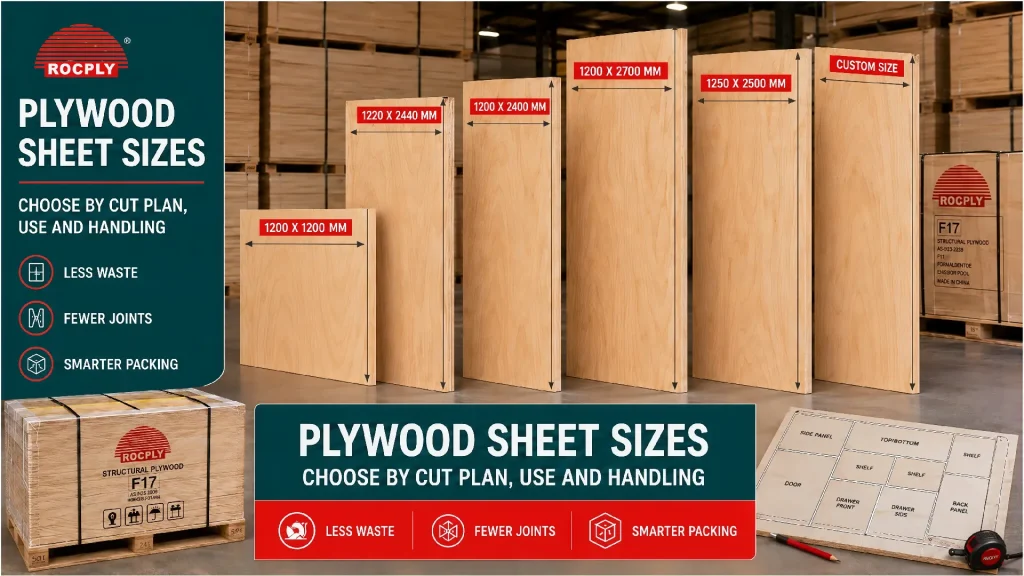
The most familiar plywood sheet format is 4×8, usually sold as 1220 x 2440mm. In Australia, 1200 x 2400mm, 1200 x 2700mm and 1200 x 1800mm formats are also common for structural plywood. Trade buyers may also order 1250 x 2500mm panels where a larger cut plan improves yield.
Do not choose plywood sheet sizes by habit alone. Match the panel to the cut list, support layout, handling method, freight plan and final application. A 4×8 furniture panel, a 4×8 structural panel and a 4×8 formwork panel may share the same length and width, but they do not have the same grade, bond, core or use.
Common Plywood Sheet Sizes
| Sheet Format | Common Trade Name | Typical Use | Check Before Ordering |
|---|---|---|---|
| 1220 x 2440mm | 4×8 plywood | Furniture, wall lining, fit-outs, export and general trade | Confirm actual finished size and thickness tolerance |
| 1200 x 2400mm | Metric structural sheet | Structural walls, roofs, floors and interior panels | Confirm panel grade, face grain direction and design data |
| 1200 x 2700mm | Long structural or lining sheet | Tall wall linings, long spans and fewer horizontal joins | Check handling access and transport length |
| 1200 x 1800mm | Short structural sheet | Smaller projects, bracing and easier handling | Confirm project layout and joint positions |
| 900 x 2400mm | Narrow structural format | Bracing, repair work and selected structural layouts | Check fixing pattern and panel orientation |
| 1250 x 2500mm | Large metric panel | Furniture cutting plans, export orders and custom layouts | Confirm minimum order quantity, pack size and freight fit |
| Custom size | Made to order panel | Factory production, repeated components and special projects | Confirm cutting tolerance, pack quantity and lead time |
Not every plywood product is available in every format. Face grade, core type, thickness, bond class, certification and production line all affect what can be supplied. Confirm the finished length, finished width and thickness on the order sheet before production begins.
4×8 Plywood and Metric Sheet Formats
A 4×8 sheet is a trade shorthand for a panel close to 1220 x 2440mm. It is widely used because it suits common cutting plans, standard handling methods and global export packing.
However, 1220 x 2440mm is not the same as 1200 x 2400mm. The difference may seem small, but it can affect cabinet parts, wall layouts, cutting yield and the number of sheets required for a repeated program.
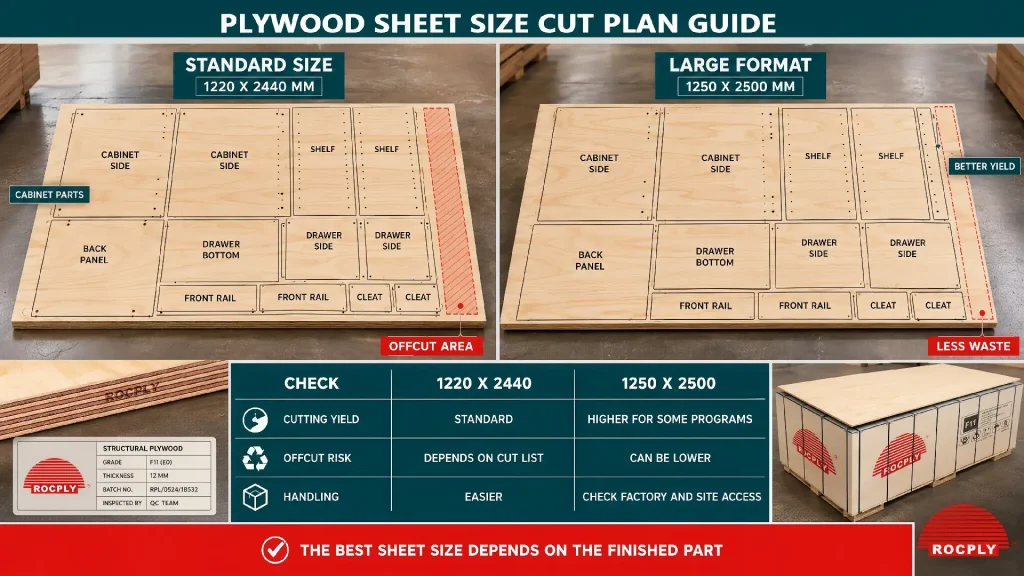
A 1250 x 2500mm sheet can offer more usable area for some furniture factories and panel processors. It may reduce offcuts when the production plan uses wider doors, larger cabinet sides or repeated components close to 600mm, 625mm or 1200mm widths.
The best size depends on the finished part, not the market habit.
Choose Sheet Size by Project Type
Furniture and Cabinet Production
Furniture factories should start with the cutting list. A sheet that matches cabinet side depth, door width or shelf length can reduce saw time and waste.
For example, 1220 x 2440mm sheets often work well for standard cabinet programs. A 1250 x 2500mm panel may be more efficient when the cutting plan requires wider strips or larger repeat parts.
Check face grade, core consistency and sheet flatness as well as size. A good cut plan cannot fix a poor core or damaged face.
For thickness selection, use the ROCPLY panel depth selection guide before finalising furniture components.
Structural Walls Floors and Roofs
Structural plywood must be selected by the project design, not only by sheet size. Common structural formats include 1200 x 2400mm, 1200 x 2700mm and shorter panels for specific layouts.
- Certified structural grade
- Face grain direction
- Panel orientation
- Support spacing
- Fixing pattern
- Edge detail
- Thickness
- Moisture exposure
A longer sheet can reduce horizontal joints in wall linings or roof layouts. However, it also increases handling difficulty and may need more careful delivery planning.
Review the ROCPLY structural panel product range when the project requires a rated panel rather than a general furniture sheet.
Wall Linings and Decorative Panels
Wall lining projects often benefit from longer sheets. A 2700mm panel can reduce horizontal joins on taller walls. A 2400mm panel may suit standard ceiling heights and be easier to lift, store and cut on site.
For decorative wall panels, sheet size should also match veneer direction, grain repeat and joint layout. A smaller format may create more joints. A larger format may improve visual continuity but increase freight, lifting and damage risk.
Export Wholesale and Distribution
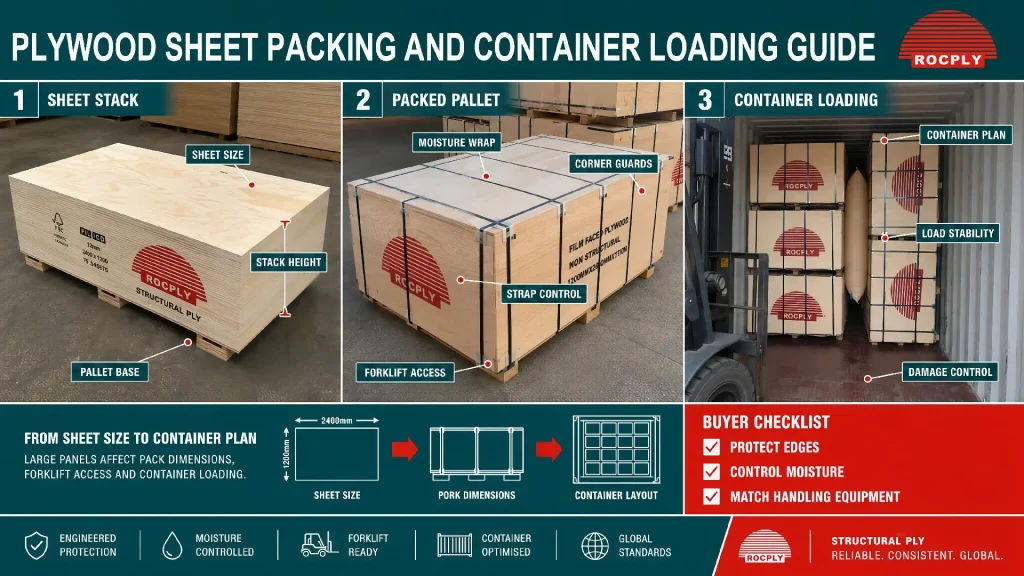
Wholesale buyers should consider pallet dimensions, container width, loading sequence and local handling equipment. A large sheet may improve cutting yield but create handling problems at the destination.
- Sheets per pack
- Pack height
- Pallet type
- Corner protection
- Moisture barrier wrap
- Forklift entry
- Container loading method
- Mixed-thickness rules
- Destination warehouse handling limits
The right format should work from factory cutting through to the buyer’s final warehouse.
Build the Cut Plan Before You Request a Quote
A good cutting plan can save more money than a small reduction in sheet price.
Start with the finished component list. Record each part length, width, grain direction, quantity and allowable trim. Then test the parts against several plywood sheet sizes.
- Can the main parts run with the preferred face grain direction?
- How many offcuts will each format create?
- Can offcuts be used for drawers, rails, shelves or packing parts?
- Will the sheet fit the saw, CNC bed and handling area?
- Does the panel size reduce or increase joints in the finished project?
- Does the format fit the pallet and container plan?
A 1250 x 2500mm sheet may reduce waste in one factory but create excess trim in another. The right answer comes from the cut list.
Sheet Size Affects Handling and Freight
Large sheets reduce joins, but they also increase weight, bending risk and handling difficulty. A panel that is easy to cut in a large factory may be hard to move on a small site.
- Manual lift limits
- Forklift fork length
- Storage rack depth
- Door and stair access
- Delivery truck length
- Site cutting area
- Risk of corner damage
- Need for two-person handling
When panels travel long distances, packing becomes part of product quality. Protective film, corner guards, straps and stable pallet construction help reduce damage before installation.
For shipment planning, request a container loading and packing discussion before confirming unusual sizes or mixed product programs.
What to Include in a Plywood Sheet Size RFQ
A request that says only “4×8 plywood” is incomplete.
- Product type
- Final application
- Finished length and width
- Nominal thickness and accepted tolerance
- Face and back grade
- Core type
- Glue bond
- Structural grade where required
- Sheet orientation or face grain direction
- Pack quantity
- Pallet and wrapping requirement
- Destination port or delivery market
- Required certification or documents
This protects both buyer and supplier. It reduces the risk of receiving a sheet with the right dimensions but the wrong face, core, bond or performance level.
Common Plywood Size Mistakes
The first mistake is treating 4×8 and 1200 x 2400mm as identical without checking the finished dimensions. The second is ordering long sheets without planning transport, warehouse access or site handling.
Another common error is choosing a panel size before preparing the cutting plan. This can create unnecessary waste across a large furniture or fit-out order.
The final mistake is treating dimensions as the full specification. Length and width do not confirm structural grade, moisture resistance, core quality or face finish.
Questions Buyers Often Ask
What Is the Most Common Plywood Sheet Size
1220 x 2440mm, often called 4×8 plywood, is a common global trade format. In Australia, 1200 x 2400mm and 1200 x 2700mm are also common in structural plywood programs.
Is 4×8 Plywood the Same as 1220 x 2440mm
Usually, yes in trade language. However, always confirm the finished dimensions and tolerance on the purchase order.
Why Choose 1250 x 2500mm Plywood
It can improve cutting yield for some furniture, joinery and export programs. It is most useful when the factory cut list fits the larger dimensions and the handling plan supports the format.
Can I Order Custom Plywood Sheet Sizes
Many product programs can offer custom size options, subject to product type, thickness, minimum order quantity, manufacturing tolerance and packing requirements.
Does Sheet Size Affect Structural Performance
The panel size itself does not replace the structural specification. For structural work, confirm grade, orientation, support spacing, thickness, fixing and project design requirements.
Technical References for Size Selection
For structural applications, use recognised plywood product data and project-specific design information. WoodSolutions provides guidance on common structural plywood dimensions in Australia, while EWPAA explains common structural panel formats and the importance of panel orientation.
- WoodSolutions structural plywood fact sheet
- EWPAA structural plywood and LVL design guide
- APA plywood product information
Choose the Format Before You Quote
Plywood sheet sizes should support the whole supply chain. The best format reduces waste in cutting, works with the project layout, fits the handling plan and arrives protected at the final destination.
ROCPLY supports trade buyers with standard and custom plywood programs for furniture, construction, fit-out and export supply. Send your cut list, sheet size, thickness, grade, quantity and destination market to receive a panel recommendation, packing plan and quotation.
Need a Plywood Sheet Size and Packing Plan
Send your cut list, panel use, sheet size, thickness, target quantity and destination market. ROCPLY can help match the panel format with your production, packing and freight requirements.
Post time: Jul-06-2026