
Knowing how to check plywood quality can prevent machining waste, rejected panels, fixing failures and delivery disputes. A sheet may have a clean face while hiding core gaps, weak glue lines, uneven thickness or unsuitable product markings.
A reliable inspection must cover more than appearance. Buyers should confirm the product identity, inspect the panel construction, test the material for its intended process and review the packing before shipment.
Quick Answer
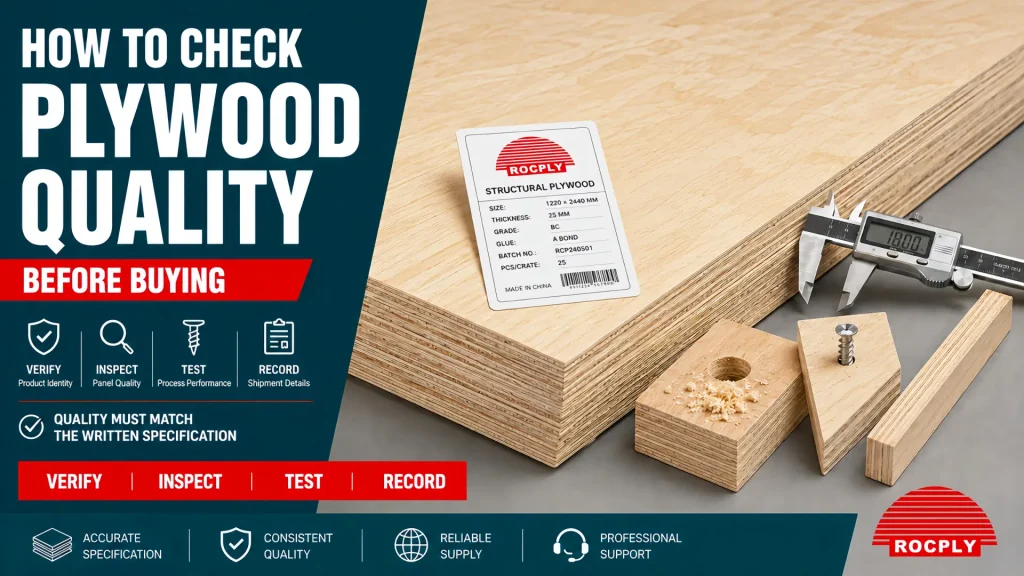
To check plywood quality, first compare the panel with the purchase specification. Confirm the product type, grade, dimensions, bond, certification and intended use. Then inspect both faces, all four edges, the veneer core, glue lines, thickness, squareness, flatness and moisture condition.
For repeat furniture production, cut and machine a sample before approving the order. Structural plywood, verify the product marking and certification rather than relying on appearance. Export shipments, inspect the pallet base, wrapping, edge protection, straps and container loading.
The best plywood is not simply the smoothest or heaviest sheet. It is the panel that consistently meets the agreed specification and performs correctly in the finished application.
Start with the Intended Application
Quality requirements change with the job.
Furniture plywood may need a clean face, stable core, tight thickness tolerance and good screw holding. Structural plywood needs the correct grade, bond, product marking and design information. Formply also needs a suitable film face, sealed edges and reliable bonding.
- Final application
- Required plywood type
- Surface finish
- Structural or non-structural use
- Moisture exposure
- Machining method
- Fixing method
- Packing and delivery conditions
Without these details, terms such as “premium quality” or “export quality” have little value.
Use a Four-Stage Plywood Inspection
| Inspection Stage | Main Question |
|---|---|
| Product identity | Is this the plywood that was ordered? |
| Physical panel check | Are the face, core, bond and dimensions acceptable? |
| Process trial | Will it cut, screw, route or finish correctly? |
| Shipment check | Will the panels arrive protected and identifiable? |
A panel should not pass simply because the top sheet looks good. Each stage protects against a different purchasing risk.
Verify Product Marking and Documents
Start with product identity before judging the surface.
Check the panel mark, product label or pack label against the purchase order. The description should match the agreed product type, size, thickness, face grade, core, bond and structural grade where required.
- Applicable product standard
- Structural grade
- Nominal thickness
- Manufacturer or mill identity
- Certification mark
- Certificate scope
- Current certificate status
- Supporting technical data
Do not accept an unrelated certificate simply because it mentions plywood. The product, mill, standard and certification scope should match the goods being supplied.
A clean-looking panel does not prove structural performance. In the same way, an exterior bond statement does not prove that the panel is suitable for a load-bearing application.
Inspect the Face and Back
Place the sheet under clear, even light. Inspect the full panel rather than one corner.
- Open splits
- Blisters or raised areas
- Sand-through marks
- Rough patches
- Excess filler
- Overlapping veneers
- Glue stains
- Deep scratches
- Strap damage
- Crushed corners
The accepted appearance depends on the face grade. Natural colour variation, sound patches or repaired defects may be acceptable for one grade and unsuitable for another.
For clear-coated furniture, compare the sample with an approved face reference. Painted panels, focus on smoothness, repairs and sanding quality. For hidden construction work, surface appearance may be less important than bonding and structural compliance.
Use the ROCPLY plywood grade selection guide when a quotation includes both face grades and structural grades.
Inspect All Four Edges and the Veneer Core
The plywood edge often reveals defects that remain hidden beneath the face veneer.
- Repeated open core gaps
- Missing veneer sections
- Veneer overlaps
- Loose internal plies
- Open glue lines
- Uneven veneer thickness
- Edge separation
- Crushed or broken corners
- Unbalanced lay-up
A good core should appear controlled and well bonded. However, buyers should not apply a universal “zero core gap” rule to every plywood grade. The acceptable core quality must match the application and written specification.
Furniture factories should inspect areas that will receive screws, hinges, grooves or edge banding. Gaps in these zones may cause breakout or poor fixing. Panels with exposed decorative edges require a higher visual core standard than concealed construction panels.

Check Bonding and Delamination
Delamination occurs when adjacent veneers separate along a glue line. It may appear as an open edge, raised blister, hollow surface or loose layer after cutting.
Inspect visible glue lines and press gently around suspicious raised areas. Cut a representative sample when possible and inspect the newly exposed edge.
A workshop check can identify obvious problems. It cannot replace a recognised laboratory bond test or valid product certification.
Match the bond requirement to the service condition. Dry furniture, humid interiors, exterior building work and concrete formwork do not require the same adhesive performance.
Measure Thickness and Panel Dimensions
Do not measure only one corner.
Use a calibrated calliper or thickness gauge. Take readings around the perimeter and at agreed internal points. Record the minimum, maximum and variation across the sheet.
- Finished length
- Finished width
- Both diagonals
- Squareness
- Edge trimming
- Agreed tolerance
Thickness variation can create problems in CNC machining, cabinet assembly, edge banding and flooring. An out-of-square sheet can reduce cutting yield and create installation gaps.
Compare the measurements with the purchase order or applicable product standard. Do not use one universal tolerance for every plywood type.
Use the panel thickness guide and plywood sheet format guide when selecting the required dimensions before inspection.
Check Flatness and Moisture Condition
Place the sheet on a flat, supported surface. Look along its length, width and diagonals.
- Bow
- Twist
- Cupping
- Raised edges
- Local bubbles
- Uneven stacking movement
Plywood is a timber product, so some movement can occur. Strong twist or repeated deformation across several packs requires further review.
Also inspect the wrapping and panel edges for water marks, damp surfaces, condensation, mould and swollen edges. Use a suitable calibrated moisture meter when moisture content forms part of the specification.
Run a Production Sample Test
Visual inspection is not enough for repeat manufacturing.
Use the same tools and processes planned for production. Cut, drill, route, screw, sand, edge-band or finish the sample as required.
- Face veneer chipping
- Core breakout
- Fuzzy routed edges
- Splitting near screws
- Weak edge fixing
- Uneven sanding
- Poor laminate adhesion
- Paint absorption at cut edges
- Variation between samples
A successful trial does not prove that every sheet is identical. It does show whether the proposed panel specification suits the buyer’s actual production process.
Inspect More Than the Top Sheet
A polished top sheet may not represent the full shipment. Select samples from different packs and from the top, middle and lower sections of each selected pack.
When a defect appears, expand the sample. Determine whether the issue is isolated, repeated within one pack or present across the batch.
| Decision | Meaning | Action |
|---|---|---|
| Pass | Matches the agreed specification | Approve the inspected stage |
| Review | Minor or uncertain variation | Expand sampling and request evidence |
| Hold | Serious or repeated non-conformity | Stop approval until resolved |
Inspect Packing Before Shipment
Good plywood can still arrive damaged if the packing fails.
- Level pallet base
- Strong and correctly placed bearers
- Protective top and bottom sheets
- Corner and edge protection
- Moisture-resistant wrapping
- Controlled strap tension
- Clear pack labels
- Safe forklift entry
- Stable container placement
Loose straps may allow the load to move. Excessive strap pressure may crush the panel edges. Weak pallet feet can fail during lifting.
Request clear loading photographs that show the pack condition, pallet number, container number and final loading arrangement.
Common Findings and Buyer Actions
| Finding | Main Risk | Recommended Action |
|---|---|---|
| Repeated core gaps | Poor fixing and machining breakout | Review core specification and extend sampling |
| Open glue line | Delamination risk | Hold the affected batch and request bond evidence |
| Uneven thickness | CNC and assembly problems | Measure more sheets against the agreed tolerance |
| Strong twist | Cutting and installation difficulty | Check storage conditions and batch consistency |
| Blistered face | Local bonding or pressing issue | Mark affected sheets and inspect nearby panels |
| Wet wrapping | Moisture and mould risk | Open selected packs and check inner sheets |
| Crushed corners | Usable-area loss | Review straps, pallet design and forklift handling |
| Missing marking | Identity or compliance risk | Stop approval until the product is verified |
Write the Inspection Standard into the Purchase Order
A quality inspection becomes difficult when the purchase order only states a product name and price.
- Final application
- Product type
- Finished dimensions
- Thickness and tolerance
- Face and back grade
- Core construction requirement
- Bond requirement
- Structural grade where required
- Moisture or emission requirement
- Surface and sanding requirement
- Packing specification
- Sampling method
- Required certificates and test reports
For appearance-sensitive work, approve a physical reference sample or clear signed photographs before production.
Questions Buyers Often Ask
How Can I Check Plywood for Core Gaps
Inspect all four edges and cut a representative sample where practical. Look for missing veneer, open spaces and repeated defects. Judge the result against the agreed product grade and final use.
Does Heavy Plywood Mean Better Quality
No. Weight changes with wood species, density, moisture, thickness and core construction. A heavier sheet is not automatically stronger, flatter or better bonded.
Can I Test Plywood Bonding in a Warehouse
You can check edges, blisters and cut samples for visible separation. Formal bond claims should rely on the correct test method, technical documents or valid certification.
Should Every Plywood Sheet Be Perfectly Flat
Not always. Some movement can occur in timber panels. However, strong twist, repeated bowing or deformation that affects cutting and installation should trigger further inspection.
What Is the Most Important Quality Check
The most important check is whether the plywood matches the intended use and written specification. Appearance alone cannot confirm core quality, bonding or structural performance.
Technical References
- APA plywood product and quality information
- EWPAA Structural Plywood and LVL Design Guide
- EWPAA Non-Conforming Timber Products Update
Approve Plywood Against Evidence
Knowing how to check plywood quality gives buyers a repeatable way to reduce supply risk. Verify the product identity, inspect the panel, run the required process trial and check the shipment packing.
ROCPLY supports trade buyers with product specifications, samples, quality-control records, packing plans and loading photographs. Send the plywood type, application, dimensions, quantity and required quality limits to prepare a clear inspection and supply plan.
Need a Plywood Inspection Plan
Send your plywood type, application, dimensions, quantity and required quality limits. ROCPLY can help prepare the product specification, sample process, packing standard and quotation.
Post time: Jul-13-2026