
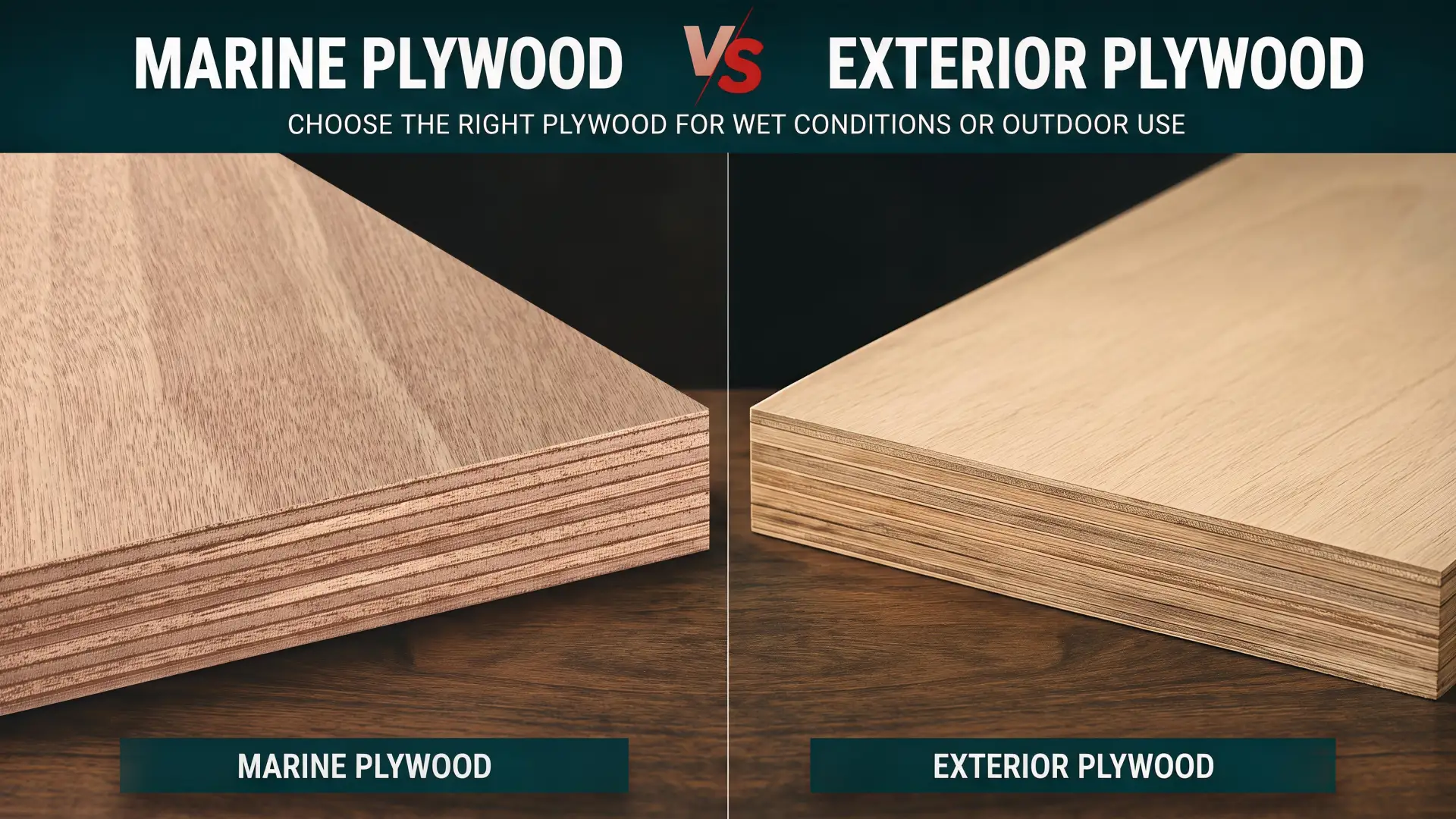
Marine plywood vs exterior plywood is a wet-use choice. Start with marine plywood when a boat or severe wet use needs sound veneers, a durable bond and consistent construction. Start with exterior plywood for outdoor work with no load role that can be coated, drained and maintained. Neither sheet is a complete waterproofing system.
Therefore, define the water source, wet time, drying path and load role before you compare sheets. Then check the standard, bond, treatment, finish and proof.
This guide helps buyers. However, the boat or building designer must approve the final sheet and installation system.
Map the water exposure before choosing a panel
“Wet conditions” can mean damp air, splash, wind-driven rain or full soak. Each has its own risk. For example, an open soffit can dry after rain, while a boat locker may stay damp for days.
| Wet duty | Job example | Start here | Checks |
|---|---|---|---|
| Damp air or brief splash | Protected cabinet or cabin lining | Exterior or marine plywood, as specified | Air flow, sealed cut-outs and finish |
| Outdoor wall face | Cladding, sign or soffit with no load role | Exterior plywood may suit | AS/NZS 2271 claim, treatment, coating and maintenance |
| Frequent wet use and sea spray | Boat fit-out, locker or deck part | Named marine plywood | Standard, species, bond, finish and fixings |
| Floor, roof or wall with a load role | Wet-area floor deck or outdoor bracing | Specified structural panel system | Grade, span, support, membrane and fixings |
| Ponding or trapped water | Flat ledge, sealed box or failed joint | Fix the detail first | Fall, drain, air gap, joints and check access |
| Long-term water contact | Hull, pontoon or immersed part | Specialist marine design | Treatment, species, coating, hazards and maintenance |
A marine plywood vs exterior plywood choice cannot fix a detail that traps water. First stop ponding. Next choose the sheet. Finally, specify the coating and inspection plan.
What marine plywood controls
AS/NZS 2272 covers marine plywood in Australia and New Zealand. It sets rules for veneers, joints, bond and core flaws. As a result, the sheet gives a sound base for demanding wet service.
The EWPAA design guide says AS/NZS 2272 marine plywood normally has at least an F14 grade unless marked otherwise. Yet its lay-up can differ from structural plywood. Therefore, do not swap them without design sign-off.
Marine grade alone does not stop rot. Species, treatment, coating and detailing still control service life. Therefore, name each item in the boat specification.
ROCPLY’s marine plywood range lists bond and size data. Match the offered sheet to the named standard. Do not blend BS 1088 and AS/NZS 2272 into one claim.
What exterior plywood controls
AS/NZS 2271 covers plywood and blockboard for exterior use. EWPAA classifies it as non-structural. It suits exterior appearance work that does not brace, span or bear a design load.
Exterior plywood is not low-cost marine plywood. Moreover, phenolic glue does not give it structural properties. Use the specified structural sheet for load roles. The structural and non structural plywood guide explains that line.
Marine plywood vs exterior plywood comparison
| Buyer check | Marine plywood | Exterior plywood |
|---|---|---|
| AU/NZ standard | AS/NZS 2272 when named | AS/NZS 2271 when named |
| Main aim | Demanding marine and wet use | Exterior appearance work with no load role |
| Veneer and core | Tighter rules for veneers and core | Face grade to suit the outdoor use |
| Structural role | May have structural properties, but the exact grade and lay-up must suit the design | Non-structural under AS/NZS 2271 |
| Bond | Marine bond set by the named standard | Exterior bond set by the named standard and sheet |
| Wet-use start point | Frequent wet use, sea spray or high risk | Outdoor use that can drain, dry and get due care |
| Still needs a finish | Yes—edges, holes, faces, joints and fixings | Yes—most of all on edges and flat faces |
| Quote evidence | Standard, grade, species, bond, treatment, certificate scope and finish | Standard, face/back grade, bond, treatment, certificate scope and finish |
The glue line is only one line of defence
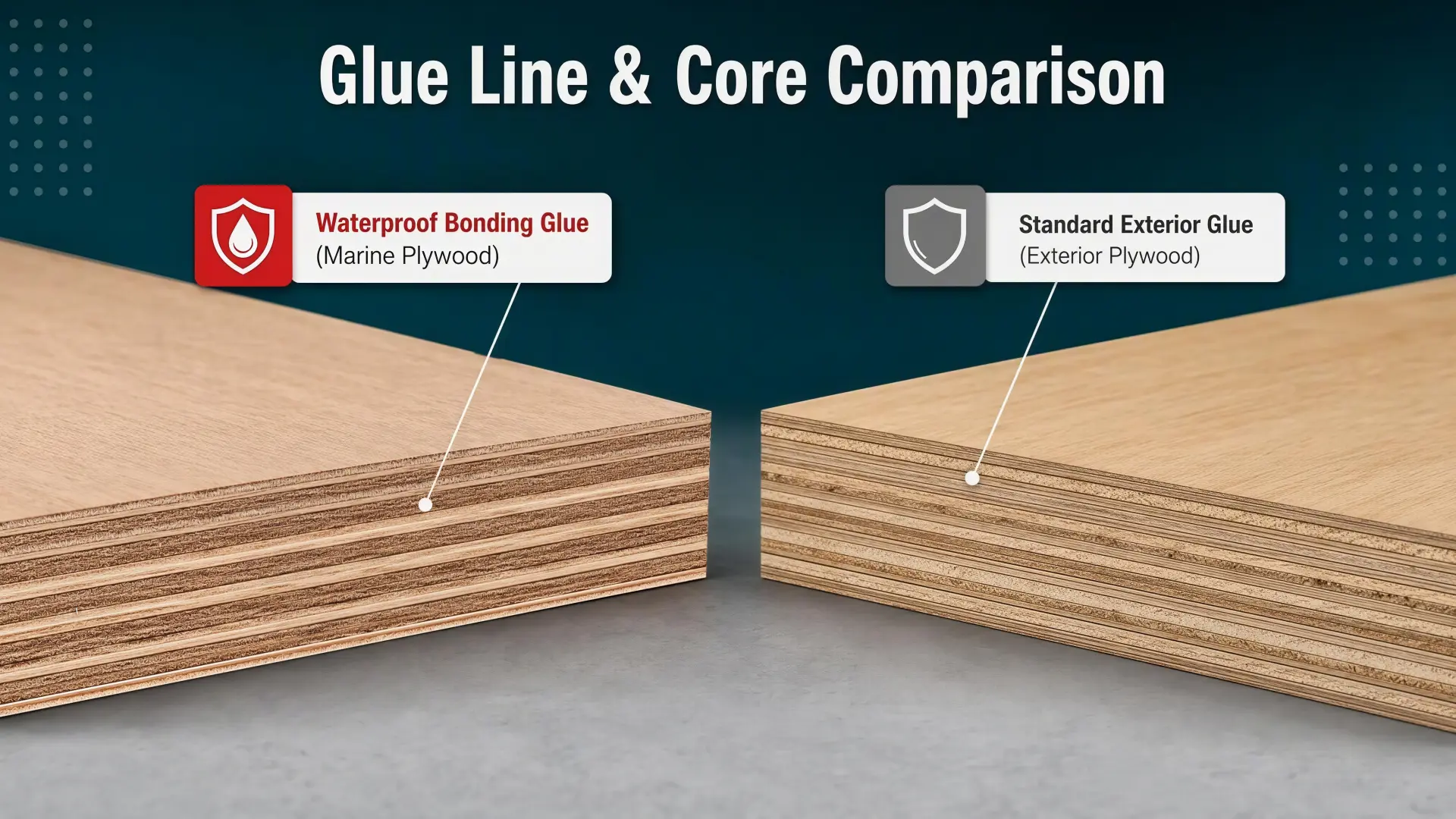
In a marine plywood vs exterior plywood check, WBP, phenolic and A Bond claims are not enough. They do not prove marine grade, structural capacity, veneer grade, treatment or a water-tight face.
Instead, check four lines of defence. The bond joins veneers. Core rules cut weak paths. Treatment deals with the named pest or rot risk. Finally, the coat and detail block most water.
Ask which claim appears in a standard, test report or valid certificate scope. “Waterproof plywood” without a named test and scope is just a broad sales term.
Edges, holes and horizontal surfaces decide service life
Water enters through end grain, cut-outs and damaged coatings. Therefore, seal factory edges where required. Also reseal site cuts, holes and penetrations with a compatible product.
Detail joints to shed water. Provide falls, ventilation and inspection access. In addition, match fasteners to the treatment, coating and environment.
EWPAA recommends surface protection and edge sealing. It also warns against water traps. Thus, use one approved coating system.

Use the application, not the room name
Boats and marine fit-outs
Use the vessel designer’s schedule for hulls, decks and bulkheads. Marine plywood is the normal starting point, but grade, species, treatment and coating must match the duty.
Bathrooms, laundries and kitchens
A room with water does not automatically need marine plywood. Cabinets, benchtops and floors have different exposures. More importantly, plywood does not replace a compliant waterproofing system. The NCC wet-area provisions set assembly requirements. Check the membrane instructions and local rules.
Cladding, soffits and signs
Exterior plywood may suit approved non-load-bearing vertical work. Still, specify treatment, coating and maintenance. If the panel also braces the building, use a structural specification.
Floors, roofs and formwork
Floors and roofs need structural capacity, support, fixings and the correct membrane. Concrete formwork follows a separate formply specification, so keep it outside this comparison.
Build a quote that can be verified
Use the same marine plywood vs exterior plywood evidence pack for each bidder.
- Wet duty: name splash, rain, wet time, ponding, salt and drying.
- Sheet role: state if it braces, spans, bears load or gives a finish.
- Sheet designation: name the standard, grade, faces, lay-up, thickness and sheet size.
- Protection: state treatment, seals, coating, membrane, fixings and maintenance.
- Evidence: ask for certificate scope, test reports, product data and pack marks.
The EWPAA product-certification scheme uses mill checks and tests. Make sure its scope lists the mill, sheet and standard. Then use the ROCPLY plywood quality checklist when stock lands.
Stop weak substitutions before delivery
| Seller claim | What you do not know | Buyer reply |
|---|---|---|
| “It is WBP, so it is marine.” | Veneers, core, standard, grade and evidence | Ask for the full marine product designation. |
| “Both sheets use phenolic glue.” | Product class and core construction | Check the named standards and certificate scopes. |
| “It is the same thickness.” | Lay-up, strength and end use | Check the design and sheet role. |
| “The face has no flaws.” | Inner veneer grade and bond test | Check the core and test sheets. |
| “Marine plywood needs no seal.” | Face wear, edge swell, rot and coat life | Use the named treatment and finish system. |
| “Exterior plywood is close enough for the boat.” | Risk and design sign-off | Stop the swap until the designer signs off. |
Write one clear wet-area RFQ line
A short sheet name leads to guesswork. Instead, give each seller the same clear line:
Quantity; end use and structural role; wet and dry cycle; named plywood standard and grade; species or approved lay-up; face/back grade; length × width × thickness; bond; treatment; edge and face finish; fixings; certification and test evidence; packing; destination.
This format makes marine plywood vs exterior plywood offers easy to match. It also shows gaps before the mill starts.
Questions buyers ask about wet-service plywood
Is marine plywood waterproof?
Its marine bond resists demanding moisture exposure. However, the timber panel still absorbs water and can weather or decay. Protect faces, edges, joints and penetrations as the approved system requires.
Can exterior plywood be used in a bathroom?
It may suit some protected non-structural joinery when the seller and designer approve the detail. It does not replace a compliant waterproofing system or specified structural substrate.
Is marine plywood always stronger than exterior plywood?
No. Marine plywood may have a stress grade, while AS/NZS 2271 exterior plywood is non-structural. Still, use the grade and design data your job needs.
Is WBP plywood the same as marine grade plywood?
No. WBP most often refers to expected glue-line performance. A marine standard sets more product rules. Ask for the named standard, grade and evidence.
Does exterior plywood need edge sealing?
Yes, where required. Seal exposed and cut edges with compatible products. Also keep coatings continuous and prevent ponding.
Can marine plywood stay submerged?
Do not rely on “marine” alone. The designer must set species, treatment, coating, joints, hazards, inspection and service life.
Request a wet-area plywood specification
Send ROCPLY the end use, structural role, wet duty, drying path, standard, grade, size, finish, quantity, destination and evidence needs. The team can prepare a marine plywood vs exterior plywood supply table for review.
Post time: Sep-14-2026