

How to Choose the Right Ply Subfloor for a Strong, Quiet Floor
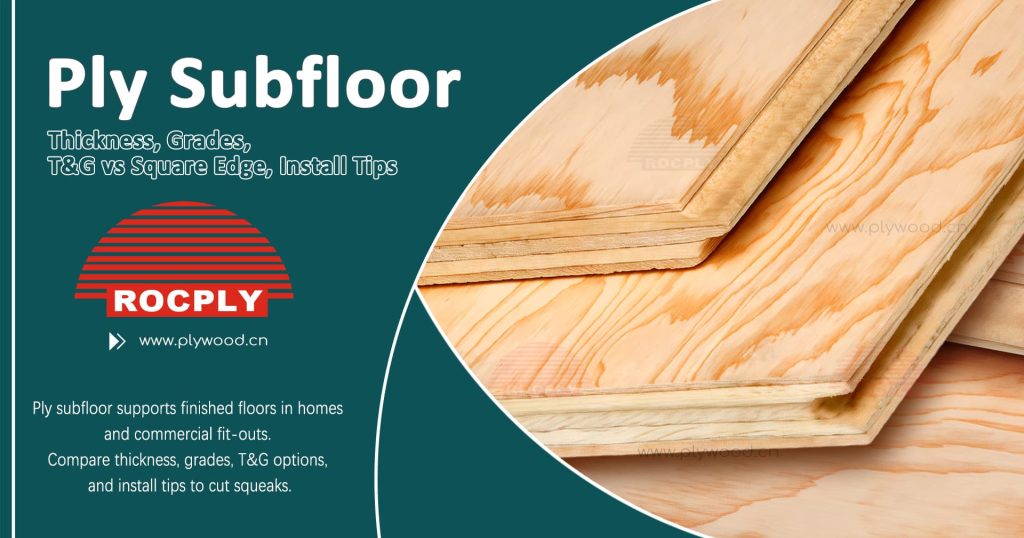
A ply subfloor is the structural panel layer that sits on top of joists and supports your finished flooring. Because it carries daily loads, panel choice and install method matter. Therefore, this guide explains thickness, grades, tongue-and-groove options, and site tips that help reduce bounce and squeaks.
What a ply subfloor does in a floor system
A subfloor panel has three core jobs:
Strength: it spreads loads across joists
Stiffness: it reduces flex that can crack tiles or loosen fasteners
Stability: it keeps the floor flat for your final finish
As a result, a “cheaper” panel can cost more later if it creates call-backs, noisy floors, or uneven surfaces.
Ply subfloor vs underlayment (do not mix them up)
These two layers are often confused:
Subfloor: structural layer on joists (load-bearing)
Underlayment: smoother layer above subfloor (finish support)
For example, vinyl and laminate often need a clean, flat surface. In that case, installers may add an underlayment layer. However, underlayment is not a substitute for a correct structural subfloor panel.
How to choose ply subfloor thickness (quick, practical guidance)
Thickness depends on joist spacing, load expectations, and floor finish.
Common panel thickness choices include:
15–17 mm: often used where spans and loads are controlled
18–19 mm: a frequent “safe” choice for residential and light commercial
21–25 mm: used for higher stiffness needs or wider spacing
In addition, tile and stone floors typically demand higher stiffness. Therefore, confirm the full floor build-up before you lock the panel.
Tip: If you are unsure, prioritize stiffness. It reduces squeaks and movement, and it protects the finished floor.
Panel grades that suit subfloors
Subfloors focus on strength and bond, not perfect appearance. Still, grade matters.
Look for:
Structural-rated plywood intended for flooring
A consistent core with controlled gaps
A reliable bond line appropriate for construction use
Meanwhile, avoid panels made for interior furniture use if the job site will see moisture during construction. Wet trades, rain exposure, and poor storage can damage the floor fast.
Tongue & Groove plywood vs square edge plywod
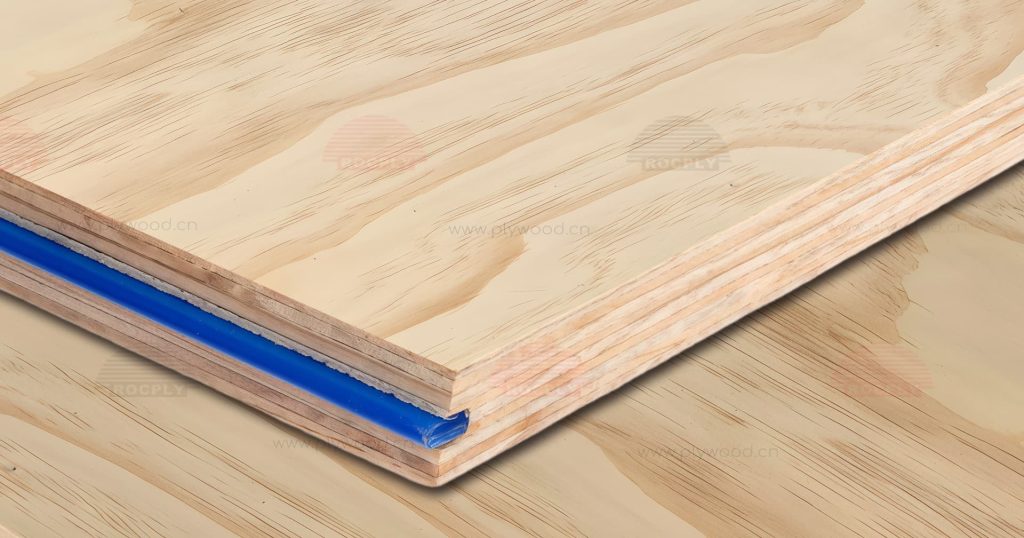
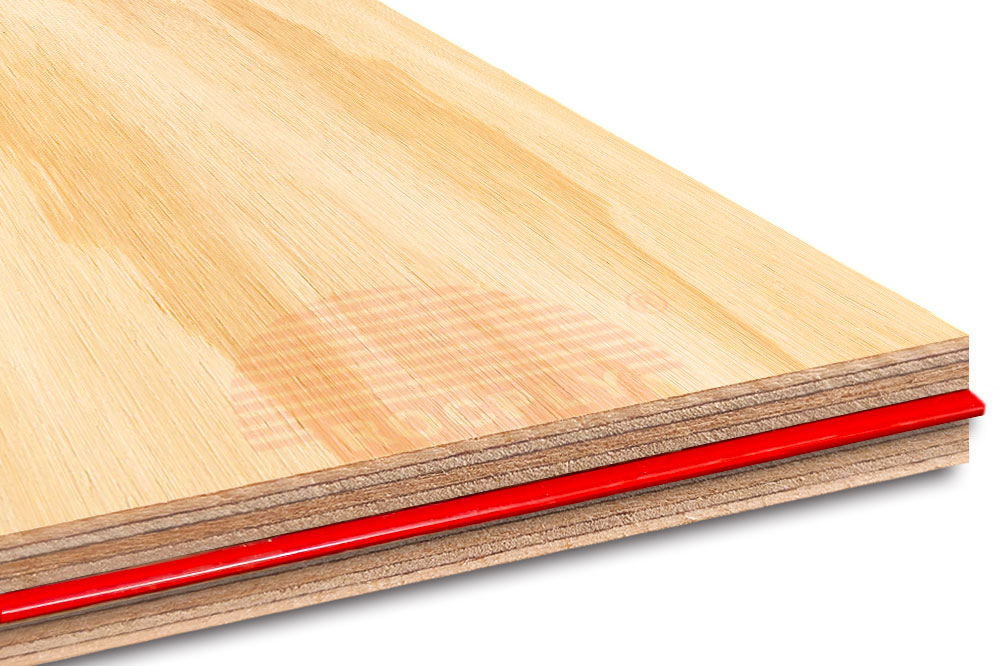
Tongue-and-groove (T&G) panels lock together along the long edge. That support reduces edge movement between joists. As a result, T&G often feels tighter and quieter.
Square edge panels can still work well. However, they may need extra support at edges, depending on the framing and installation method.
Rule of thumb:
Choose T&G when you want better edge support and faster alignment.
Choose square edge when the design includes blocking or edge support.
Ply Subfloor Installation essentials that reduce squeaks
Good panels can still squeak if installation is rushed. These steps make a measurable difference:
1) Acclimate and protect the sheets
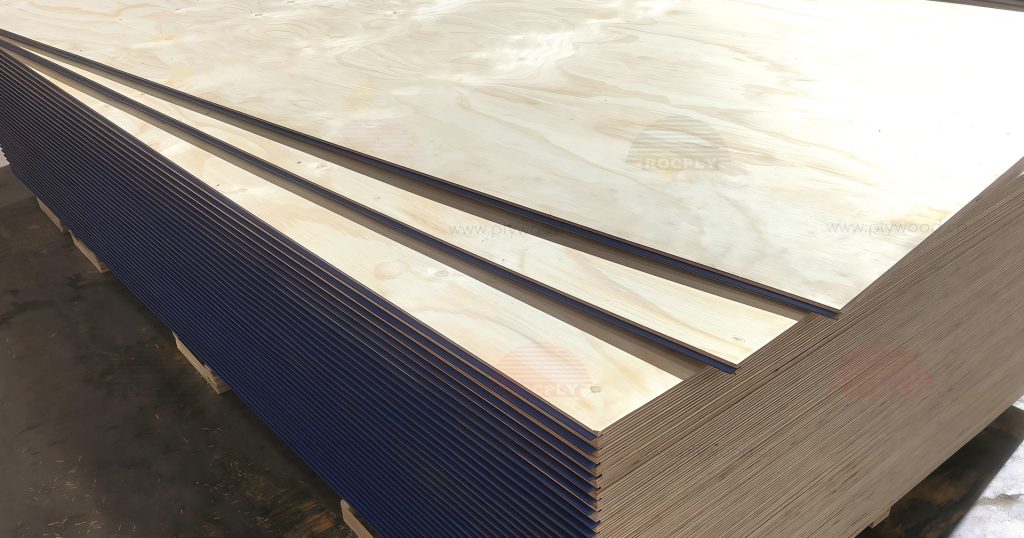
Store panels flat, off the ground, and covered. In addition, avoid soaking wet stacks. Moisture swings cause edge lift and movement later.
2) Use adhesive the right way
Apply a consistent bead of construction adhesive on joists before laying each sheet. Therefore, the panel bonds to framing and reduces micro-movement.
3) Fasten correctly and consistently
Use the correct fastener type and schedule for your job. Also, keep fasteners tight to framing lines. Random fastening causes loose zones, which create noise.
4) Keep expansion gaps
Leave a small gap at panel ends and edges as recommended for site conditions. Otherwise, panels can bind, crown, and telegraph through the finish.
5) Stagger joints
Offset joints between rows. As a result, loads spread better and seams stay flatter.
Moisture control on site (the hidden subfloor killer)
Most subfloor problems come from moisture during construction. For example, rain exposure, wet screeds, or poor ventilation can swell edges and soften fibers.
To reduce risk:
close the building envelope early where possible
keep ventilation moving during wet trades
remove standing water immediately
avoid installing finish flooring until moisture is stable
In addition, if edges swell, sanding may be needed before underlayment or finish goes down.
Choosing a ply subfloor for different finishes
Different finishes react to movement in different ways:
Tile/stone: needs the most stiffness and flatness
Engineered timber: needs stable, dry substrate
Vinyl/laminate: needs smoothness; underlayment may be required
Carpet: more forgiving, but squeaks still matter
Therefore, always match the subfloor build-up to the finish requirements, not only to the framing.
Common mistakes (and how to avoid them)
Wrong panel type for the site
Use structural panels designed for subfloors when construction moisture is expected.
Skipping adhesive
Without adhesive, fasteners can loosen with movement. Then squeaks start.
No edge support
Square-edge panels often need support. Otherwise, seams can move and print through.
Poor storage
Wet stacks swell and warp. Even a good panel can become unusable.
Installing finish flooring too early
Wait until the subfloor is dry and stable. This single step prevents many failures.
FAQ
Is a ply subfloor the same as plywood underlayment?
No. The subfloor is structural on joists. Underlayment sits above it to support the finish.
Should I always use T&G panels?
Not always. T&G helps at edges. However, square edge works well with proper edge support.
What thickness is “best”?
There is no single best thickness. It depends on spacing, loads, and floor finish. If you want fewer call-backs, choose stiffness and consistency.
How do I stop subfloor squeaks?
Use adhesive on joists, correct fastening, stagger joints, keep gaps, and manage moisture.
Ready to specify the right subfloor panel?
Send your joist spacing, target thickness, sheet size, and floor finish. Then you can confirm the correct panel type, edge profile, and installation method before you commit to volume.
Tongue and Groove Plywood
Post time: Jan-26-2026