
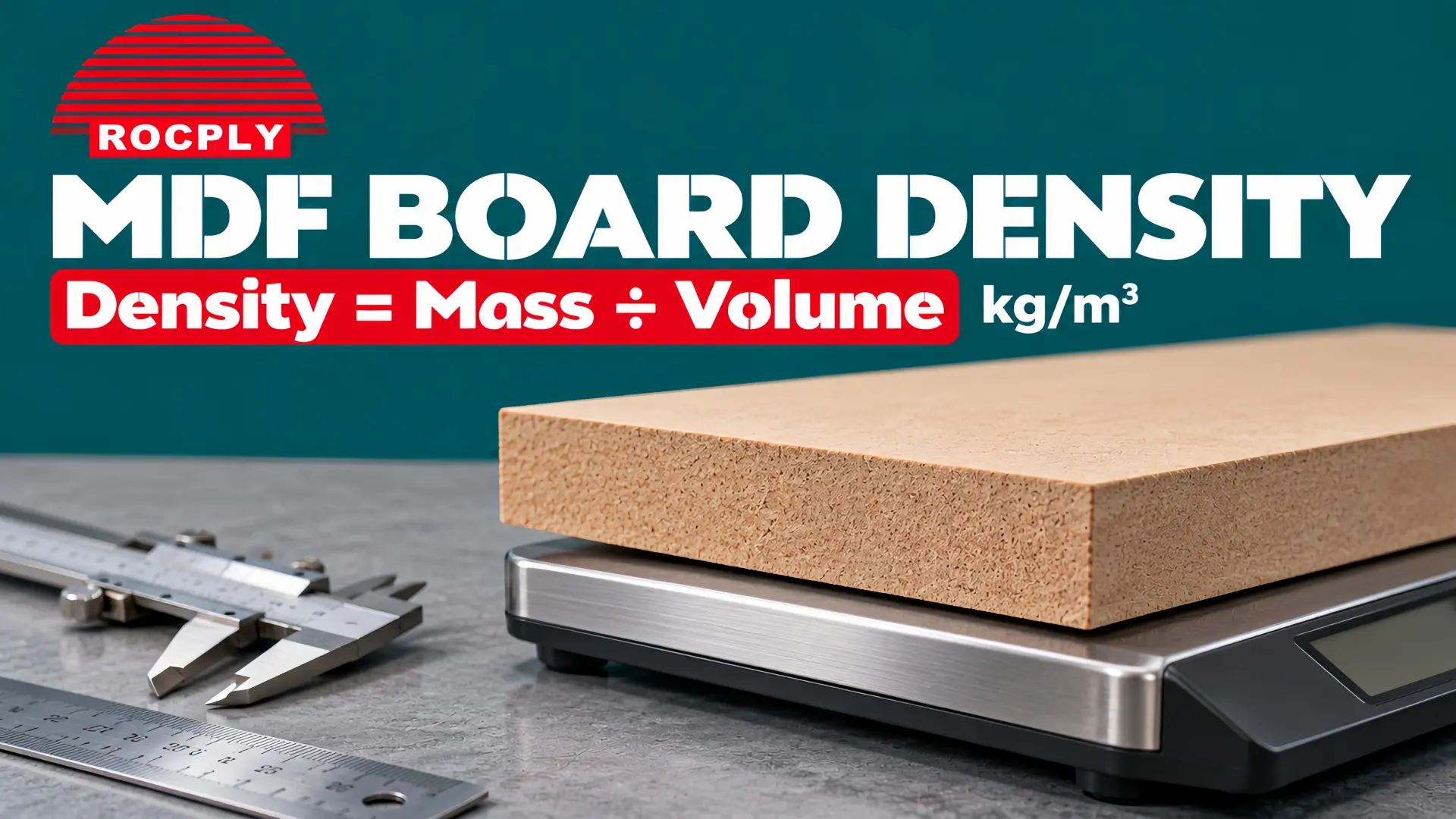
MDF board density is mass per unit volume, normally expressed in kg/m³. Measure it alongside thickness, moisture condition and product identity. Then assess the core, bond, finish and required performance. A higher density reading alone cannot establish that a board meets the order.
The first quality decision belongs in the purchase specification. A target average, an allowed range and an individual minimum mean different things. Agree which one applies before a delivery reaches the inspection bench.
Give the density number a defined role
The WPIF MDF guide gives 700–800 kg/m³ as typical average density for standard forms of MDF. It also describes lighter and denser products. Treat that range as industry context, not a universal acceptance rule.
For our raw standard MDF options, request the offered grade and thickness-specific data. State whether the density figure is a target, declared limit or measured result. Also identify the method and test condition.
An agreed average does not automatically create an individual minimum. Likewise, a measured value above a target is not automatically an upgrade. More mass can affect door hardware, handling and delivery weight without resolving the part’s performance needs.
Calculate MDF board density from measured dimensions
ISO 9427:2003 specifies a density test method for wood-based panels. Formal testing must follow the selected standard. The example below illustrates the arithmetic only; it does not prescribe standard specimen dimensions or conditioning.
| Illustrative input | Value |
|---|---|
| Raw sample length × width × thickness | 100 × 100 × 18.0mm |
| Sample mass | 135g = 0.135kg |
| Sample volume | 0.100 × 0.100 × 0.018 = 0.000180m³ |
| Calculated density | 0.135 ÷ 0.000180 = 750 kg/m³ |
These are assumed example inputs, not ROCPLY test results or pass limits. Use actual dimensions rather than the nominal sheet thickness. Weigh and measure the same sample in the recorded condition. Check instrument calibration, clean contact faces and unit conversion before comparing results.
For a rectangular sample measured in millimetres and grams, the same calculation is: density in kg/m³ = mass in grams × 1,000,000 ÷ (length × width × thickness). Keep the unrounded readings in the inspection file.
Keep the measurement basis consistent
State the moisture and conditioning basis alongside kg/m³. A density value without that basis leaves part of the comparison unresolved. Repeat measurements after conditioning only when the agreed method calls for it.
For faced panels, define whether the order controls core density, finished-panel density or both. A method for core density must account for the added layers. Subtracting a guessed coating weight cannot give reliable core data.
Also agree how to handle readings close to a limit. Keep instrument resolution and rounding consistent with the test and decision procedure.
Sample the delivery rather than the display sheet
Define the lot before choosing samples. Agree the number of packs and sheets, selection method and measurement positions in advance. A convenient offcut from the top sheet cannot represent every board in a shipment.
Record pack, sheet and sample IDs. Then retain each result alongside any agreed summary statistics. Averages can conceal differences between sampled locations. Review minimum and maximum readings where the inspection plan calls for them.
Moisture changes both mass and dimensions. Therefore, compare samples on the agreed moisture and conditioning basis. A handheld moisture reading needs a suitable material setting or correction; it should not silently replace the specified reference method.
Average density does not describe every layer
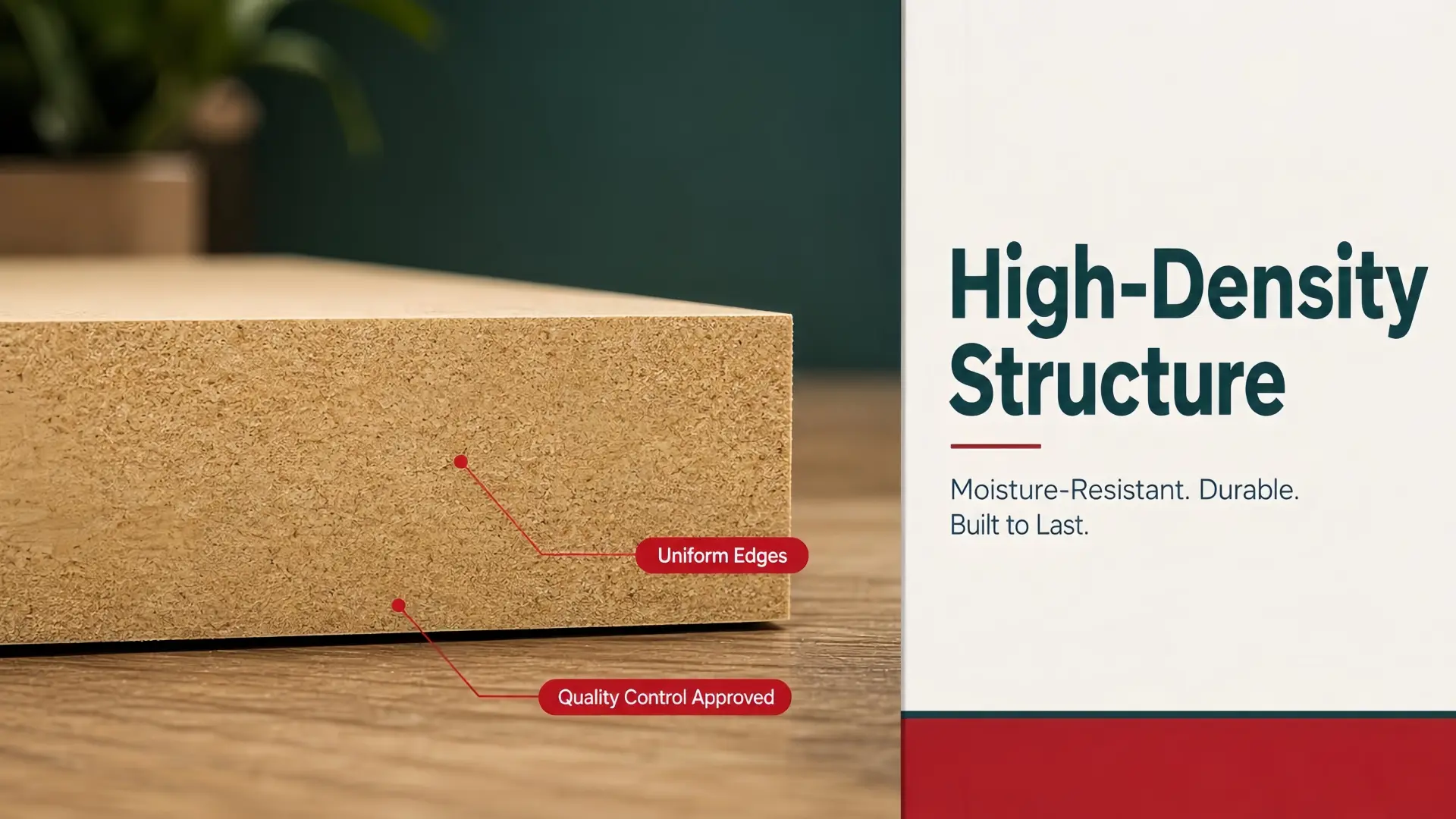
MDF board density averaged across a sample does not reveal its full thickness profile. The WPIF guide describes denser face zones and a less dense core. It also notes that profiles differ between brands and can affect machined finish.
A cut edge can reveal visible damage, loose fibres or a poor routed surface. However, a photograph does not measure local density. Use profile testing where the specification needs it, alongside a controlled machining trial.
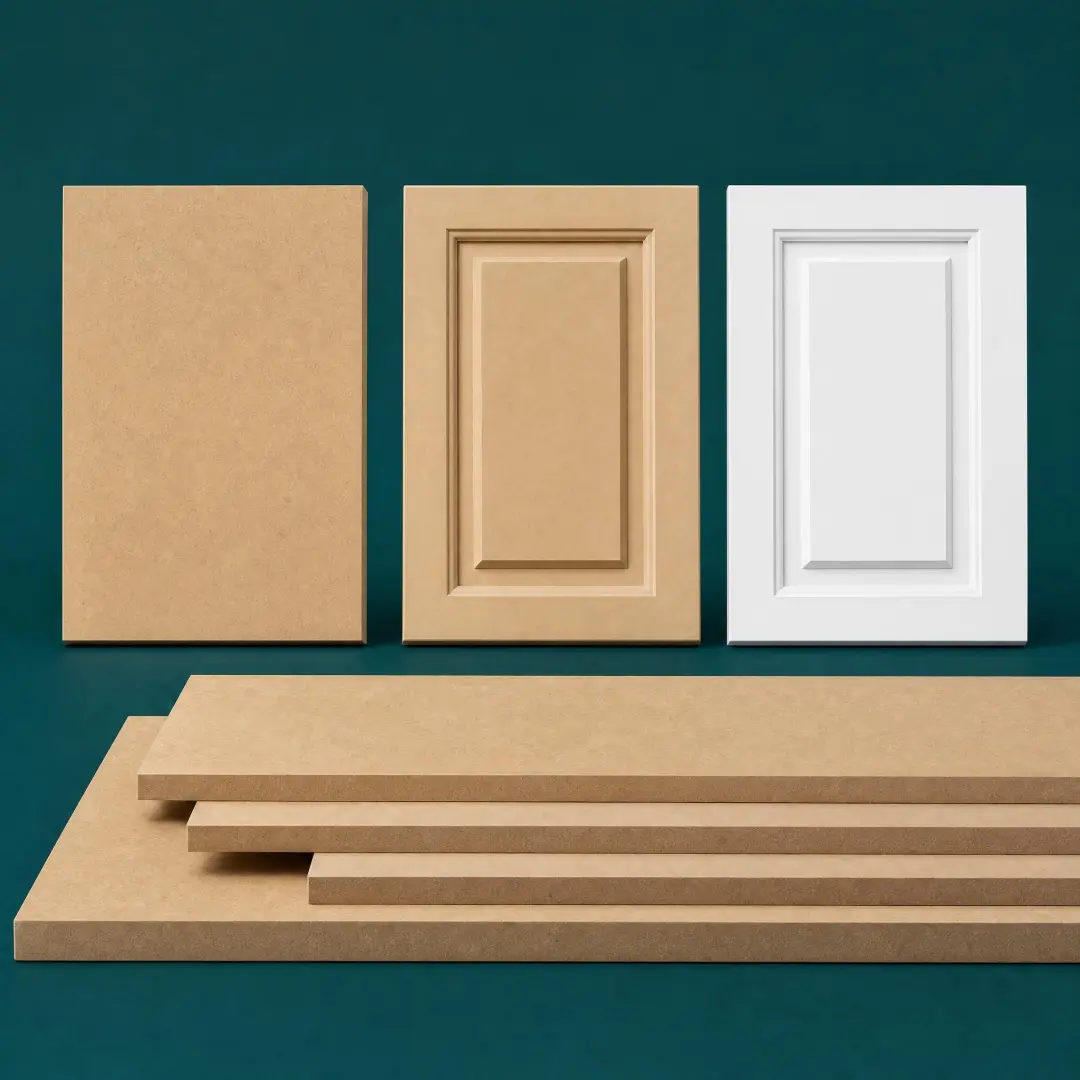
Compare our white melamine MDF options with the core stated separately. Surface layers and adhesive contribute to a finished panel’s mass. Its overall mass and volume do not directly establish the raw core density.
Use a receiving checklist before cutting
| Check | Record | Acceptance basis |
|---|---|---|
| Identity | Product, grade, mill source, pack and lot | Approved order and product documents |
| Dimensions | Actual thickness, length, width and agreed positions | Named tolerances and measuring procedure |
| Flatness and appearance | Bow, twist, face damage, edge damage and contamination | Agreed limits and reference samples |
| Moisture condition | Conditioning, moisture result and method | Product and contract requirements |
| Density | Sample dimensions, mass and calculated value | Agreed target or limits with sampling rules |
| Processing | Routing, drilling, edge finish and fitting trial | Approved part and controlled workshop settings |
| Required performance | Relevant bond, bending, fixing or swelling evidence | Product grade, method and agreed criteria |
| Emissions | Product identity and applicable report or certification scope | Destination and order requirements |
Keep observations separate from conclusions. “Rough routed edge” records a symptom; it does not identify the cause. Check tool wear, feed, cut depth and coating preparation before attributing the result to the board.
Use a repeatable workshop trial
Choose a trial that matches the part’s hardest operation. A flat colour swatch may say little about a deep profile or an edge fixing. Use the intended cutter, hole pattern, connector and finish.
Record tool condition, feed, cut depth and coating sequence. Then keep an approved reference part with those settings and the board identity. This helps separate a supply change from a workshop change.
For repeat orders, use the same comparison method. A visually acceptable sample still needs the agreed measurements and performance evidence. Neither a showroom finish nor an average density number should silently replace the specification.
Request the tests that answer the use
ASTM D1037 includes separate tests for bending, tension perpendicular to the surface, screw withdrawal and thickness swelling. Choose the relevant procedures for the order. A density result cannot replace these different measurements.
Also separate a test method from a product specification. The method explains how to measure a property. The specified grade and contract set the applicable requirements. Match report scope, thickness, conditioning and units before comparing offers.
For humid-use parts, our moisture-resistant MDF guide addresses the exposure question. Density alone establishes neither an MR grade nor an emissions class. Request the evidence for each claim separately.
Hold unresolved lots and preserve the evidence
If a check falls outside an agreed limit, identify the affected lot and refer it for review. Keep the samples, raw readings, photographs and instrument details. Then confirm the result using the agreed verification process before release or rejection.
Compare like with like: the same product, thickness, condition and method. Record any authorised concession against the specific lot. A concession on one delivery should not silently become the specification for repeat supply.
Buyer questions about MDF board density
What is a normal MDF density?
The WPIF guide gives 700–800 kg/m³ as typical for standard forms. Other grades vary. Use the named product’s declared values and agreed limits for acceptance.
Is higher-density MDF always better?
No. The part needs suitable stiffness, bond, machining and fixing performance. Extra mass alone does not prove those properties or make a different grade equivalent.
Can full-sheet weight check density?
Net sheet mass and actual volume can provide an overall check. Exclude packaging. For faced sheets, the result includes the surface layers and adhesive.
Does a smooth edge prove core density?
No. Edge appearance is a useful processing observation. It does not replace a density measurement, profile assessment or the required bond and fixing tests.
How many density samples should a buyer take?
Use the agreed sampling plan for the lot and test method. Set sample numbers, selection, positions and decision rules before inspection. One universal count cannot cover every order.
Download the MDF QC inspection checklist
Use the printable checklist to record the lot, agreed criteria, sample dimensions, mass and receiving decision. For a product review, send ROCPLY your specification, intended parts and required evidence. Keep the MDF board density requirement clear before approving supply.
Post time: Nov-23-2026