

MDF vs Particle Board for Cabinets and Furniture
In an MDF vs particle board choice, MDF usually makes more sense for painted, routed doors. Faced particle board is often an efficient choice for flat cabinet boxes. A cabinet can use both. However, shelf loads, joint design and wet exposure still need checks for the exact board grade.
We recommend specifying the core for each part. The useful question is which board suits the machining, finish and fittings that part needs.
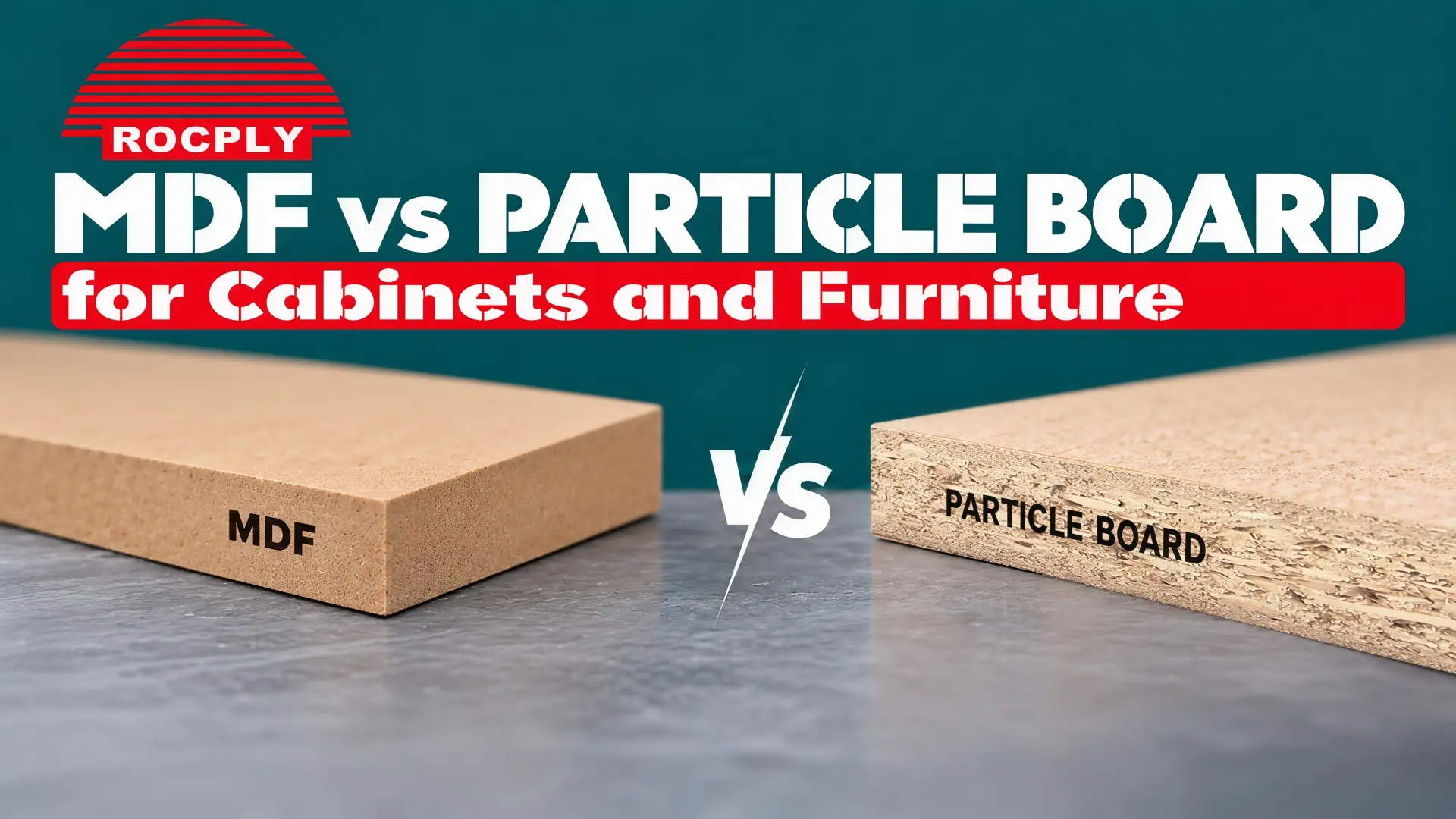
MDF vs particle board at a glance
MDF-board means medium density fibreboard. It uses wood fibres bonded with resin. Particle board, also called chipboard, uses wood particles. Common furniture boards have finer particles at the faces and a coarser core.
| Buyer check | MDF | Particle board |
|---|---|---|
| Core texture | Fine wood fibres | Wood particles with finer face layers |
| Painted profiles | A useful starting point for routed fronts | Check filling, edge finish and machining needs |
| Flat faced panels | Available with decorative surfaces | Common in laminated cabinet boxes |
| Screws and fittings | Check face and edge joints separately | Match the fitting and pilot hole to the board |
| Shelf capacity | Depends on grade, span and support | Depends on grade, span and support |
| Water exposure | Select the correct moisture grade | Select the correct moisture grade |
| Buying cost | Include machining and paint work | Include facing, edging and accepted-part yield |
These are selection pointers. They are not a ranking of every MDF and chipboard product. In particular, board density alone cannot prove shelf capacity or hinge life.
One cabinet can use two cores
A painted kitchen front and a flat wardrobe side have different needs. The front may need a deep profile and a smooth paint edge. The side may need a clean faced surface, edge banding and repeatable drilling.
Therefore, an MDF vs particle board decision can lead to a mixed specification. A routed MDF front can sit on a faced particle board box. Each part still needs its own grade, thickness, joints and finish.
Keep that distinction in the bill of materials. Record the box core, door core, back panel and shelf as separate lines. Then check the sizes and hardware against the assembled cabinet drawing.
Our particle board range includes raw and faced options. Confirm the exact core and surface in the quote. A colour or decor name does not identify the board underneath.
Painted doors favour a machinable core
MDF is a practical starting point when the front needs a routed groove, moulded edge or painted profile. Its fine fibres help create a workable surface through the cut.
The WPIF MDF guide describes its use for profiling, painting and laminating. It also notes that density through the thickness varies between brands. Thus, similar-looking boards can machine and finish differently.
Trial the deepest profile on the proposed board. Inspect the cut surface, edge strength and paint build after curing. Also check corners and any grooves close to hinge holes. A smooth bare face does not prove a sound finished door.
Compare our raw standard MDF options against that sample brief. Include edge sealing, primer and the final coating system. Particle board can accept coatings too, but the preparation must suit its exposed texture.
Hinge performance belongs to the whole joint
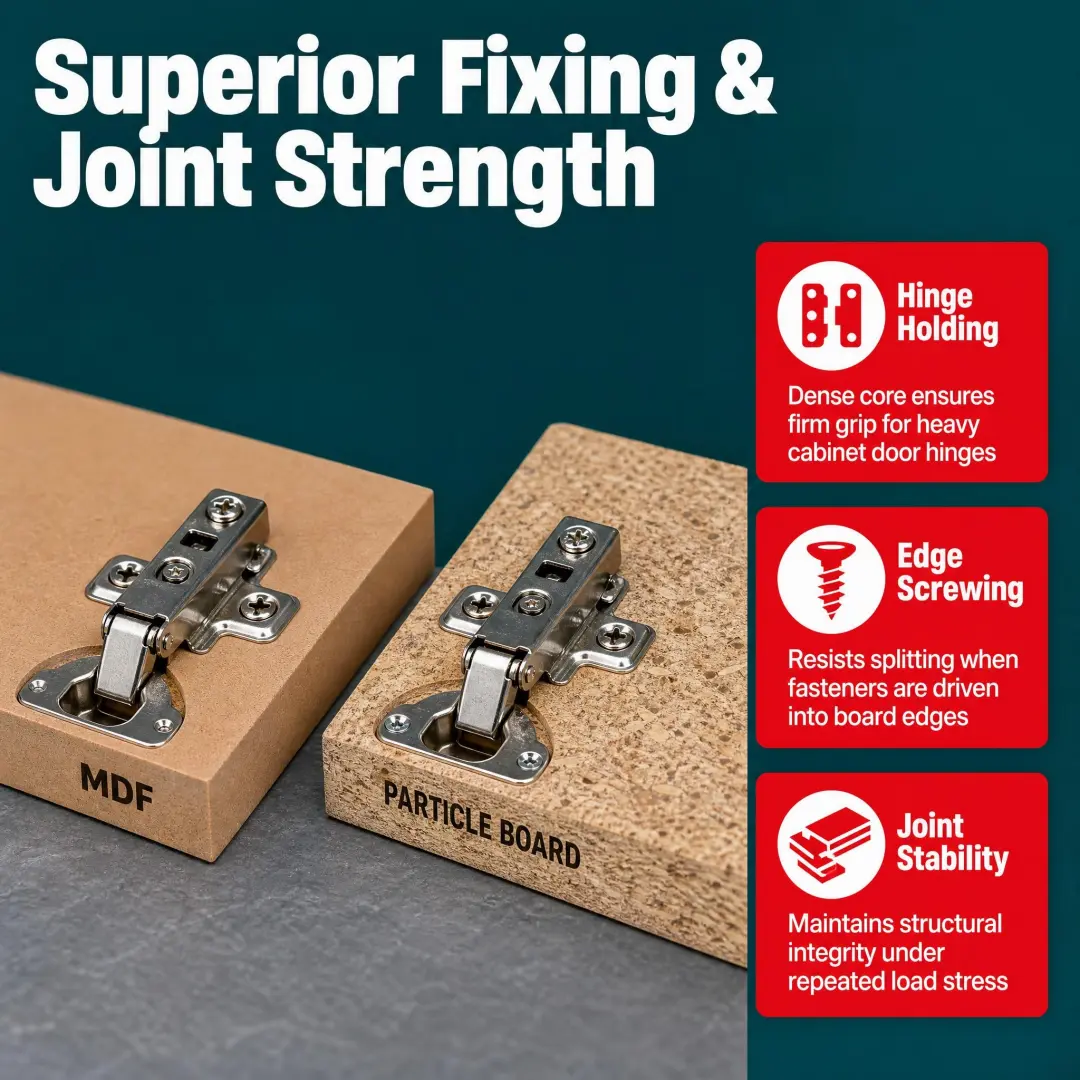
A failed hinge often tells you more about the joint than the core name. Door weight, plate screws, hole depth and edge distance all affect the result.
The WPIF fixing guidance recommends pilot holes for both MDF and particle board. Its advice distinguishes the materials and fixing positions. Follow the board and fitting suppliers’ instructions for the actual assembly.
For an MDF vs particle board comparison, use matched joint samples. Keep the fitting, screw, hole pattern and assembly method under control. Test each proposed core as it will be used in the finished unit.
- Separate screws into the panel face from screws into its edge.
- Record board thickness, screw type, pilot hole and distance from the corner.
- Check the assembled hinge joint with the intended door size and mass.
- Assess repeated assembly if the furniture will be taken apart and rebuilt.
A screw withdrawal value is useful evidence. However, it does not cover every force on a hinge plate or cabinet corner. Pair board data with a suitable joint or furniture test.
Read the grade before the moisture claim
Humidity, a brief splash and a plumbing leak are different exposures. First, define which one the cabinet must handle. Then select the grade and protection for that condition.
For example, the WPIF particleboard guide identifies EN 312 P2 for dry interior fitments, including furniture. P3 covers non-load-bearing boards for humid conditions. These classes describe products; they do not approve every cabinet detail.
Moisture-resistant grades of either core still need protection from direct wetting. Specify exposed edges, service holes and joints, as well as the faces. A decorative surface cannot upgrade the core’s moisture class.
Our moisture-resistant MDF range provides a product route for humid interior briefs. Confirm its stated limits. For sink bases, include leak access, a tray or drainage, and a repair plan in the cabinet design.
A core name does not set a shelf span
Both materials can serve as shelf candidates. Neither earns a safe span just from its name. Check thickness, stiffness, shelf depth, clear span, supports and the expected load.
Also allow for sag under a load held over time. A shelf full of books differs from a lightly used display. Compare the exact board data and support layout before changing the core.
An 18 mm MDF panel and an 18 mm particle board panel share a nominal thickness, not a load rating. Request data for each product. If plywood is also under review, our plywood vs MDF comparison supports that separate choice.
Compare cost per accepted part
The cheapest sheet is not always the cheapest finished component. For MDF vs particle board, compare two routes to the same approved part.
Cost per accepted part = total material, processing, finishing, inspection and packing cost ÷ number of accepted parts.
Include cutting yield, edging, paint work and rework in that total. Meanwhile, hold the part size, finish, hardware and acceptance rules constant. Otherwise, the offers price different products.
Density affects handling mass, but weigh the supplied panel or use its stated density. Do not apply one generic MDF weight to all brands. Finally, compare packing, lifting and transport needs using the finished order.
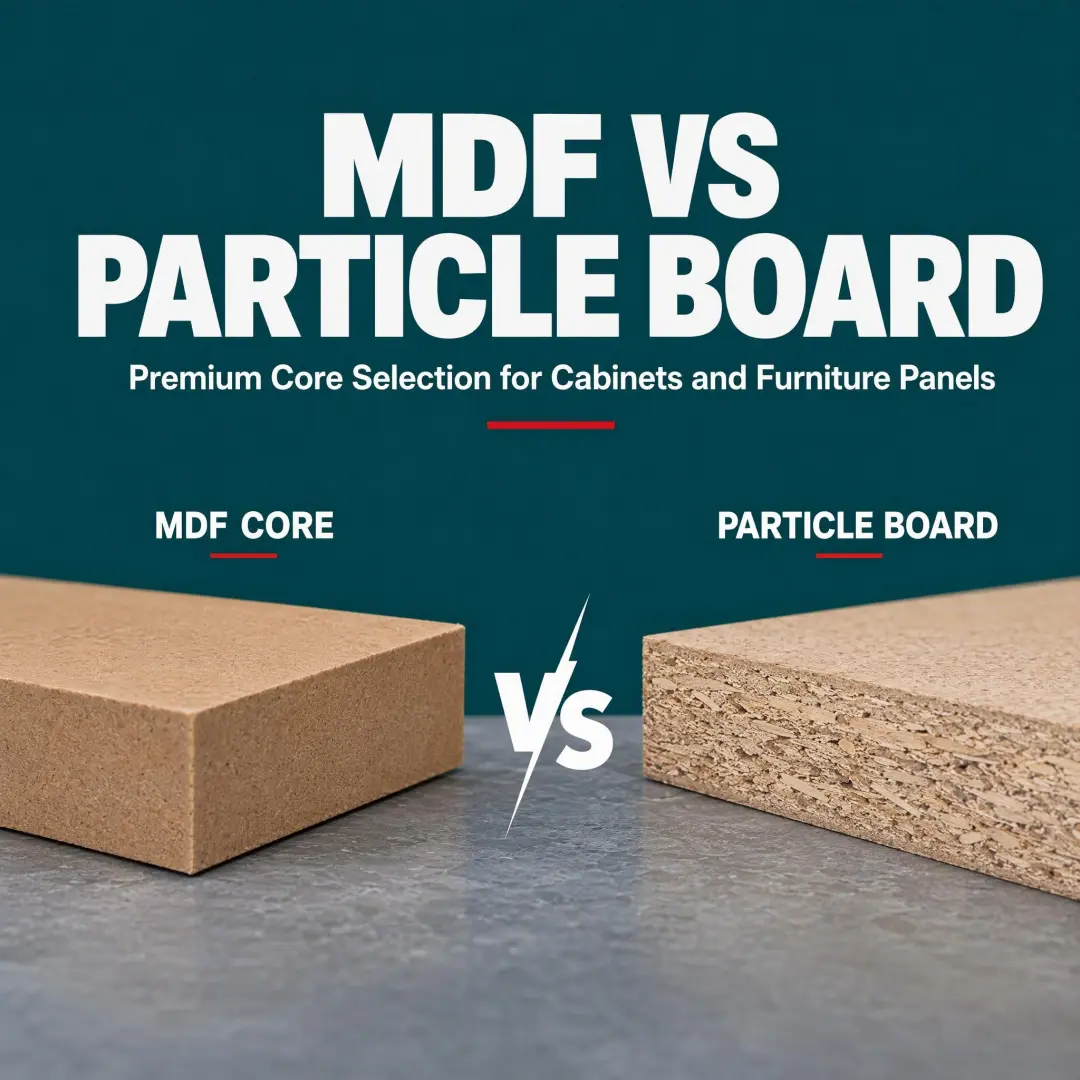
Which core suits each cabinet part
| Part or brief | Starting choice | Approval check |
|---|---|---|
| Painted, routed front | MDF suited to the profile | Cut quality, coating and hinge detail |
| Flat faced cabinet side | Faced particle board or MDF | Core grade, edging and drilling |
| Loaded shelf | Either, with suitable design | Stiffness, span, support and long-term sag |
| Humid indoor cabinet | Verified moisture-resistant product | Exposure limits and edge protection |
| Furniture for repeat assembly | Core and connector system together | Joint performance after rebuilding |
Approve a production sample
Before a bulk MDF vs particle board order, approve a small run using the proposed sheets and shop settings. Check routed edges, drill breakout, edge bond and flatness after finishing. Next, assemble the real hardware and inspect the completed part.
Request the board standard, grade and emissions report for the exact product and destination. Record the mill, product code and batch link. A report for another thickness or board type may not cover this order.
Keep the approved sample and acceptance notes. On delivery, check pack marks, thickness, surface damage and flatness against that file.
MDF vs particle board buyer questions
Is MDF always stronger than particle board?
No single ranking covers every property and grade. Compare the required stiffness, bending strength, bond and joint performance for the part.
Is melamine board the same as particle board?
Melamine describes a surface. That surface can cover different cores, including MDF and particle board. Ask for both the facing and core specification.
Can a cabinet use MDF doors and particle board sides?
Yes, where each part suits the design. Check door weight, hinge plates, box joints and the moisture grade for the complete unit.
Request a cabinet core comparison sheet
Send us the part list, dimensions, finish, hardware, shelf loads, exposure, quantity and destination. We can help compare available MDF and particle board options against your brief. Request samples with the exact grade and thickness needed for technical approval.
Post time: Oct-19-2026