
Raw MDF vs Melamine MDF for Cabinets and Shelving
Raw MDF vs melamine MDF is a choice about the finish and the work needed to produce it. Choose raw MDF for painted profiles or a custom applied surface. Choose melamine-faced MDF when a factory decor suits the flat parts. Then check the core grade, both faces and the edge plan. The surface name alone gives no wet-use approval or shelf rating.
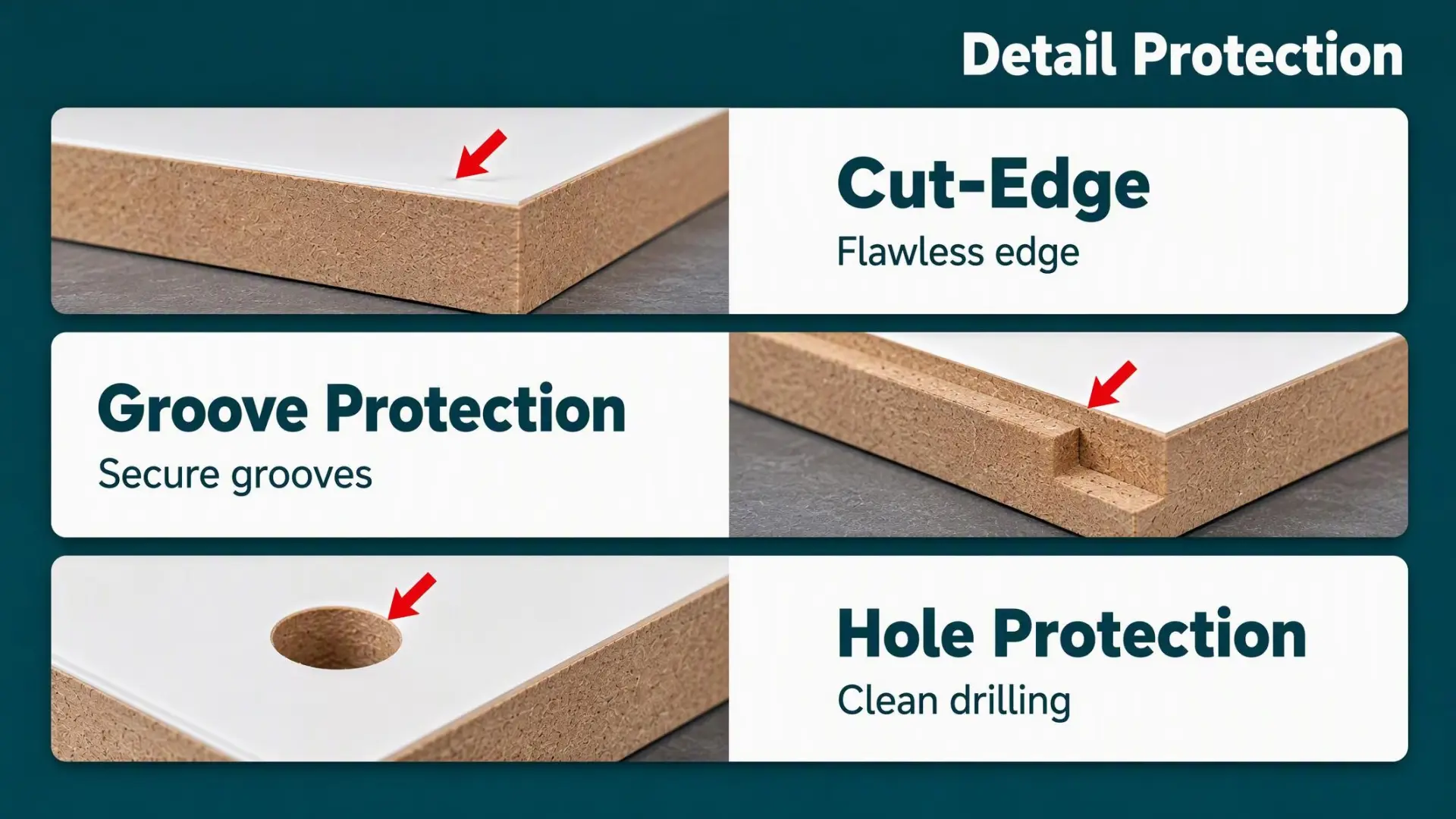
The key detail often appears after cutting. A finished face can arrive from the mill, while each new edge, groove or hole exposes the core again.
Raw MDF vs melamine MDF comparison
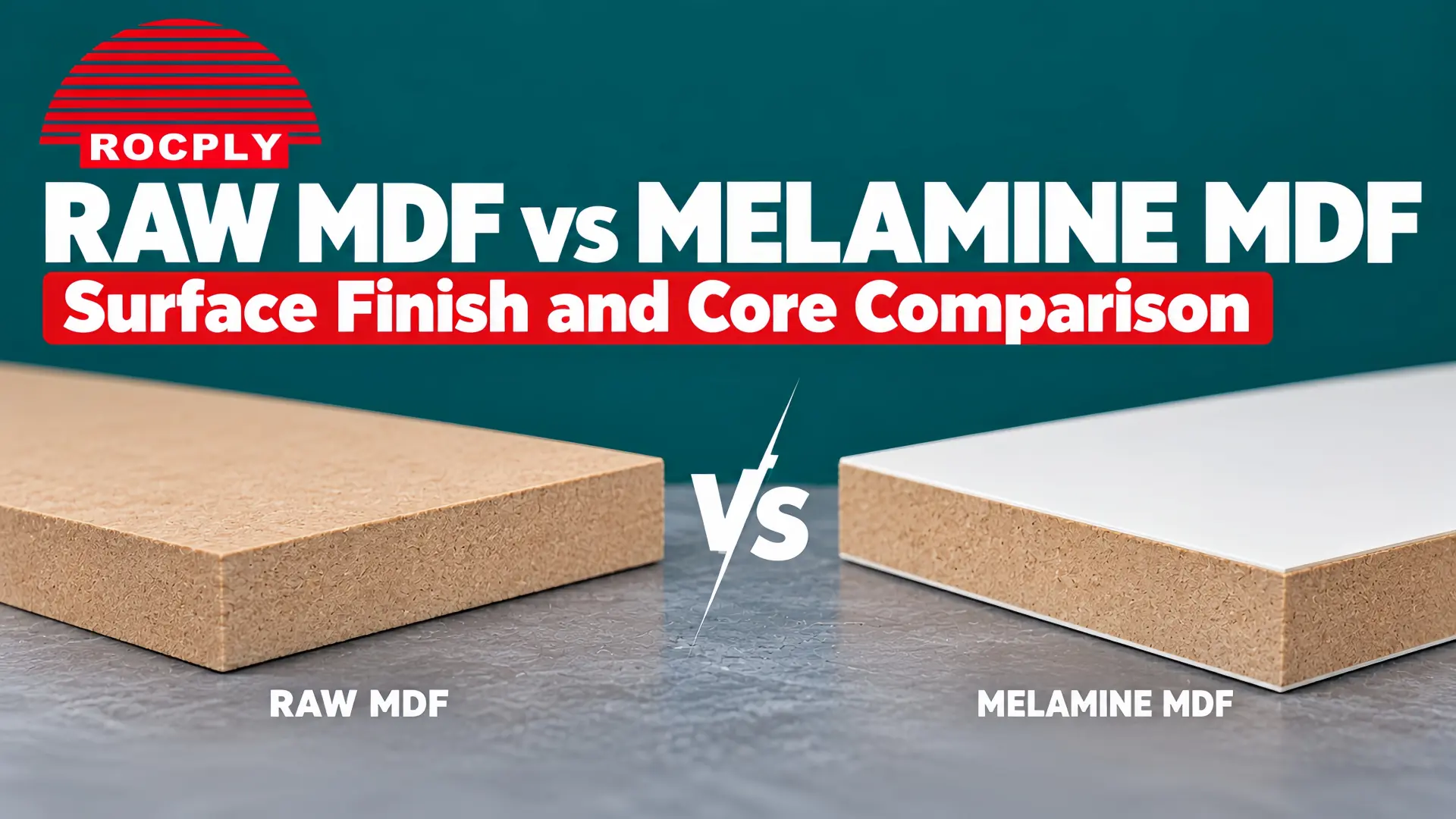
Raw MDF has no decorative face coating. Melamine MDF has an MDF core with a factory-applied decorative surface. Confirm the actual face construction when buying, since trade names can cover different products.
The Composite Panel Association TFL guide explains one common method. Resin-treated decor paper bonds directly to the substrate under heat and pressure. Thermally fused laminate, or TFL, can use MDF or particle board as its core.
| Job requirement | Raw MDF | Melamine-faced MDF |
|---|---|---|
| Custom paint colour | Useful starting point | Confirm coating compatibility with the exact face |
| Routed painted profile | Machine, prepare and coat | Plan how exposed routed areas will be finished |
| Flat factory decor | Needs a further finish | Decorative face already present |
| Cut edges | Prepare and finish to the design | Band or seal as specified |
| Back face | Specify its finish | Confirm the supplied back surface |
| Humid interior use | Choose a suitable core grade | Choose a suitable core grade beneath the face |
Route one is to machine before finishing
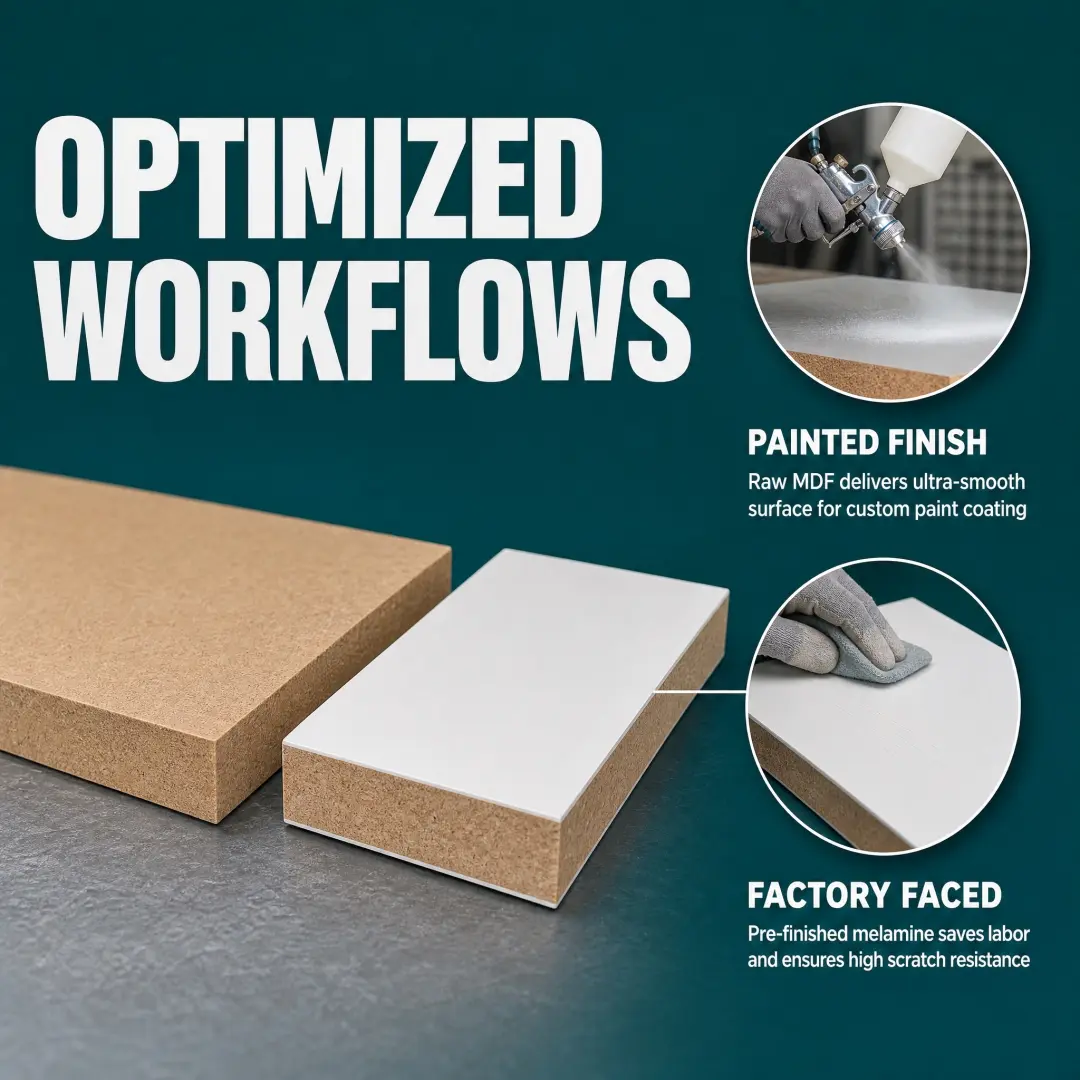
Raw MDF gives the workshop control over the final surface. Cut, drill and form the part before completing the agreed paint or applied finish. This route can suit shaped fronts, custom colours and small batches.
Our raw standard MDF range provides a starting point for that brief. Choose a board suited to the profile, then trial the whole coating system. Include the cut edges and corners in the sample.
Also allow for drying, curing, sanding and handling between coats. The board may be ready for machining, yet the finished part still needs shop time. Confirm when the coating can accept packing and assembly.
For shaped interior details, our grooved MDF wall panels offer another product route. Specify whether the grooves remain exposed, receive paint or need another finish.
Route two protects a factory face
Melamine-faced MDF can remove the need to paint the supplied decorative faces. The workshop still cuts, drills, edges and assembles the parts. Therefore, the savings depend on how well that factory finish matches the job.
Compare our white melamine MDF options against the approved decor sample. State the finish on each side, its texture and the required edge match. A white colour name alone leaves too much open.
Next, trial the cutting and drilling setup on the proposed panel. Inspect the finished faces for chips, scratches and breakout. Keep the visible side clear of glue marks and damage during edging and assembly.
In a raw MDF vs melamine MDF order, name which shop applies the final face finish. This makes the process handover clear and helps prevent gaps in responsibility.
Specify every exposed edge
A clean factory face does not cover a fresh saw cut. The same applies to a hinge recess, service hole or groove through the face. Mark these areas on the part drawing before approving the finish.
The WPIF MDF guide notes that edges absorb more than faces and may need sealing. It also explains that moisture-resistant MDF is not waterproof. Choose edge protection for the actual exposure.
For example, take a 600 × 300 mm shelf. It has 0.18 m² per face and 1.8 m of perimeter. If all four edges need banding, quote that full 1.8 m. A front-edge-only item has a different specification. These figures describe geometry, not shelf capacity.
Specify the band material, thickness, colour match and adhesive system. Also define treatment for internal cut-outs and holes. A front strip gives no protection to an untreated rear edge near a wet wall.
Keep core grade separate from the face
Raw describes the unfinished surface. It does not mean one fixed MDF grade. Likewise, melamine describes a facing, not proof of a moisture-resistant core. Ask for the core designation behind either offer.
For humid indoor briefs, review our moisture-resistant MDF options and confirm the stated use limits. Then match the finish, edges and joints to that exposure. A faced standard board and a faced moisture-resistant board need separate order lines.
Shelves need a separate load check too. Compare core properties, thickness, clear span, supports and long-term sag. A decorative face alone does not establish a span or a permitted storage load.
Check both faces and the final size
A visible face sample answers only part of the question. Record the back face and any balancing layer as well. The two sides may serve different visual roles, but both belong in the approved build.
The WPIF finishing guidance explains that balancing laminates or veneers generally help avoid panel deformation. Agree the complete face-and-back build with the panel or finish supplier.
Then measure the finished sample. Allow for added layers and edging where they affect grooves, door gaps or hardware clearance. Confirm whether the quoted thickness describes the core or the finished panel. Do not assume every facing adds the same amount.
Match the decor with a physical sample
Approve the decor under the room’s intended lighting. Compare the edge band and face together, rather than approving them from separate photos. Record the decor code, texture, gloss and grain direction where relevant.
For a run of tall doors, mark which end faces up on the cutting list. A rotated woodgrain part can meet its dimensions yet fail the visual brief. Confirm any batch-matching needs with the supplier before cutting.
Also agree which chips or scratches justify rejection before production. Use a physical sample and a written acceptance rule. Ask for the relevant surface test method and result when wear or cleaning matters. A core emissions report answers a different question from face resistance.
Write three lines into the quote
A raw MDF vs melamine MDF RFQ should separate the core, faces and edge treatment. Give every supplier the same part drawing and approval sample.
- Core: standard, grade, nominal thickness, tolerance, sheet size and required emissions evidence.
- Faces: raw or specified decor, both sides, texture, coating system and agreed surface performance.
- Edges and openings: banding or sealer, adhesive, hole treatment, final dimensions and responsibility for site cuts.
Finally, approve one completed part through the intended process. Check flatness, finish, edge bond and fitting clearance. Retain that sample and its production notes, then use them to assess deliveries.
Raw MDF vs melamine MDF questions
Can you paint melamine MDF?
Use a coating system approved for the exact factory face, with the specified preparation and a cured sample. Purpose-made paintable faces and standard decorative melamine surfaces require different checks.
Is melamine MDF the same as HPL-faced MDF?
No. Direct-fused decor paper and a separately made high-pressure laminate are different surface constructions. Ask which one the quote includes, along with its test evidence and edge detail.
Which option needs less work?
Melamine-faced MDF can reduce face finishing for flat parts. Raw MDF can simplify custom paint and profiling work. Compare the complete process, including cuts, edges, curing and rework.
Request an MDF surface and finish guide
Send us your part drawings, core grade, thickness, face sample, edge plan, exposure, quantity and destination. We can help compare available raw and melamine-faced MDF options. Include the intended machining and coating steps so the proposed supply matches your workshop process.
Post time: Oct-26-2026