
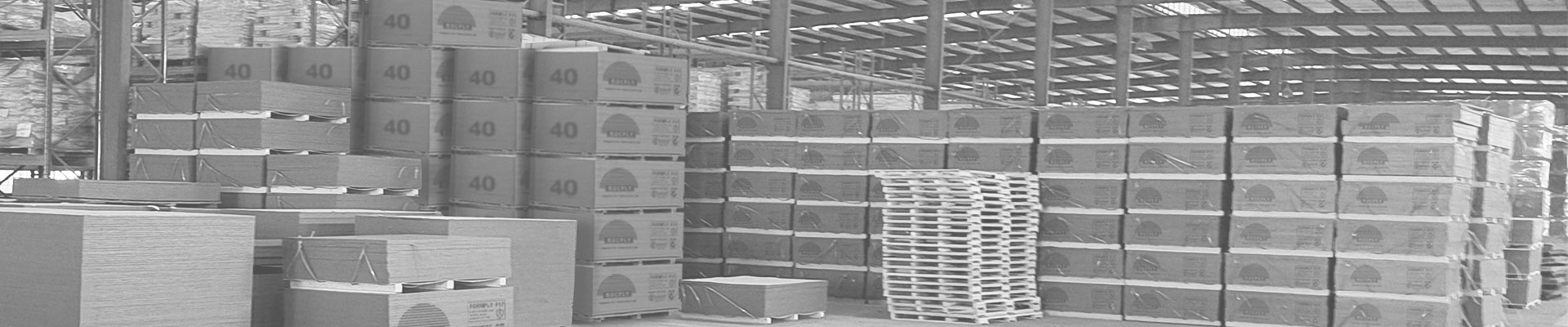
The moisture resistant MDF vs standard MDF choice starts with exposure. Standard MDF suits dry indoor work. A verified moisture-resistant grade can suit humid interiors within its stated limits. Neither label approves standing water, a plumbing leak or an outdoor job. Match the grade to the water source, then protect the completed part.
We recommend writing the exposure into the brief before choosing the board. A bathroom cabinet above a dry floor faces different risks from a sink base with hidden pipework.
Describe the water before the room
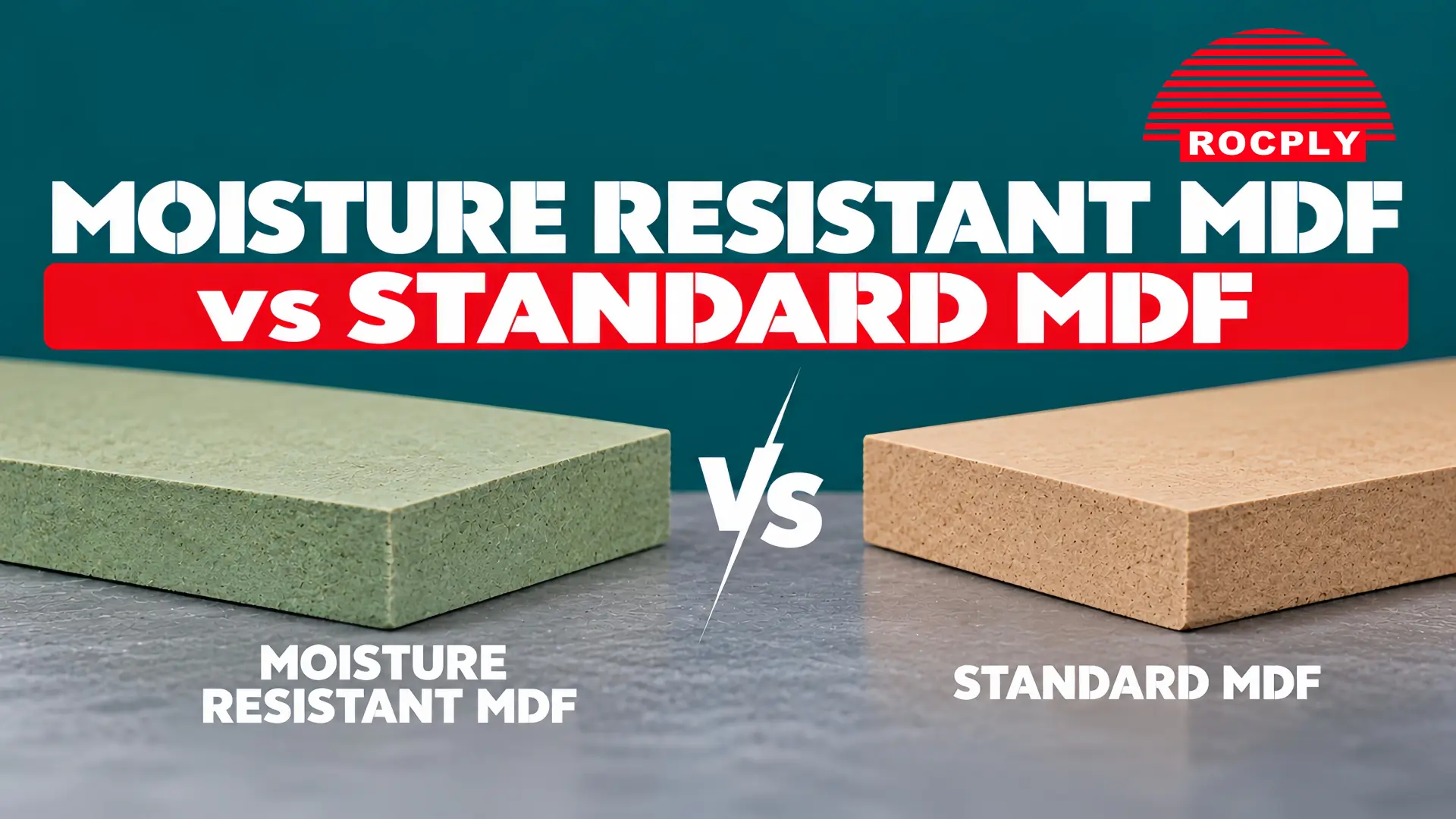
Room names hide important differences. Humid air, droplets on a face and water trapped beneath a cabinet reach the panel in different ways. Therefore, record the likely water path and how the part can dry.
| Exposure | Starting decision | Detail to resolve |
|---|---|---|
| Dry, protected indoor air | Standard MDF may suit | Finish, joints and storage conditions |
| Humid indoor air | Consider a verified MR grade | Declared use, ventilation and finish |
| Occasional splash on a finished face | Review the complete cabinet system | Edges, joints, drying and prompt cleaning |
| Repeated condensation or hidden leaks | Resolve the water source and design | Drainage, access and material suitability |
| Standing water or direct weather | Ordinary interior MDF is not the starting specification | Choose a system approved for that exposure |
This table screens the exposure. It gives no universal safe wet time. For dry furniture and joinery, our raw standard MDF range provides a product route once the finish and part design are clear.
What the moisture-resistant grade changes
MR MDF uses a formulation and manufacturing process intended to improve performance under the declared moisture conditions. However, the panel still contains wood fibres. It can still change size as its moisture content changes.
The WPIF MDF guide distinguishes dry-use and humid-use grades under EN 622-5. It also states that moisture-resistant panels are not waterproof. Verify the exact designation on the supplier’s documents.
For a moisture resistant MDF vs standard MDF review, compare named products rather than two generic labels. Ask which thickness, grade and manufacturing source the evidence covers. A report for a different product may not support the offer.
Read the swell test in its proper scope
Thickness swelling measures a change after a defined test. The method, conditioning and thickness band matter. Published data from two named products illustrate how to compare the entries:
| Named product | Thickness band | Published EN 317 thickness swelling limit after 24 hours |
|---|---|---|
| MEDITE MR | Over 12 mm up to 19 mm | Less than 8% |
| MEDITE PREMIER | Over 12 mm up to 19 mm | Less than 14% |
These are declared limits for those products, not measured ROCPLY results or universal MDF requirements. They show why a useful comparison names the method and thickness. They do not promise zero swelling or 24 hours of safe leak exposure.
Next, check whether the supplier provides results from a test or a declared specification limit. Record that distinction. A short product sheet and a batch-linked laboratory report serve different purposes.
The cabinet detail still controls water entry
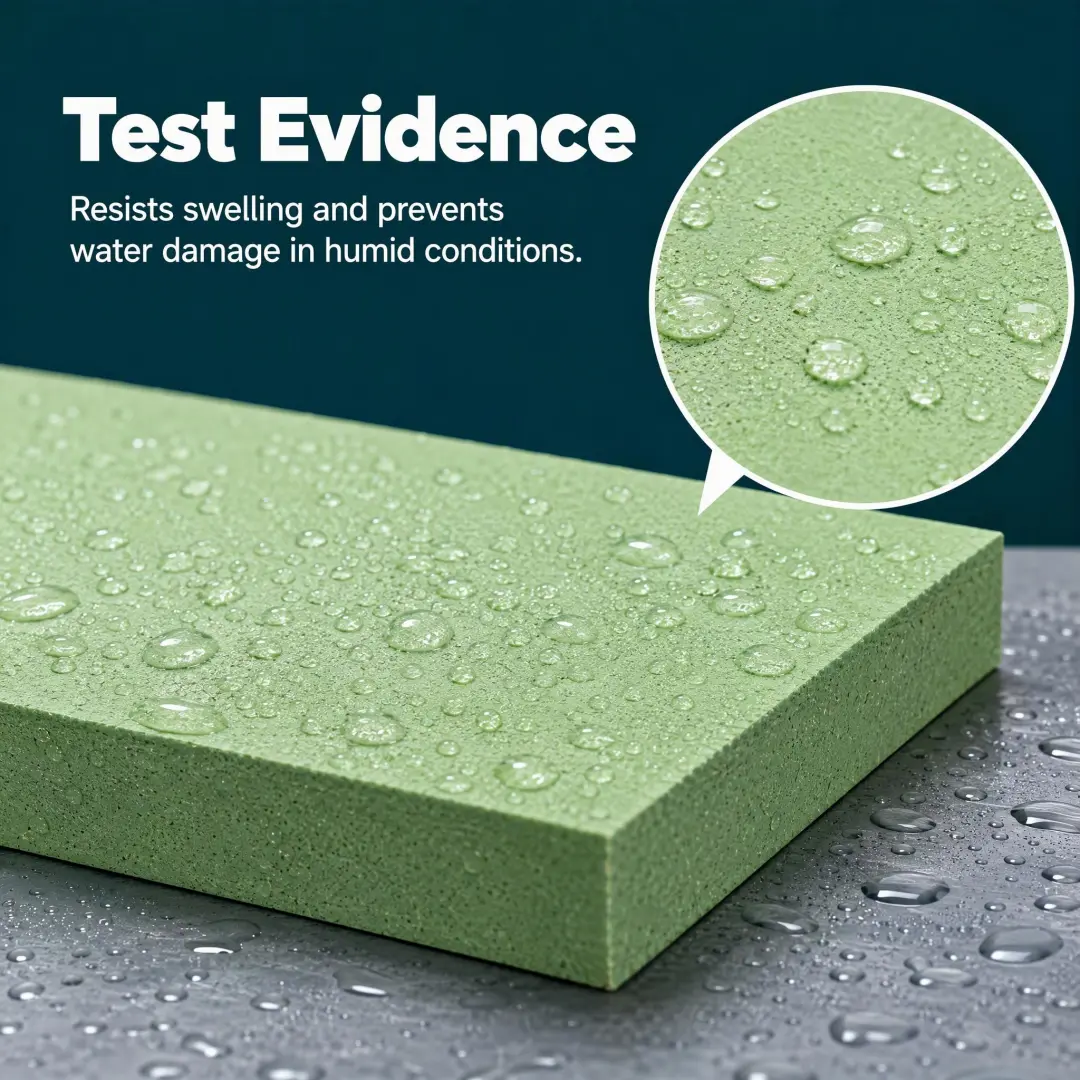
A better core does not close a gap around a pipe. Check where water can enter before specifying the board upgrade. A small unfinished cut-out can leave a path behind a sound decorative face.
- Mark exposed lower edges, rear edges, routed grooves and service openings on the drawing.
- Specify a compatible coating, sealer or edge system for those areas.
- Provide access to plumbing joints so a leak can be found and repaired.
- Review trays, drainage and separation from damp floors or walls.
- Agree how installers will treat any new site cuts.
For a sink cabinet, review the base and pipe openings together. Also make the affected parts accessible for inspection. The board grade forms one part of that design; it cannot replace a water-management plan.
Treat the face and core as separate specifications
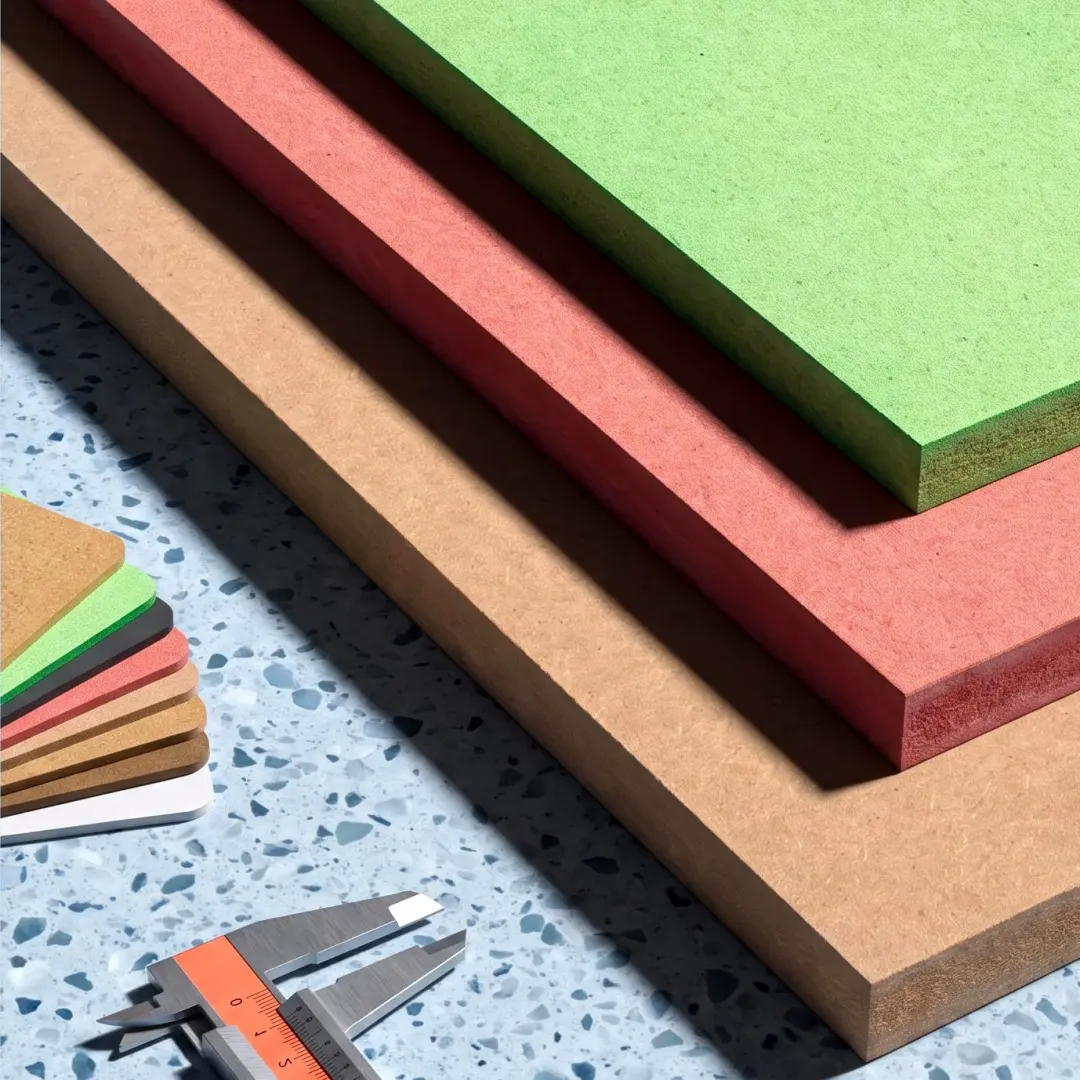
A white face or a painted surface does not identify the core underneath. Our white melamine MDF options should be reviewed with a separate core-grade requirement. State both in the order.
Likewise, a green core is an identification aid, not proof of performance. Check the product marking and data sheet. The selected finish must also suit the intended use, including the cut edges and back face.
For profiles such as our grooved MDF wall panels, review the coating inside the grooves and at ends. Machining creates new surfaces that need the specified protection.
Compare the upgrade by part
A room-wide upgrade may hide where the risk sits. A high cabinet away from pipes and a sink base do not share the same exposure. List each part, its water source and the detail needed to protect it.
For example, compare a dry wardrobe shelf with a laundry cabinet beside a cold wall. The first brief may favour standard MDF. The second needs a check for humid air, condensation and drying. Choose from the verified product range after that review.
Price each option on the same basis. Include the core, machining, coating, edge treatment, fittings and installation. A cheaper sheet with an incomplete finish allowance does not make a useful comparison.
Where different grades are selected, identify them on the cut list and delivery packs. This helps the workshop keep the intended board in each part.
Check load and joints separately
Moisture resistance does not settle every design question. A shelf still needs stiffness, clear span, supports and long-term sag checks. A door still needs suitable hinge fixings and an acceptable finished mass.
Compare those properties for the actual grade and thickness. If another panel family is under review, our plywood vs MDF comparison helps assess the separate load and joint needs.
Install dry panels into a ready space
Do not confuse an MR grade with permission to install into a wet building. Finish wet trades and address damp backgrounds first. Follow the maker’s storage and conditioning instructions before machining, coating and fixing.
Store sheets flat, supported and protected from rain and floor moisture. Then check the delivered condition against the order. Record thickness, flatness, damage and pack identification before the sheets enter production.
Set aside panels with swollen edges or damaged faces for review. Drying alone does not prove that an affected part still meets its fit, finish or strength requirements.
Put the exposure and proof into the RFQ
A moisture resistant MDF vs standard MDF RFQ needs more than the room name. Send the part drawing, water exposure, core standard, grade, thickness and sheet size. Add the finish, edge system, required emissions evidence, quantity and destination.
Ask for the technical data sheet, relevant test evidence and a link between the product and supplied packs. Agree the acceptance checks before production. Finally, approve a finished sample with the intended machining, coating and fittings.
Also record the required emissions classification separately from moisture resistance. If a supplier proposes another board later, review its evidence before accepting the change. Keep the approved product identity on repeat orders so an MR label alone cannot stand in for the agreed specification.
Moisture resistant MDF vs standard MDF questions
Is moisture-resistant MDF waterproof?
No. Ordinary interior MR MDF is for its declared humid-use conditions. Direct wetting, leaks and standing water still require a different exposure assessment and suitable protection.
Can paint turn standard MDF into MR MDF?
A coating can form part of moisture protection, but it does not change the core’s certified or declared grade. Specify the core and coating as separate requirements.
How long can MR MDF stay wet?
There is no universal safe wet time. A laboratory swelling test does not provide a leak deadline for every cabinet. Follow the product’s use limits and remove water promptly.
Request an MR MDF specification
Send us the intended exposure, drawings, thickness, finish, edge details, quantity and destination. We can help compare available board options against the brief. Use this moisture resistant MDF vs standard MDF guide to identify the product evidence your technical team needs.
Post time: Nov-02-2026