
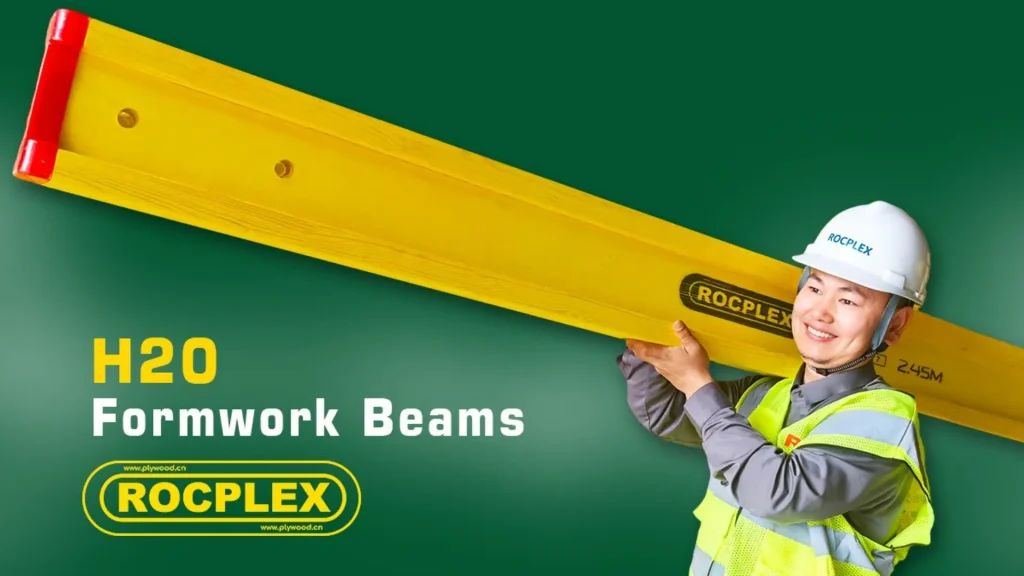
A slow formwork cycle usually does not come from one dramatic failure. It comes from small problems that repeat every day. The timber is heavy to move. The ends get damaged too fast. The beam length does not suit the layout. The crew spends time fixing parts instead of pouring concrete. That is why the right H20 formwork beam matters. ROCPLY current H20 beams positions this product as a lightweight solid-web timber beam for wall and slab formwork, made from high-quality fir, with finger-joint technology, melamine resin-based glue, and a stated weight of about 4.5 kg per metre.
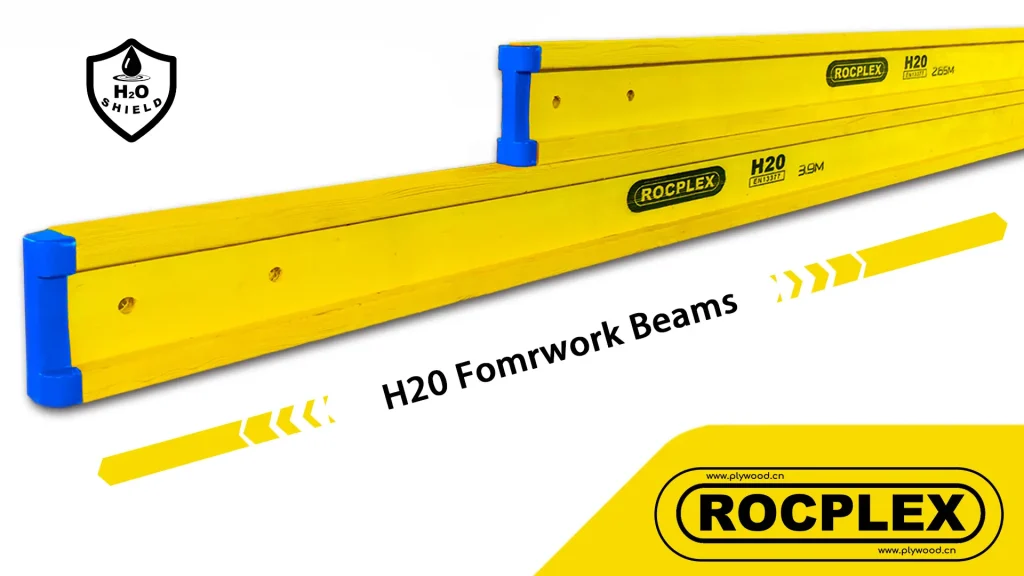
ROCPLY also shows that its H20 range is not a one-length item. The site lists standard lengths from 1.8 m to 5.9 m, notes special manufacture up to 12 m, and says the beam can be used across different formwork systems. That matters for buyers who want smoother slab cycles, cleaner planning, and less waste from cutting and reworking stock on site.
When an H20 formwork beam earns its place
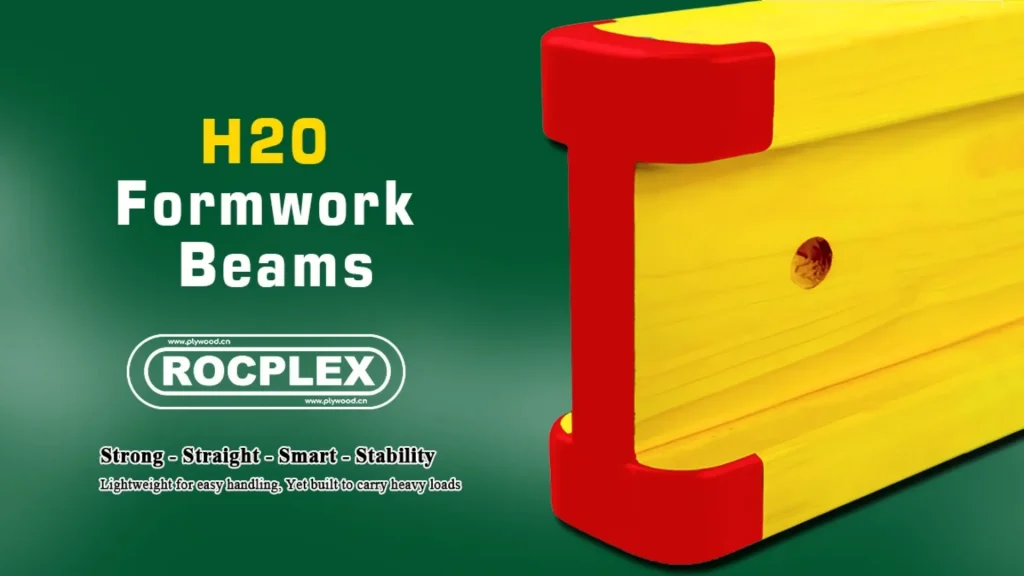
An H20 formwork beam earns its place when the crew needs a repeatable member for slab or wall formwork that stays easier to handle than heavy solid timber, yet still offers good stiffness and predictable site use. ROCPLY presents its beam as suitable for both wall and floor slab formwork and highlights the solid-web design, polyurethane cap-sealed ends, and optional plastic protection to reduce edge damage and extend service life.
This is also why H20 timber beams remain a familiar format across international formwork systems. The European standard EN 13377 covers prefabricated timber formwork beams, including classification, requirements, assessment, and production control. In practical terms, that means the market treats these beams as a defined product category, not as improvised site timber cut to shape.
A good internal reference here is ROCPLY Formwork Timber category, which places H20 beams beside other formwork timber products rather than mixing them into general plywood or structural board lines. That layout makes the buying logic clearer from the start.
The formwork beam works best when the system is matched
Many buyers focus on the beam and forget the rest of the system. That is a mistake. An H20 beam does not replace every other formwork component. ROCPLY wider range shows that clearly. The site separately offers Formply F17 F14 F22, SENSO Form LVL, and H20 beams, which tells you each product has a different role in the formwork package.
Form LVL is presented by ROCPLY as a straighter, more uniform formwork timber for beams and bearers, with high strength, stiffness, and dimensional stability. That makes it useful where buyers want engineered timber in bearer-style roles. Formply, by contrast, is the panel face that carries the concrete surface and helps determine release and finish quality. The H20 timber beam sits between those roles as the repeatable beam member in slab and wall systems. When buyers understand that split, they stop asking one product to do three jobs.
Three mistakes that slow the pour
Formwork beam ordering length without planning the support grid
ROCPLY offers a broad H20 length range, from 1.8 m through 5.9 m as standard, with other lengths by special manufacture up to 12 m. That is useful only if the buyer plans around the actual support grid and reuse pattern. If the site orders by habit instead of layout, the crew ends up cutting too much stock, carrying too many odd lengths, or wasting beam capacity on poor spacing decisions.
Treating the end caps as cosmetic
Beam ends fail early when crews treat protection as decoration. ROCPLY states that polyurethane cap-sealed ends improve durability, and optional plastic protection can reduce damage and wear. On a fast-moving site, that is not a minor feature. Damaged ends shorten reuse life, weaken handling confidence, and create more stock losses across the project.
Using the formwork beam where a bearer or panel should do the job
This is the most common system mistake. A beam is not a panel, and a panel is not a bearer. ROCPLY’s own product mix shows the distinction. Form plywood is built to face wet concrete and provide a smoother release surface, while Form LVL is engineered as formwork timber and bearer material. The H20 formwork beam belongs where a repeatable beam member is needed, not where a panel face or edge form should be doing the work.
A quick formwork component comparison
| Job in the system | Best ROCPLY product direction | Why it fits | Common buying error |
|---|---|---|---|
| Beam member in slab or wall formwork | H20 formwork beam | Lightweight, repeatable, available in standard lengths, built for beam use | Treating it as a general timber substitute |
| Bearer style formwork timber | SENSO Form LVL | Strong, stiff, straight, and engineered for formwork timber roles | Using rough timber when consistency matters |
| Concrete facing panel | Formply F17 F14 F22 | Built for concrete pressure, moisture, release, and surface finish | Asking a beam to do a panel’s job |
This comparison matters because ROCPLY markets these products as separate lines, not interchangeable copies. Its H20 beams focuses on beam performance, its Form LVL stresses strength and dimensional stability for formwork timber use, and its form plywood article explains that formply is built to carry wet concrete pressure and provide a clean release face.
What to check before you place the order
Start with the simplest questions. Is the job mainly slab formwork, wall formwork, or a mixed system? What beam lengths suit the layout with the least cutting? How rough will handling be? Does the crew protect and stack beams properly between pours? ROCPL H20 says the beams should be stored on level bearers, clear of the ground, with cover that keeps them dry while still allowing ventilation. That storage point alone can change reuse life.
Then check the rest of the package. If the buyer also needs the facing panel, ROCPLY Formply F17 F14 F22 is the natural internal next step. If the buyer is comparing bearer-style timber, the SENSO Form LVL belongs in the same conversation. The team is still deciding how form plywood differs from standard plywood, ROCPLY Form Plywood comparison article helps close that gap before the quote stage.
For external reference, EN 13377 remains the useful benchmark for prefabricated timber formwork beams, and recognized formwork manufacturers such as Doka describe their H20 beams as beams to EN 13377 with defined dimensions, tolerances, and performance values. That gives buyers a practical industry frame when they compare specifications across suppliers.
H20 formwork beam FAQ
What is an H20 formwork beam mainly used for
It is mainly used as a repeatable beam member in slab and wall formwork systems. ROCPLY positions it for both wall and floor slab formwork.
How heavy is the ROCPLY H20 beam
ROCPLY states a weight of about 4.5 kg per metre.
What lengths are available
ROCPLY lists standard lengths from 1.8 m to 5.9 m, with special manufacture available up to 12 m.
Does end protection really matter
Yes. ROCPLY says polyurethane cap-sealed ends and optional plastic protection help reduce damage and improve durability.
What should buyers compare besides price
They should compare length planning, handling ease, end protection, storage practice, and how the beam fits with formply or Form LVL in the full system.
The practical takeaway
The right H20 formwork beam is not just a timber item on a list. It is a speed decision, a handling decision, and a reuse decision. Buyers who match beam length, beam role, end protection, and storage practice usually get smoother slab cycles and cleaner site control. For ROCPLY, the strongest conversion angle is simple: sell the beam as part of the working formwork system, not as a stand-alone commodity. That is where the real value shows up.
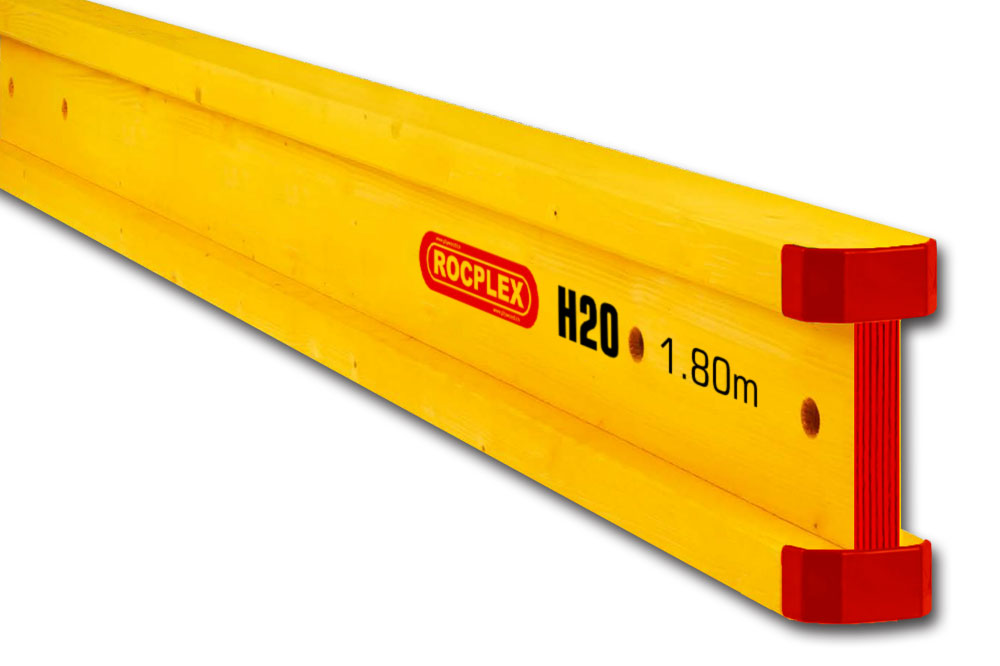
H20 Formwork Slab Timber Beams
ROCPLEX H20 Beam redefines construction efficiency. This top-of-the-line formwork H20 timber beam offers unparalleled strength and flexibility. Ideal for diverse construction projects, the H20 Wood Beam is a testament to innovation in slab beams and formwork solutions. It’s not just a beam; it’s the backbone of contemporary construction.
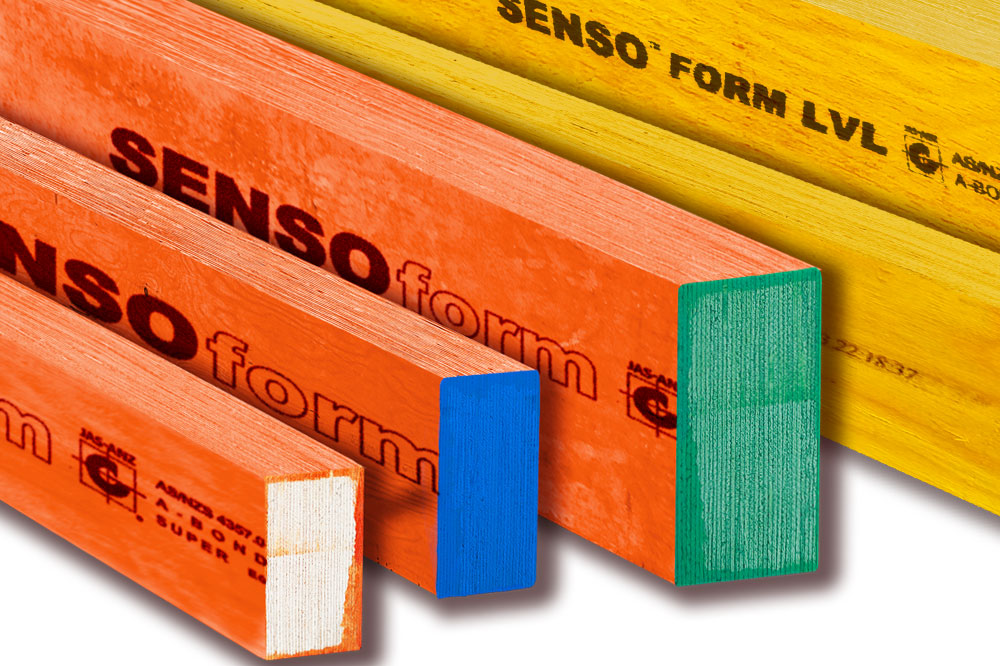
SENSO Form LVL Beam
Post time: Apr-09-2026