
How Grooved Plywood Wall Panels Improve Interior Wall Design
Grooved plywood design plays an important role in shaping interior wall panels that feel structured, balanced, and visually refined. While flat wall linings remain common, designers increasingly choose grooved plywood wall panels to introduce structure, rhythm, and visual depth without adding unnecessary complexity. These panels combine material stability with refined surface detailing, making them a practical and aesthetic choice for modern interiors.
Creating Visual Rhythm Through Grooved Plywood Design
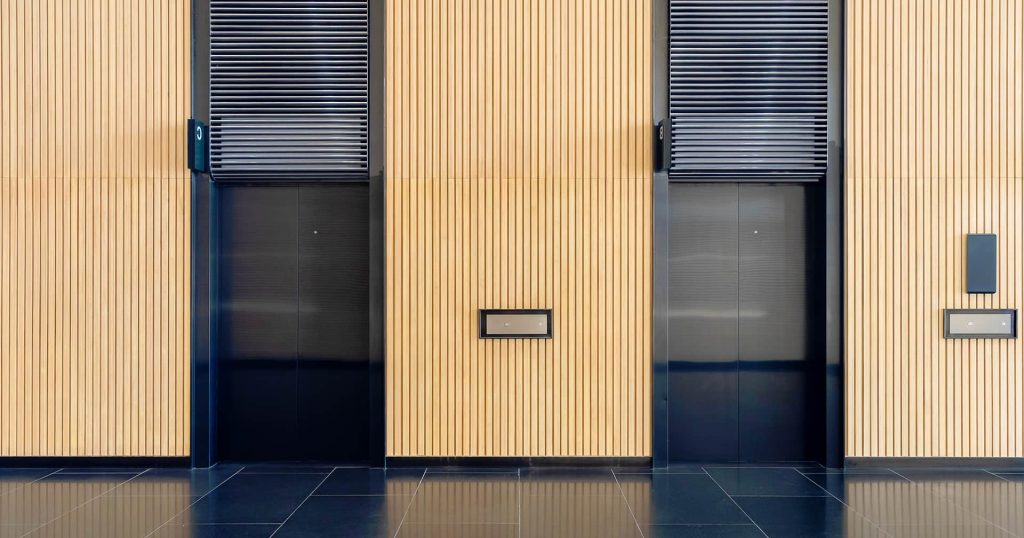
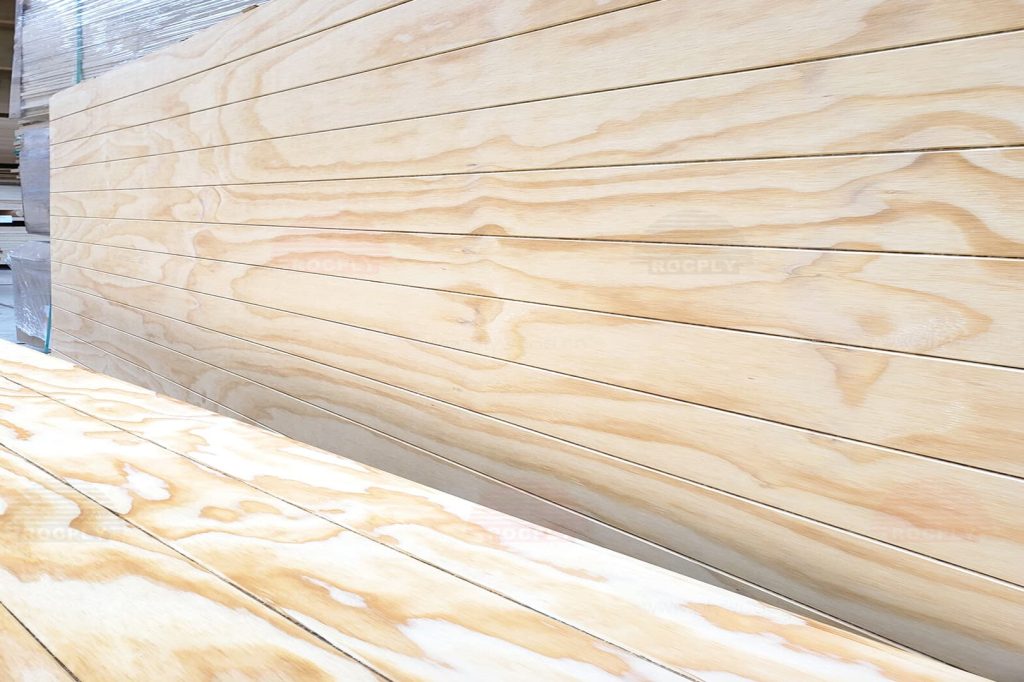
Grooved panel profiles create controlled shadow lines that bring order to interior wall surfaces. Unlike decorative overlays or heavy feature walls, groove patterns rely on subtle depth rather than contrast. As a result, walls appear more structured while still feeling calm and balanced. This approach works well in both small residential rooms and large commercial interiors where visual consistency matters.
For standard groove layouts used across interior projects, explore our precision-grooved plywood wall panel systems designed for interior wall applications.
How Grooved Plywood Design Influences Wall Proportions
Groove orientation can visually influence how a space is perceived. Vertical grooves can enhance ceiling height, while horizontal layouts help widen narrow rooms. Designers use this effect to guide movement and improve spatial flow without altering structural elements. Because plywood panels maintain flatness and dimensional control, groove alignment stays consistent across full wall runs.
These effects form part of our broader plywood wall panel systems developed for interior architectural use.
Supporting Clean Installation and Predictable Results
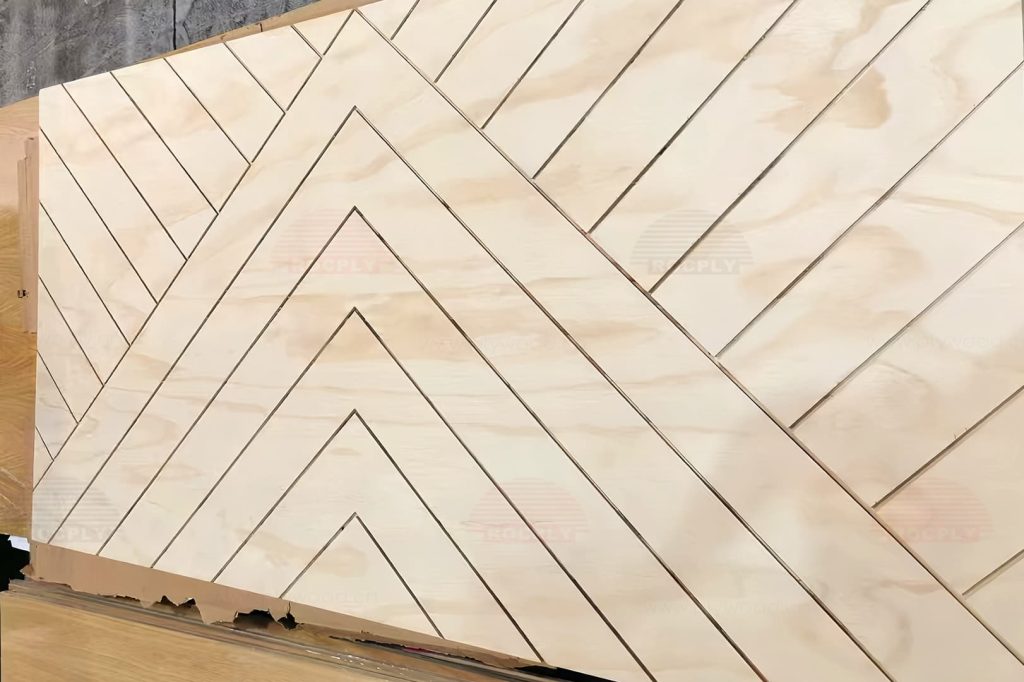
Grooved plywood wall panels also simplify on-site installation. Panels arrive with pre-machined profiles, which reduces layout errors and limits on-site cutting. Consequently, installers achieve cleaner joint alignment and more consistent surface finishes. This predictability helps project teams maintain timelines while protecting the intended design outcome.
Balancing Aesthetics With Material Performance
Interior wall finishes must look good while remaining stable over time. Plywood construction supports groove accuracy by using balanced veneer layering and controlled moisture levels. As a result, panels resist warping and maintain groove definition throughout their service life. This balance makes grooved plywood suitable for interiors that require both visual quality and reliable performance.
Adapting Groove Design to Different Interior Styles
Grooved panels work across a wide range of design styles, from minimal residential interiors to structured commercial spaces. Designers can pair groove layouts with clear finishes, painted surfaces, or natural wood tones depending on the desired atmosphere. When projects require tailored layouts, spacing adjustments, or custom dimensions, project-based solutions are available through our custom grooved plywood wall panel options.
A Practical Design Tool for Modern Interiors
Rather than acting as a decorative layer alone, grooved plywood wall panels function as a design tool that improves wall clarity and surface order. By combining controlled groove geometry with stable panel construction, these systems help designers achieve interiors that feel intentional, refined, and durable over time.
Design principles referenced align with general interior wall guidelines outlined by ArchDaily .
Post time: Jan-04-2026