

18mm MDF board uses include cabinet sides, divider panels, painted doors, drawer fronts and supported shelving. Choose the grade, clear span, joints and finish for each part. A nominal 18mm sheet has no single shelf load rating. Its thickness alone does not approve a wet-area or structural job.
A cabinet side, an adjustable shelf and a hinged door can share a thickness while needing different checks. Start with the part drawing. Then decide where 18mm adds value and where another thickness or support detail makes more sense.
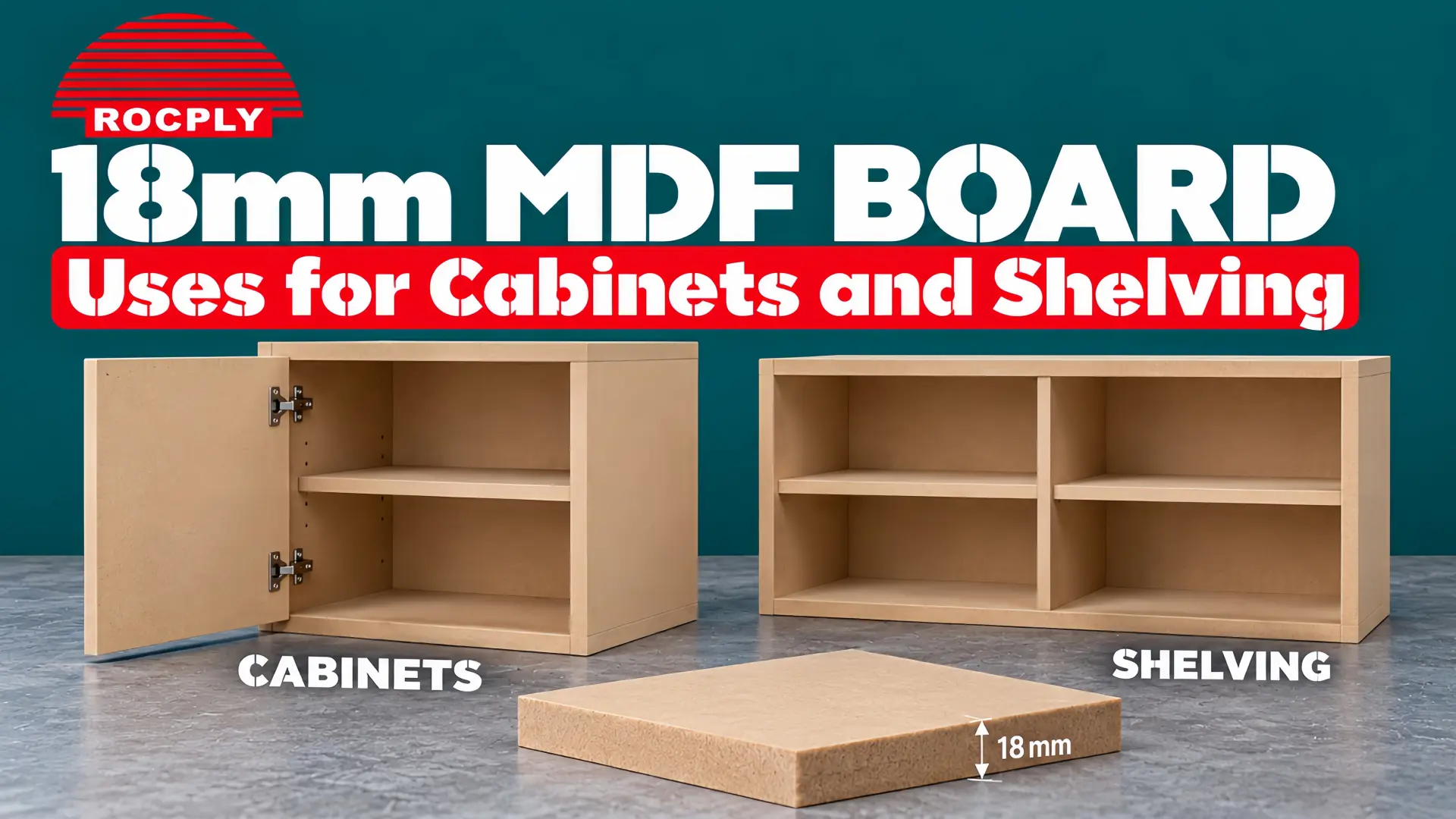
Match 18mm MDF board uses to the part
| Part | Reason to consider 18mm MDF | Check before selection |
|---|---|---|
| Cabinet sides and dividers | Flat faces for finishes and machined joints | Internal space, back detail and joint layout |
| Adjustable shelves | Consistent section and finished edges | Clear span, load, supports and board stiffness |
| Fixed shelves | Integration with the cabinet joints | Joint capacity and how the shelf supports the carcass |
| Painted doors and drawer fronts | Faces and profiles suited to the coating brief | Finished mass, hinge system and remaining section after routing |
| Shopfitting and furniture panels | Matching faces and repeatable part geometry | Wear, mounting details and intended loads |
| Backs and drawer bottoms | Only when the design calls for this section | Groove size, weight and usable storage space |
For painted parts, review our raw standard MDF options against the machining and coating brief. Also name the product standard, core grade and required emissions evidence. An 18mm thickness is only one line of that specification.
A 600mm cabinet is not a 600mm shelf span
Suppose a cabinet measures 600mm across its outside faces. With two full-height 18mm sides, the space between them is 564mm: 600 − 18 − 18. That is a geometry example before fitting clearances, linings or joint details.
Now mark the shelf supports on the drawing. Shelf length, clear opening and distance between support points may differ. Use the support arrangement required by the design when checking bending. A shelf on pins does not behave like a shelf fixed into a designed joint.
Measure the supplied board before locking the machining programme. Nominal thickness, actual thickness and finished thickness can differ. Therefore, match grooves, rebates and hardware holes to the approved panel and finish build-up.
The back also needs a defined role. When it forms part of the cabinet’s bracing, specify its joints and fixings for that purpose. An 18mm back adds mass and takes up storage depth. Use it where the design calls for that section, rather than extending the side-panel choice to every part.
Span changes the shelf more than the label suggests
The European Panel Federation shelving guidance links shelf choice to load, geometry and board stiffness. It also notes that sustained loading can increase initial sag through creep.
For this comparison, each shelf has simple end supports. With the same uniform load per metre, initial deflection varies with span to the fourth power. Hold thickness, depth and board stiffness constant. The calculated span effect is:
| Illustrative span | Relative initial deflection | Calculation |
|---|---|---|
| 600mm | 1.00 | Reference case |
| 800mm | 3.16 | (800 ÷ 600)⁴ |
| 1000mm | 7.72 | (1000 ÷ 600)⁴ |
These are calculated ratios, not millimetres of sag or safe spans. The CPA shelving bulletin gives the beam equation and separates strength from deflection checks. Include shelf self-weight and actual loading.
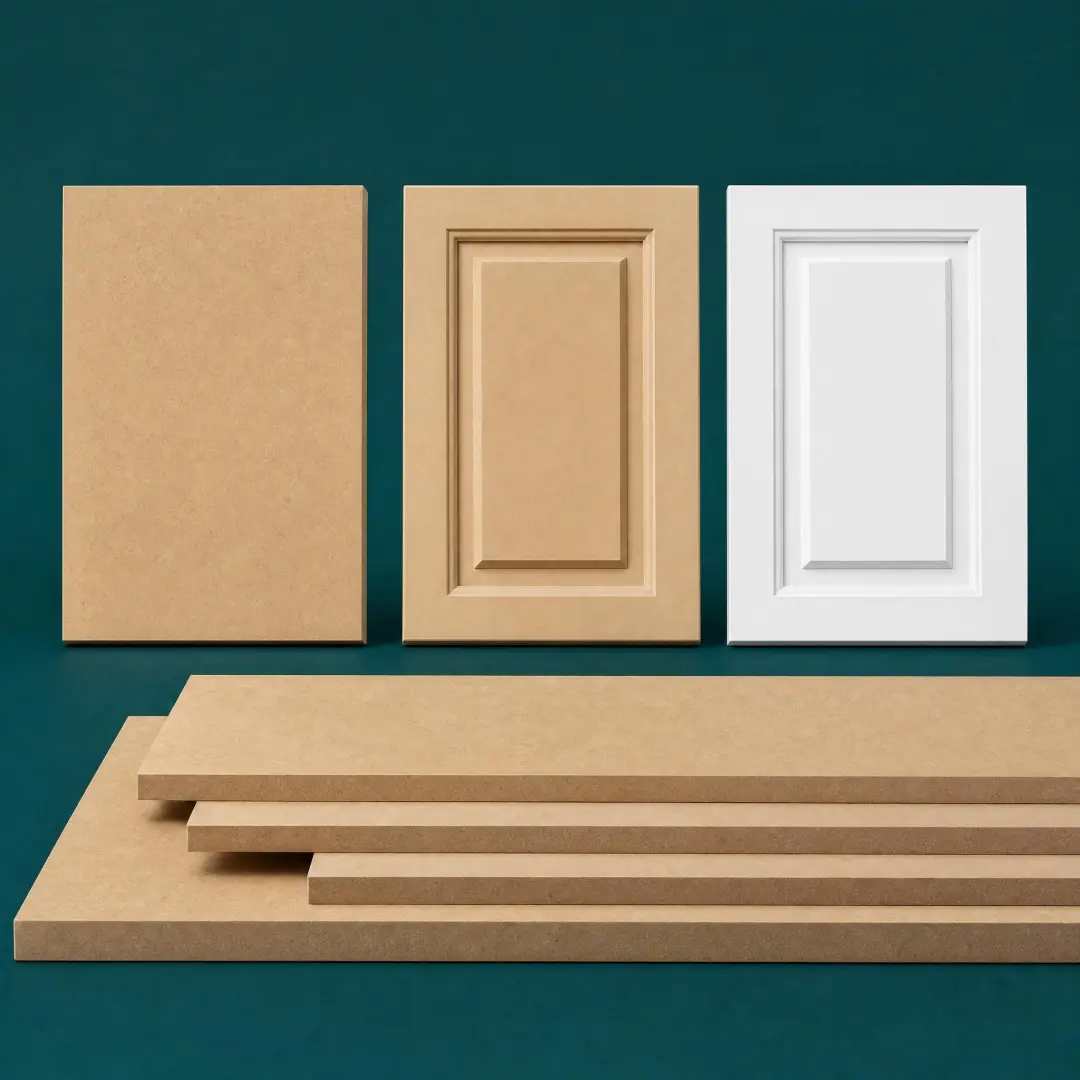
Change the support layout before defaulting to more board
A centre divider, a designed front stiffener or a properly supported rear edge may change the shelving solution. However, each detail needs a reliable connection and a clear path for the load. Decorative edging alone should not be credited as structural reinforcement.
Ask what the shelf will hold. A row of books, a few display objects and a heavy appliance impose different demands. A uniform-load table does not directly cover a heavy point load. For repeated commercial units, review a finished assembly under the intended service conditions.
This is where 18mm MDF board uses become a layout decision. A divider can reduce the open bay, but it also changes storage access. Compare that trade-off with a thicker panel or another shelf system.
Before changing an adjustable shelf to a fixed shelf, consider how it will be replaced. A fixed joint may change both bending restraint and the assembly sequence. Record the actual joint instead of assuming the shelf is fully clamped at its ends.
Weigh the door before choosing the hinges
Door width and height matter as well as thickness. For an illustrative plain panel measuring 720 × 450 × 18mm, assume a density of 700 kg/m³. Its calculated core mass is 0.720 × 0.450 × 0.018 × 700 = 4.08 kg.
That density is an assumed input, not a ROCPLY product value. Add the actual finish and hardware. Then select hinges from the maker’s guidance for the finished mass, dimensions and fixing pattern.
Routing also removes material. Check the remaining section behind a profile, hinge cup or handle recess. A nominal 18mm blank does not leave 18mm everywhere after machining.
Prove the joint in the supplied core
The EPF screw-fixing guidance treats screw type, pilot holes and fixing position as linked choices. It also limits comparisons of withdrawal strength to matching screw types and test methods.
Trial the intended hinge plate, connector or shelf fitting in the offered board. Check face fixings and edge fixings separately. Also review repeated assembly if the furniture will be dismantled. An attractive face cannot establish the capacity of a machined joint.
Write the surface and core on separate lines
Raw MDF suits a planned coating process. Our white melamine MDF options offer a different surface route for cabinet parts. Confirm the edge finish, exposed cuts and compatibility with any further coating.
For humid interiors, review our moisture-resistant MDF guide and the selected product’s use limits. A decorative face does not identify the core grade or seal a service opening.
Match 18mm MDF board uses to the actual workshop sequence. Include machining, edge preparation, coating or edging, drying and final assembly in the quote. A bare-sheet comparison leaves much of the finished-part cost unresolved.
An exposed front edge and an edge hidden inside a groove may need different treatment. State which surfaces remain visible after assembly. Then check the finished edge under the light and viewing distance specified for the furniture.
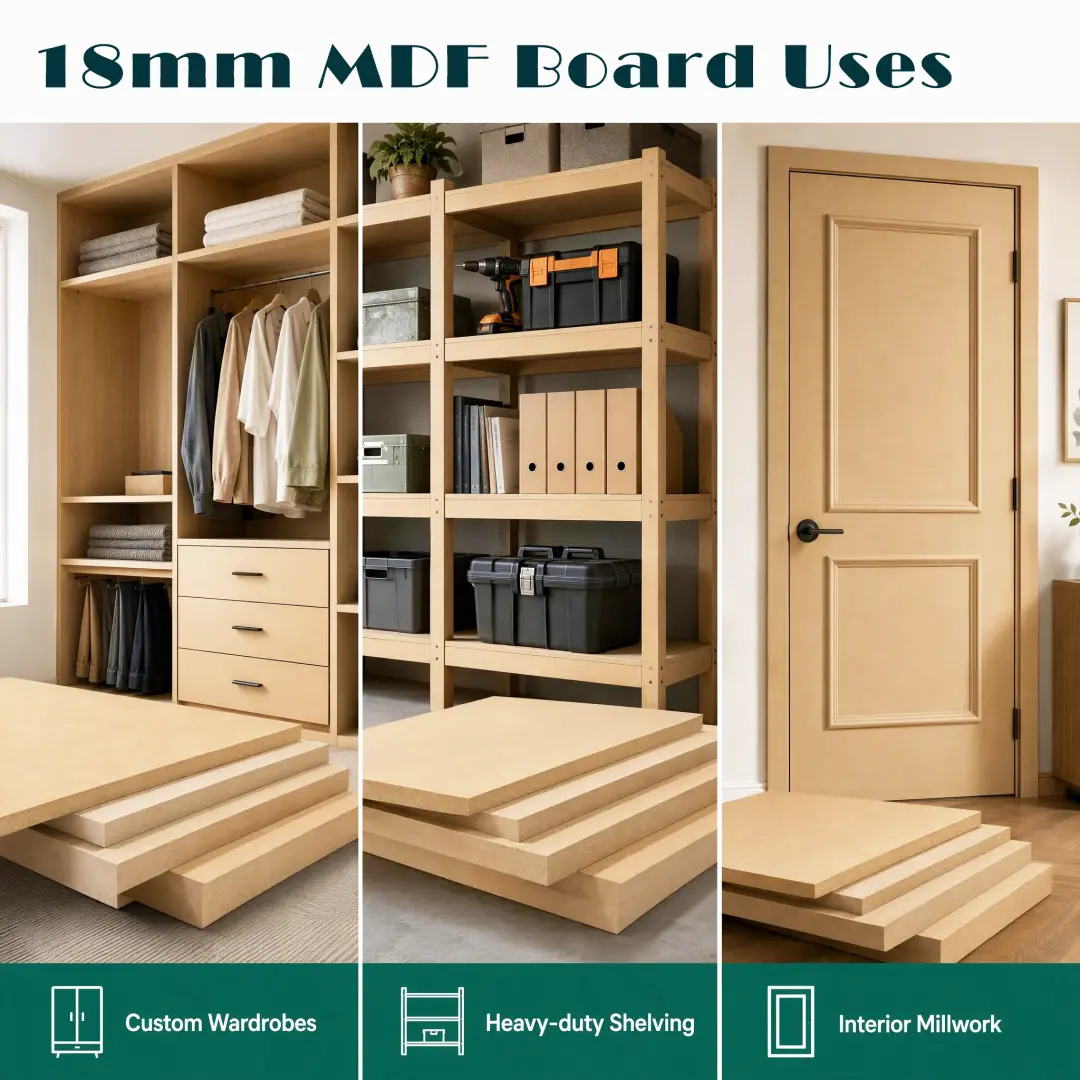
Ask for a sample that represents the part
A small raw offcut can show the face and cut edge. It cannot settle every fit or service question. Send the part drawing with the sample request and ask for the features that matter:
- The offered core grade and thickness, linked to its technical data sheet.
- A representative groove, routed profile or drilled fitting position.
- The proposed face finish and complete edge detail.
- An agreed assembly review for loaded shelves or moving doors.
Keep the approved sample and drawing revision together. Then use the same part references on the order and delivery records.
For a trial assembly, agree the load, test period, room conditions and acceptance criteria in advance. Record the outcome as that assembly’s trial result. It does not establish a universal shelf rating for all 18mm MDF.
Questions about 18mm MDF board uses
Is 18mm MDF thick enough for bookshelves?
It can be, but no answer follows from thickness alone. Check clear span, book load, board stiffness, supports and long-term sag. Add support or change the section where the assessment requires it.
Should every cabinet part use 18mm MDF?
No. Backs, drawer bottoms and decorative parts may need other sections. Select them for their joints, loads and space limits. One thickness across the cutting list can add weight without solving a design need.
Request an 18mm MDF sample
Send ROCPLY the part drawing, intended load, clear span, surface brief, core grade, quantity and destination. We can review available options and the sample features needed for your 18mm MDF board uses.
Post time: Nov-09-2026